 PickPundit
📦 Sådan vælger du de bedste cervikale puder: Komplet købsvejledning

Complete cervical pillows buying guide. Learn what features matter, compare top products, and find the best cervical pillows for your budget.
View Top Picks →Table of Contents
Cervical Pillows: Neck Support Science vs Marketing Claims
Cervical pillows promise to solve neck pain, improve sleep quality, and correct posture through ergonomic design. While quality cervical pillows genuinely help many users, the category includes products with dubious claims and designs that work for some sleepers while worsening symptoms for others. Understanding cervical support principles helps navigate options and set realistic expectations.
What "Cervical" Actually Means
The cervical spine comprises the neck's seven vertebrae (C1-C7), curving slightly forward in healthy alignment. Cervical pillows aim to:
Maintain neutral alignment of the cervical spine during sleep. The neck should follow its natural curve without excessive flexion or extension.
Support the head's weight without creating pressure points or forcing unnatural positioning.
Reduce muscle tension that accumulates when sleeping positions strain neck structures.
Standard pillows may work fine for many people. Cervical pillows become relevant when standard pillows cause or fail to relieve neck discomfort.
Contour Design Features
Cervical pillows use distinctive shapes:
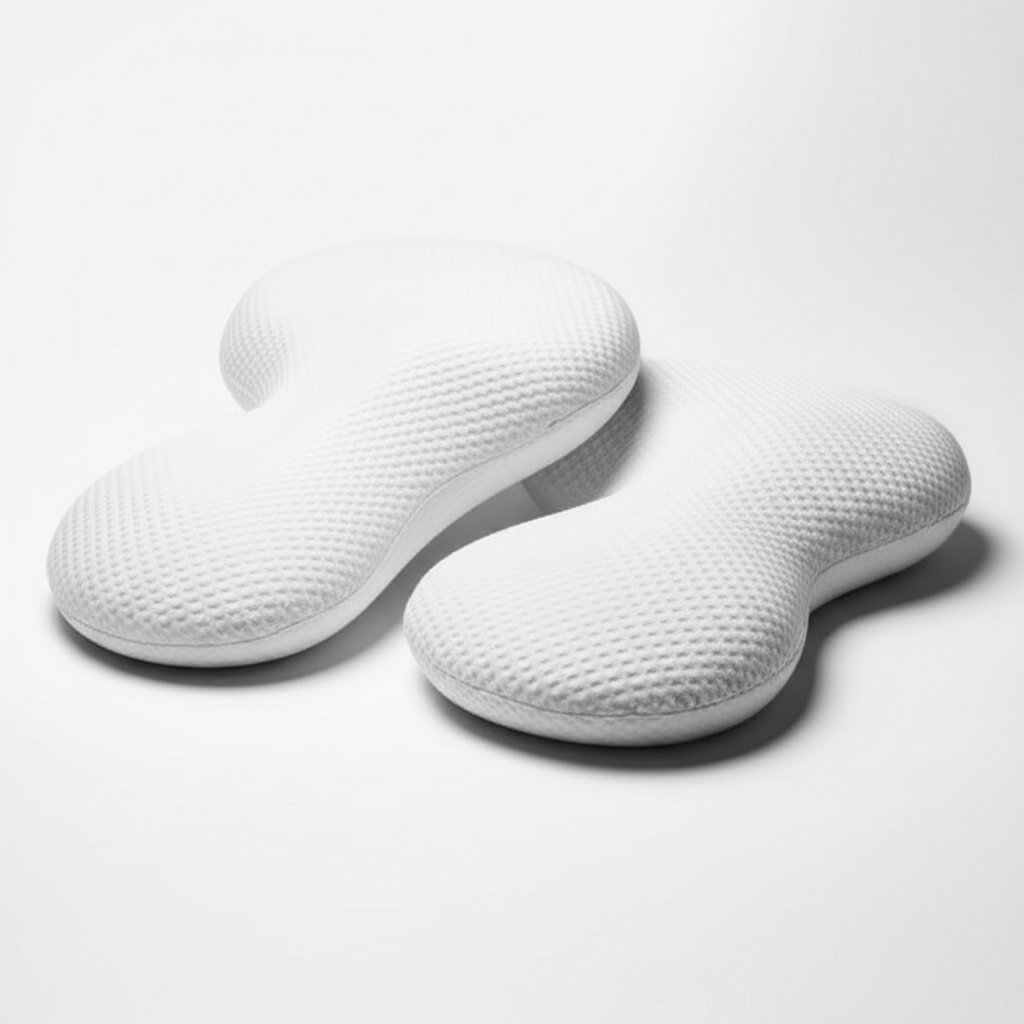
Contour/wave design (like the DONAMA at $40 and Osteo at $42) features raised edges with lower centers. The raised portion supports the neck curve while the depression cradles the head.
Different height sides accommodate various sleeping positions or neck dimensions. Users select the side matching their needs.
Center hollows (like the Osteo "hollow design") reduce pressure on the back of the head while maintaining neck support.
Traditional shapes with cervical curves maintain familiar pillow appearance while incorporating neck support zones.
The Travel Pillow at $12 uses a different approach—U-shaped design for seated travel support rather than lying-down sleep support.
Sleeping Position Compatibility
Pillow effectiveness depends on sleeping position:
Back sleepers benefit from contour pillows that support the neck curve while the head rests in the lower center. This maintains neutral alignment with the spine.
Side sleepers need pillows that fill the gap between head and mattress without tilting the head up or down. Proper height is critical—too thin allows head drooping, too thick forces upward tilt.
Stomach sleepers face challenges with cervical pillows. This position inherently strains the neck, and most cervical pillows make it worse. Changing sleep position may matter more than pillow selection.
Combination sleepers who change positions throughout the night may find single-position-optimized pillows uncomfortable in other positions.
Memory Foam Properties
Most cervical pillows use memory foam:
Conforming ability allows foam to mold to head and neck shapes, distributing pressure evenly.
Temperature sensitivity causes memory foam to soften with heat. Cold foam feels firm initially, softening as body heat transfers.
Heat retention is a common complaint—memory foam sleeps warmer than traditional materials.
Density variations affect support and durability. Higher density provides more support but may feel firmer. Lower density feels softer but may compress more quickly.
Off-gassing: New memory foam often emits chemical odors that dissipate over several days. Consider airing new pillows before use.
Sizing and Adjustment
Cervical pillow sizing presents challenges:
Height matters critically for side sleepers. The pillow height should equal the distance from the edge of the shoulder to the side of the head. This varies significantly between individuals.
Fixed heights may not match your anatomy. Some pillows offer multiple height options; others are one-size-fits-all.
Adjustable pillows with removable foam inserts allow height customization. These provide flexibility but cost more.
Body size correlation: Larger-framed individuals with broader shoulders generally need taller pillows; smaller individuals need lower profiles.
Measure your shoulder-to-head distance when lying on your side before purchasing fixed-height pillows.
Transition Period Reality
Switching to cervical pillows often involves adjustment:
Initial discomfort is normal during the transition period. New alignment may feel strange even when it's beneficial.
Adjustment timeline typically spans 1-3 weeks. Improvement before this period suggests good fit; continued problems suggest poor fit.
Worse-before-better patterns: Some users experience increased stiffness initially as muscles adapt to new alignment.
Deal-breaker signs: Sharp pain, numbness, or headaches suggest the pillow isn't right for you. Consult healthcare providers for persistent symptoms.
Return policies matter—ensure you can return pillows that don't work during the adjustment period.
Medical Condition Considerations
Cervical pillows interact with various conditions:
Existing neck injuries may require specific pillow recommendations from healthcare providers.
Sleep apnea positioning needs may conflict with cervical pillow designs.
TMJ disorders can be affected by head positioning during sleep.
Migraine patterns may improve or worsen with different pillow types.
Post-surgical recovery may have specific pillow requirements.
For diagnosed conditions, medical guidance should precede product selection. General consumer pillows aren't designed for specific medical needs.
Travel Pillow Distinctions
Travel pillows (like the memory foam travel pillow at $12) serve different purposes:
Seated support rather than lying-down support. U-shaped designs support the neck while sitting upright in planes, cars, or chairs.
Portability priorities mean compact, packable designs.
Short-duration use for travel rather than nightly sleep.
Travel cervical pillows don't substitute for proper bed pillows. They're accessories for specific situations.
Quality and Price Correlation
Cervical pillow pricing reflects materials and construction:
Budget options ($15-25): Lower-density foam, simpler construction, limited size options. Adequate for trying cervical support, may not last long.
Mid-range options ($30-50): Better foam quality, more thoughtful design, multiple height options. The DONAMA at $40 and Osteo at $42 represent this tier.
Premium options ($50-100+): Highest-quality materials, adjustability features, extended warranties. Justified for users who've identified cervical pillows as beneficial.
For first-time users, mid-range products balance quality with acceptable risk if the pillow doesn't work out.
Maintenance and Longevity
Cervical pillow care affects performance:
Cover washing: Removable, washable covers extend hygiene. Most memory foam cores shouldn't be washed.
Foam degradation: Memory foam softens over time, reducing support. Expect 2-4 years of optimal performance from quality pillows.
Compression patterns: Regular rotation prevents permanent compression in frequently-used areas.
Replacement timing: When pillows no longer return to original shape after pressure release, replacement is due.
Practical Recommendations
For first-time cervical pillow users: Mid-range contour pillows ($30-50) with return policies allowing adequate trial periods. Don't invest premium prices until confirming benefit.
For back sleepers: Contour designs with appropriate neck curve support and head depression.
For side sleepers: Height-matched pillows—measure your anatomy before purchasing. Adjustable options reduce fit risk.
For travel: Separate U-shaped travel pillows for seated use. Don't expect bed pillows to travel well.
For existing conditions: Medical consultation before self-selecting cervical pillows. Generic products may not suit specific medical needs.
The fundamental question: are standard pillows actually causing problems, or is the issue elsewhere? Cervical pillows solve cervical pillow problems—not underlying medical conditions requiring professional treatment.
Frequently Asked Questions
Hvad skal jeg kigge efter, når jeg køber cervikale puder?
Nøglefaktorer omfatter byggekvalitet, brugeranmeldelser og værdi for pengene. Topbedømte muligheder som Gentlepaw Travel Pillow - Memory Foam Cervical Neck Pillow F (4.2★ fra 194 anmeldelser) viser, hvordan kvalitet ser ud i denne kategori.
Hvor meget koster cervikale puder typisk?
Priserne varierer fra $12 til $100, med de fleste kvalitetsmuligheder omkring $40. Budgetmuligheder under $18 fungerer til lejlighedsvis brug, mens premium-modeller over $60 giver bedre holdbarhed og funktioner.
Hvilke cervikale puder er mest populære lige nu?
The Travel Pillow - Memory Foam Cervical Neck Pillow for voksne er i øjeblikket topbedømt med 4,2★ fra 194 verificerede anmeldelser. Tjek vores fulde sammenligning på /best/cervical-puder for alle topvalg.


