 PickPundit
☕ So wählen Sie die besten Espressomaschinen aus: Kompletter Kaufanleitung

Complete espresso machines buying guide. Learn what features matter, compare top products, and find the best espresso machines for your budget.
View Top Picks →Table of Contents
Espresso Machines: Understanding What Makes Real Espresso
Espresso machines range from $50 appliances to $3,000 prosumer setups, with the difference lying in pressure consistency, temperature stability, and brewing control. Understanding what separates genuine espresso from strong coffee helps navigate marketing claims toward machines that actually deliver café-quality shots.
What Espresso Actually Requires
True espresso needs specific parameters:
9 bar pressure: Industry standard for proper extraction. Less causes under-extraction; more causes channeling.
Water temperature: 195-205°F maintained throughout extraction. Temperature fluctuation ruins shots.
Fine grind: Much finer than drip coffee. Requires capable grinder.
Proper dose: 18-20 grams of coffee for double shot, precisely distributed and tamped.
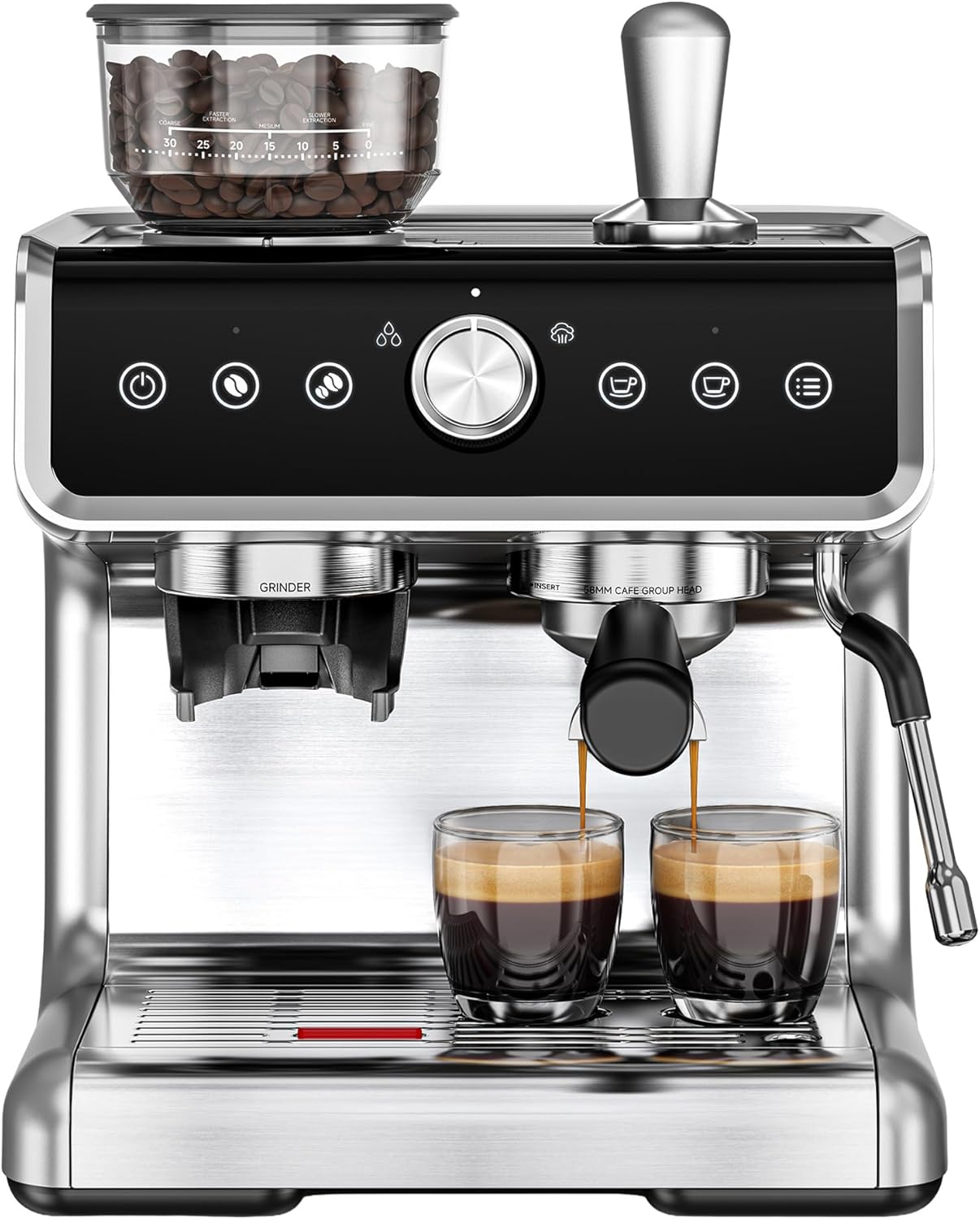
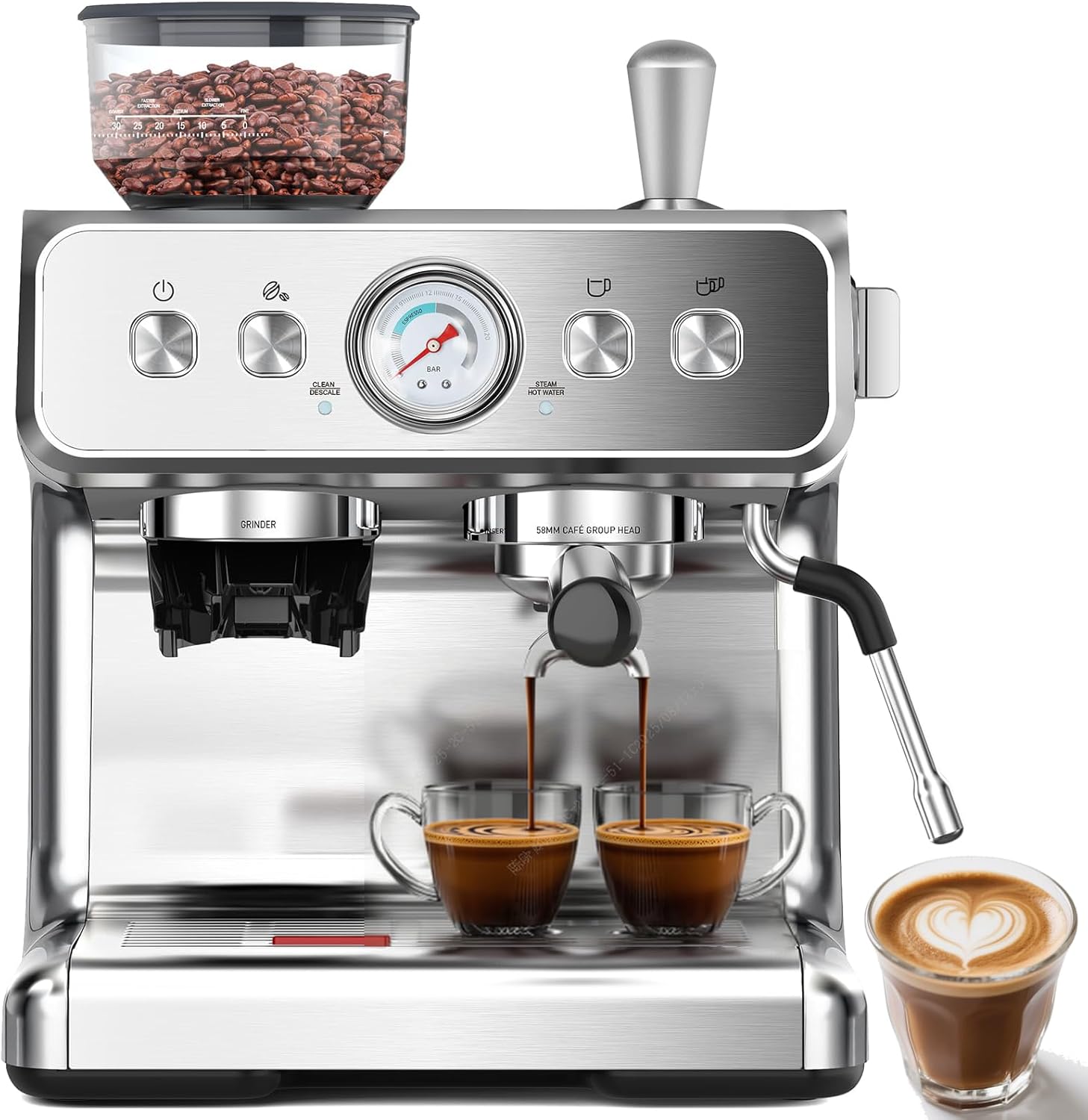
The EUHOMY with built-in grinder and SHARDOR 20-bar machines aim to simplify this complexity.
Pressure Claims vs Reality
20-bar marketing requires context:
Why machines claim 20+ bar: Pump capability, not brewing pressure. Internal systems regulate down to 9 bar.
OPV (Over Pressure Valve): Quality machines limit brewing pressure to 9 bar regardless of pump rating.
Cheap machines: May actually brew at excessive pressure, causing bitter extraction.
What matters: Consistent 9-bar brewing pressure, not maximum pump pressure.
Machine Types
Espresso machines come in distinct categories:
Steam-driven: Cheapest. Uses steam pressure, not pump. Cannot produce real espresso—more like strong coffee.
Single boiler: One boiler for brewing and steaming. Must wait between espresso and milk steaming.
Heat exchanger: Simultaneous brewing and steaming. Better temperature stability.
Dual boiler: Separate boilers for each function. Best temperature control. Prosumer territory.
Most consumer machines under $300 are single boiler—adequate for espresso, requires patience for milk drinks.
Built-in Grinder Considerations
The EUHOMY includes an integrated grinder:
Convenience: Single appliance, consistent dosing, less counter space.
Compromises: Built-in grinders typically less adjustable than dedicated grinders.
Grind quality: Fresh grinding matters immensely for espresso—built-in beats pre-ground.
Upgrade path: Separate grinder allows upgrading one component at a time.
For beginners, built-in grinder machines provide good starting point without overwhelming complexity.
Portafilter Types
What holds coffee during brewing:
Pressurized (dual-wall) baskets: Forgiving of grind inconsistencies. Produces crema artificially. Good for beginners.
Non-pressurized (single-wall) baskets: Requires precise grind. Real crema from proper extraction. Barista standard.
Portafilter size: 54mm common in consumer machines, 58mm professional standard. Affects basket and accessory compatibility.
Milk Steaming Capability
For lattes and cappuccinos:
Steam wand types: Panarello (auto-frothing, easier, less control) vs traditional (manual technique, better microfoam).
Steam power: Weaker steam takes longer, makes frothy rather than silky milk.
Simultaneous brewing: Single boilers require heating transition between brewing and steaming.
Price Tiers Explained
What different budgets buy:
Under $150: Entry level. Pressurized baskets, basic steam, adequate for learning. The SHARDOR tier.
$150-400: Better build quality, some temperature stability features, transitional baskets.
$400-800: Prosumer features—PID temperature control, better build quality, commercial-style portafilters.
$800+: True prosumer. Dual boilers, rotary pumps, near-commercial capability.
Grinder Importance
Often more important than machine:
Why grinding matters: Espresso requires exact grind size. Pre-ground coffee can't be adjusted.
Blade grinders: Produce inconsistent particles. Unusable for espresso.
Burr grinders: Consistent particle size. Essential for quality espresso.
Budget recommendation: If choosing between better machine or better grinder, choose grinder.
Common Beginner Mistakes
What new espresso enthusiasts get wrong:
Pre-ground coffee: Stales quickly, can't adjust for machine. Use whole beans, grind fresh.
Cheap grinder: Inconsistent grind causes channeling and poor extraction.
Ignoring distribution: Uneven coffee in portafilter causes uneven extraction.
Insufficient tamping: Coffee needs consistent 30-pound tamp pressure.
Wrong expectations: Café drinks take practice. First shots won't match coffee shop quality.
Maintenance Requirements
Espresso machines need care:
Daily: Wipe steam wand immediately after use. Backflush (if applicable).
Weekly: Clean drip tray, empty grounds, wipe exterior.
Monthly: Descale based on water hardness. Clean group head.
Annually: Consider professional service for commercial-style machines.
Water Quality
Often overlooked factor:
Hard water: Causes scale buildup, damages machine, affects taste.
Soft water: Can cause corrosion. Some mineral content needed.
Filtered water: Good middle ground. Reduces scaling while maintaining taste.
Descaling: Essential maintenance regardless of water source.
Practical Recommendations
For espresso beginners: All-in-one with grinder (EUHOMY type). Learn basics without overwhelming complexity.
For those upgrading: Separate quality grinder plus mid-range machine. Better espresso than expensive all-in-one.
For milk drink enthusiasts: Prioritize steam wand capability. Weak steam frustrates latte lovers.
For pure espresso focus: Invest in grinder over machine. Grind quality matters more than machine features at entry level.
The key insight: espresso quality depends more on grind consistency and fresh beans than machine price. A $200 machine with great grinder beats $800 machine with blade grinder.
Frequently Asked Questions
Worauf muss ich beim Kauf von Espressomaschinen achten?
Zu den Schlüsselfaktoren gehören die Verarbeitungsqualität, die Benutzerbewertungen und das Preis-Leistungs-Verhältnis. Top-bewertete Optionen wie die Euhomy Ehomy Espressomaschine mit Schleifmaschine (4.6★ aus 18 Bewertungen) zeigen, wie Qualität in dieser Kategorie aussieht.
Wie viel kosten Espressomaschinen normalerweise?
Die Preise reichen von 74 bis 1700 US-Dollar, wobei die meisten Qualitätsoptionen bei 331 US-Dollar liegen. Budgetoptionen unter 111 US-Dollar funktionieren für den gelegentlichen Gebrauch, während Premium-Modelle über 497 US-Dollar eine bessere Haltbarkeit und eine bessere Haltbarkeit bieten.
Welche Espressomaschinen sind derzeit am beliebtesten?
Die Euhomy Espressomaschine mit Schleifmaschine ist derzeit mit 4.6★ aus 18 überprüften Bewertungen bestbewertet. Überprüfen Sie unseren vollständigen Vergleich bei /best / espresso-maschinen für alle top-Picks.
⚖️ Quick Comparison
| Product | Price | Rating | Key Feature |
|---|---|---|---|
| $259.95 | Integrated Grinder - Built-in grinder with 30 settings for versatile coffee from... | ||
| $149.99 | 20-Bar Pressure for Café-Style Espresso Brew rich, flavorful espresso at home wi... | ||
| $299.98 | Built-In Grinder - Integrated conical burr grinder with 30 adjustable grind size... |