 PickPundit
📦 So wählen Sie die besten Kopfhörerverstärker aus: Komplette Kaufanleitung

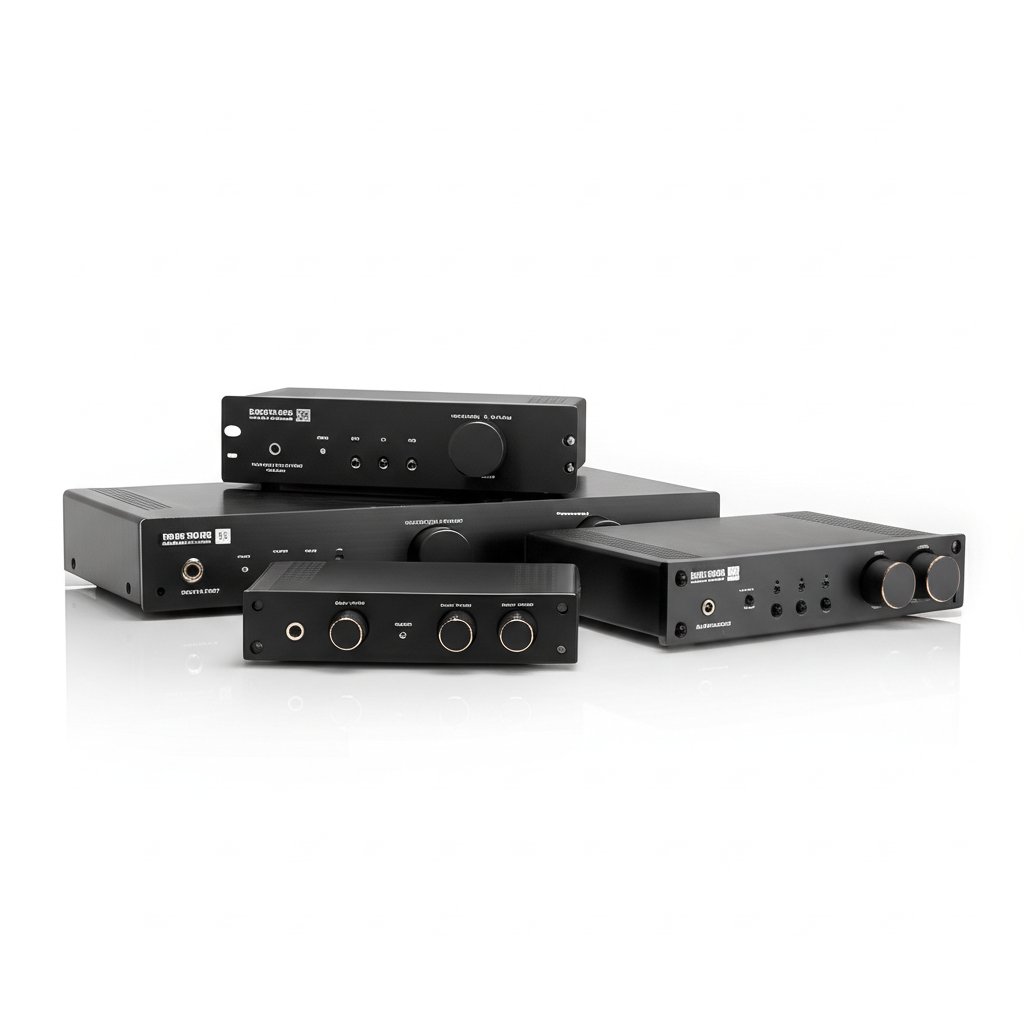
Complete headphone amplifiers buying guide. Learn what features matter, compare top products, and find the best headphone amplifiers for your budget.
View Top Picks →Table of Contents
Headphone Amplifiers: Driving High-Impedance Headphones
Headphone amplifiers provide the power demanding headphones need—driving high-impedance cans that phone outputs can't properly power. Understanding when amplification helps and when it's unnecessary helps avoid spending on equipment that doesn't improve your listening experience.
Why Headphones Need Amplification
Understanding impedance and power:
Impedance (ohms): How much electrical resistance headphones present.
Low impedance (under 50Ω): Easy to drive. Phones handle these fine.
High impedance (250Ω+): Need more voltage. Phone outputs insufficient.
Sensitivity (dB/mW): How loud per unit of power. Affects amp requirements.
DAC vs Amp
Different but related devices:
DAC (Digital-to-Analog Converter): Converts digital audio to analog signal.
Amplifier: Increases analog signal power.
DAC/Amp combos: The Fosi Audio Q4 combines both functions.
Which you need: Poor DAC affects quality; weak amp affects volume and dynamics.
When You Need an Amp
Signs amplification would help:
Insufficient volume: Maxed out and still not loud enough.
High-impedance headphones: 150Ω+ typically benefit.
Dynamics suffering: Compressed sound, weak bass.
Multiple headphones: Amp handles various impedances better.
When You Don't
Saving money on unnecessary gear:
Low-impedance headphones: Most consumer headphones don't need amps.
In-ear monitors: Usually very efficient, don't need amplification.
Satisfied with sound: If it sounds good and loud enough, you're fine.
Desktop vs Portable
Amp form factors:
Desktop amps: Home listening. More power, features.
Portable amps: Battery powered for mobile use.
USB amps: Connect to computer for desktop and laptop use.
The LZSIG 4-channel: Desktop amp for multiple headphone outputs.
Multiple Headphone Outputs
The LZSIG 4-channel feature:
Use case: Multiple listeners, different headphones.
Individual volume: Adjust each output independently.
Monitoring: Audio production, content creation.
Sharing music: Listen together with different headphones.
Tube vs Solid State
Amplifier technology:
Solid state: Clean, accurate sound. The standard.
Tube amps: Warmer coloration, "musical" character.
Preference: Personal taste in sound signature.
Tubes require maintenance: Replacement over time.
Connection Types
Input and output options:
USB input: Digital connection from computer.
Analog input: RCA or 3.5mm from sources.
Headphone outputs: 1/4" (6.35mm) standard, 3.5mm, 4.4mm balanced.
Balanced output: 4-pin XLR or 4.4mm for compatible headphones.
Power Specifications
Understanding amp capabilities:
Output power (mW): Higher power drives harder loads.
Output impedance: Lower is better for most headphones.
Frequency response: Should be flat across audible range.
Price vs Improvement
Diminishing returns:
Entry level ($50-100): Significant improvement for high-impedance headphones.
Mid-range ($100-300): Fosi Audio tier. Quality DAC/amp combos.
High-end ($300+): Refinements, premium build, specific sound signatures.
Practical Recommendations
For high-impedance headphones: Entry-level DAC/amp (Fosi Q4) provides adequate power.
For multiple listeners: LZSIG 4-channel distributes to multiple outputs.
For easy headphones: Skip the amp—your source likely handles them fine.
For serious listening: Quality DAC/amp chain improves experience with demanding headphones.
The key insight: amplifiers solve a specific problem—inadequate power for demanding headphones. Most consumer headphones don't need amps. Check your headphone impedance before assuming you need additional equipment.
Frequently Asked Questions
Worauf sollte ich beim Kauf von Kopfhörerverstärkern achten?
Zu den Schlüsselfaktoren gehören die Verarbeitungsqualität, die Benutzerbewertungen und das Preis-Leistungs-Verhältnis. Top-bewertete Optionen wie der Xisier Electronic Technology LZSIG Kopfhörerverstärker 4-Kanal (4.5★ aus 643 Rezensionen) zeigen, wie Qualität in dieser Kategorie aussieht.
Was kosten Kopfhörerverstärker normalerweise?
Die Preise liegen zwischen 20 und 210 US-Dollar, die meisten Qualitätsoptionen liegen bei 77 US-Dollar. Budgetoptionen unter 30 US-Dollar funktionieren für den gelegentlichen Gebrauch, während Premium-Modelle über 116 US-Dollar eine bessere Haltbarkeit und eine bessere Haltbarkeit bieten.
Welche Kopfhörerverstärker sind derzeit am beliebtesten?
Der LZSIG Kopfhörerverstärker 4-Kanal ist derzeit mit 4.5★ von 643 überprüften Bewertungen bestbewertet. Überprüfen Sie unseren vollständigen Vergleich bei / best / headphone-verstärkern für alle Top-Picks.
⚖️ Quick Comparison
| Product | Price | Rating | Key Feature |
|---|---|---|---|
|
#1
|
$27.98 | HEADPHONE AMP Get superior audio with our 4-channel stereo headphone amplifiers,... | |
|
#2
|
$69.99 | Versatile Entry-Level The Fosi Audio Q4 is an entry-level DAC and headphone amp,... | |
| $29.99 | Ideal Carry-On/Bedroom Guitar Effects with Headphone Amplifier for Silent Practi... |


