 PickPundit
📦 So wählen Sie die besten Makroobjektive aus: Kompletter Kaufanleitung

Complete macro lenses buying guide. Learn what features matter, compare top products, and find the best macro lenses for your budget.
View Top Picks →Table of Contents
Macro Lenses: Magnification Ratios, Working Distance, and Close-Up Photography
Macro lenses enable extreme close-up photography of small subjects. Understanding macro specifications helps select appropriate lenses for detailed photography.
What Makes a Lens "Macro"
True macro: 1:1 reproduction ratio (life-size on sensor).
Subject appears same size on sensor as in real life.
Close focusing distance enables magnification.
Technical definition matters for comparison.
Magnification Ratio
1:1 is true macro.
1:2 is half life-size.
2:1 is double life-size.
Higher ratios require specialized equipment.
Working Distance
Distance from front element to subject at macro.
Longer working distance prevents shadowing.
Important for skittish subjects (insects).
Longer focal lengths provide more working distance.
Focal Length Options
35-60mm: general macro, less working distance.
90-105mm: versatile, moderate working distance.
150-200mm: maximum working distance.
Match to primary subjects.
Depth of Field Challenges
Extremely shallow at macro distances.
f/16 or smaller often needed.
Focus stacking for complete sharpness.
Technique compensates for physics.
Stabilization Importance
Camera shake magnified at macro distances.
Image stabilization helps handheld shooting.
Tripod preferred for maximum sharpness.
Flash can freeze motion effectively.
Lighting Requirements
Close focusing reduces available light.
Macro flash units (ring flash, twin flash).
Diffused continuous lighting.
Light placement affects dimension.
Focus Systems
Manual focus often preferred for macro.
Focus rail for precise positioning.
Autofocus may struggle at macro distances.
Live view focus assists precision.
Subject Types
Insects and nature subjects.
Product photography.
Jewelry and small objects.
Food photography details.
Extension Tubes Alternative
Affordable way to increase magnification.
Work with existing lenses.
Reduce light transmission.
Good starting point before lens investment.
Close-Up Filter Alternative
Magnifying filters attach to lens front.
Least expensive macro option.
Optical quality varies.
Good for experimentation.
Practical Recommendations
For beginning macro, 90-105mm macro lenses ($400-800) provide versatility.
For insect photography, longer focal lengths (150mm+) provide safe working distance.
Extension tubes ($50-150) allow macro exploration before major lens investment.
Tripod and proper lighting matter as much as lens quality.
Frequently Asked Questions
Worauf sollte ich beim Kauf von Makroobjektiven achten?
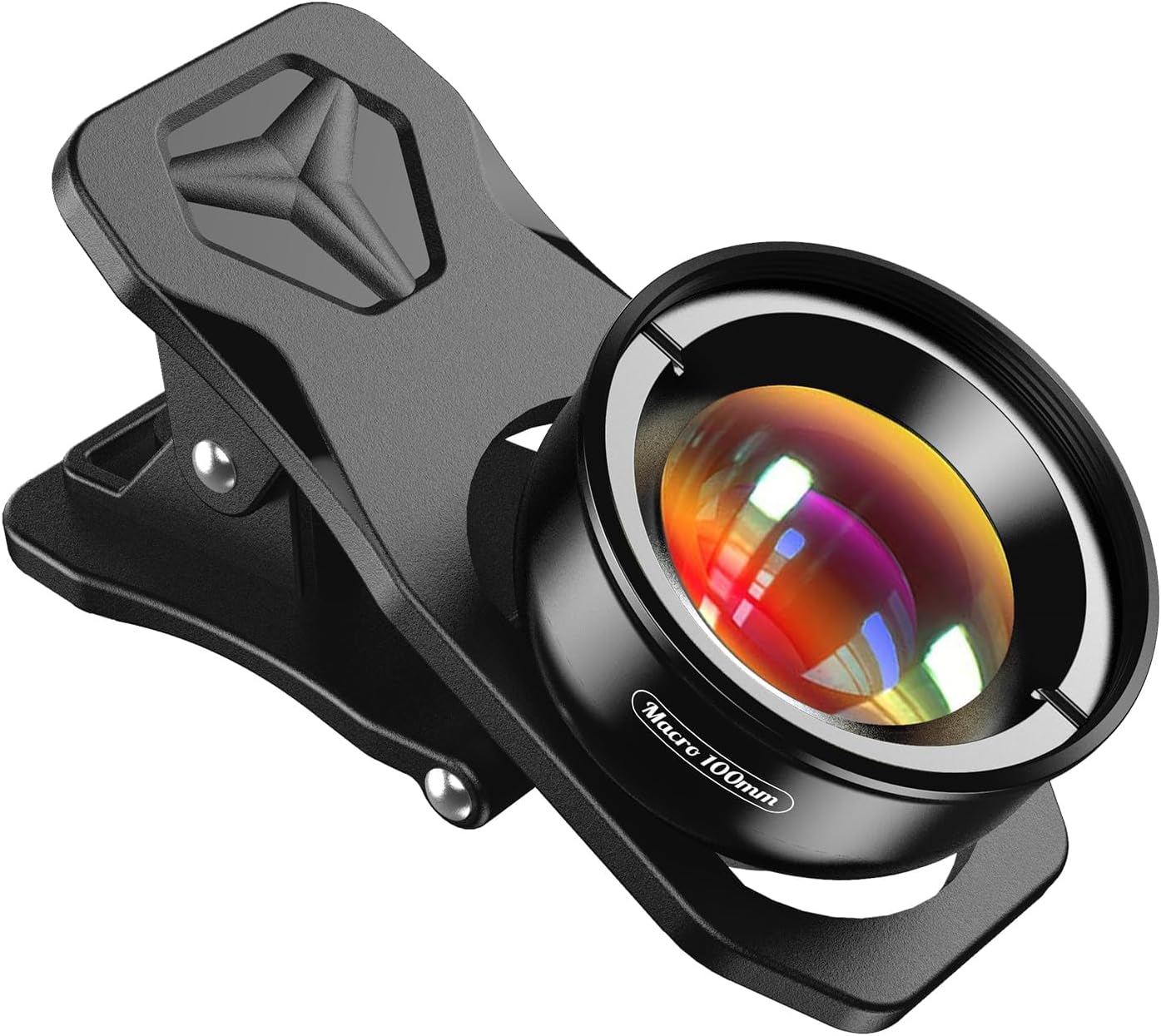
Zu den Schlüsselfaktoren gehören die Verarbeitungsqualität, die Benutzerbewertungen und das Preis-Leistungs-Verhältnis. Top-bewertete Optionen wie das Ailun Phone Lens (3.9★ aus 5.057 Bewertungen) zeigen, wie Qualität in dieser Kategorie aussieht.
Wie viel kosten Makroobjektive normalerweise?
Die Preise reichen von 7 bis 1249 US-Dollar, die meisten Qualitätsoptionen liegen bei 154 US-Dollar. Budgetoptionen unter 10 US-Dollar arbeiten für den gelegentlichen Gebrauch, während Premium-Modelle über 231 US-Dollar eine bessere Haltbarkeit und eine bessere Haltbarkeit bieten.
Welche Makroobjektive sind derzeit am beliebtesten?
Das Telefonobjektiv ist derzeit mit 3.9★ von 5.057 überprüften Bewertungen bestbewertet. Überprüfen Sie unseren vollständigen Vergleich bei / best / macro-linsen für alle Top-Picks.