 PickPundit
💧 Cómo elegir la mejor agua embotellada: guía de compra completa

Complete bottled water buying guide. Learn what features matter, compare top products, and find the best bottled water for your budget.
View Top Picks →Table of Contents
Bottled Water: Separating Hydration From Marketing
Bottled water represents one of consumer goods' greatest marketing achievements—convincing people to pay for something available nearly free from taps. Yet legitimate reasons exist for purchasing bottled water, and understanding the actual differences between options prevents overpaying for meaningless distinctions while identifying when premium options provide genuine value.
Source Types Explained
Bottled water sources fall into distinct categories with legal definitions:
Spring water comes from underground sources where water flows naturally to the surface. It must be collected at the spring or through a borehole tapping the underground formation. Poland Spring and similar brands sell spring water, which contains naturally occurring minerals from its geological source.
Purified water starts as municipal tap water or other sources, then undergoes treatment (distillation, reverse osmosis, or other purification) to remove contaminants. Pure Life and Aquafina sell purified water. It's essentially processed tap water—not inherently worse than spring water, just different.
Mineral water contains at least 250 parts per million total dissolved solids from its geological source. The minerals must be naturally present, not added. True mineral water (Evian, Perrier) costs more and tastes distinctly different from purified water.
Artesian water comes from wells tapping confined aquifers—underground water held under pressure by rock layers. The "artesian" designation sounds impressive but doesn't indicate superior quality, just geological context.
The pH and Alkaline Marketing
Alkaline water marketing has exploded, with products claiming health benefits from elevated pH levels:
The claims: Better hydration, acid neutralization, antioxidant properties, various health improvements.
The reality: Your body maintains blood pH within narrow ranges regardless of what you drink. Stomach acid neutralizes alkaline water immediately. No credible research supports health claims for alkaline water consumption.
The NANO FIT at $80 for what appears to be a modest quantity represents premium alkaline pricing. You're paying for marketing, not measurable health benefits. Standard purified or spring water provides identical hydration at a fraction of the cost.
Oxygen-Infused and Enhanced Waters
Beyond alkaline claims, enhanced waters tout:
Oxygen infusion: The body absorbs oxygen through lungs, not stomachs. Dissolved oxygen in water provides zero respiratory benefit.
Electrolyte enhancement: Legitimate for intense athletic performance, unnecessary for normal hydration. Sports drinks or electrolyte tablets cost less than premium enhanced waters.
Vitamin addition: Usually minuscule amounts with questionable bioavailability. Eat food or take supplements if vitamins are a concern.
Enhanced waters charge premiums for unproven or negligible benefits. Basic water hydrates identically.
Pack Sizes and Per-Unit Economics
Bottled water pricing varies dramatically by pack configuration:
Single bottles (convenience stores, vending machines) charge maximum premiums—$2-4 for what costs pennies in bulk.
12-packs like the Pure Life at $4 represent typical grocery store value—roughly $0.33 per bottle.
24-packs reduce per-unit costs further—often $0.20-0.25 per bottle.
Gallon jugs provide lowest per-ounce costs but sacrifice portability.
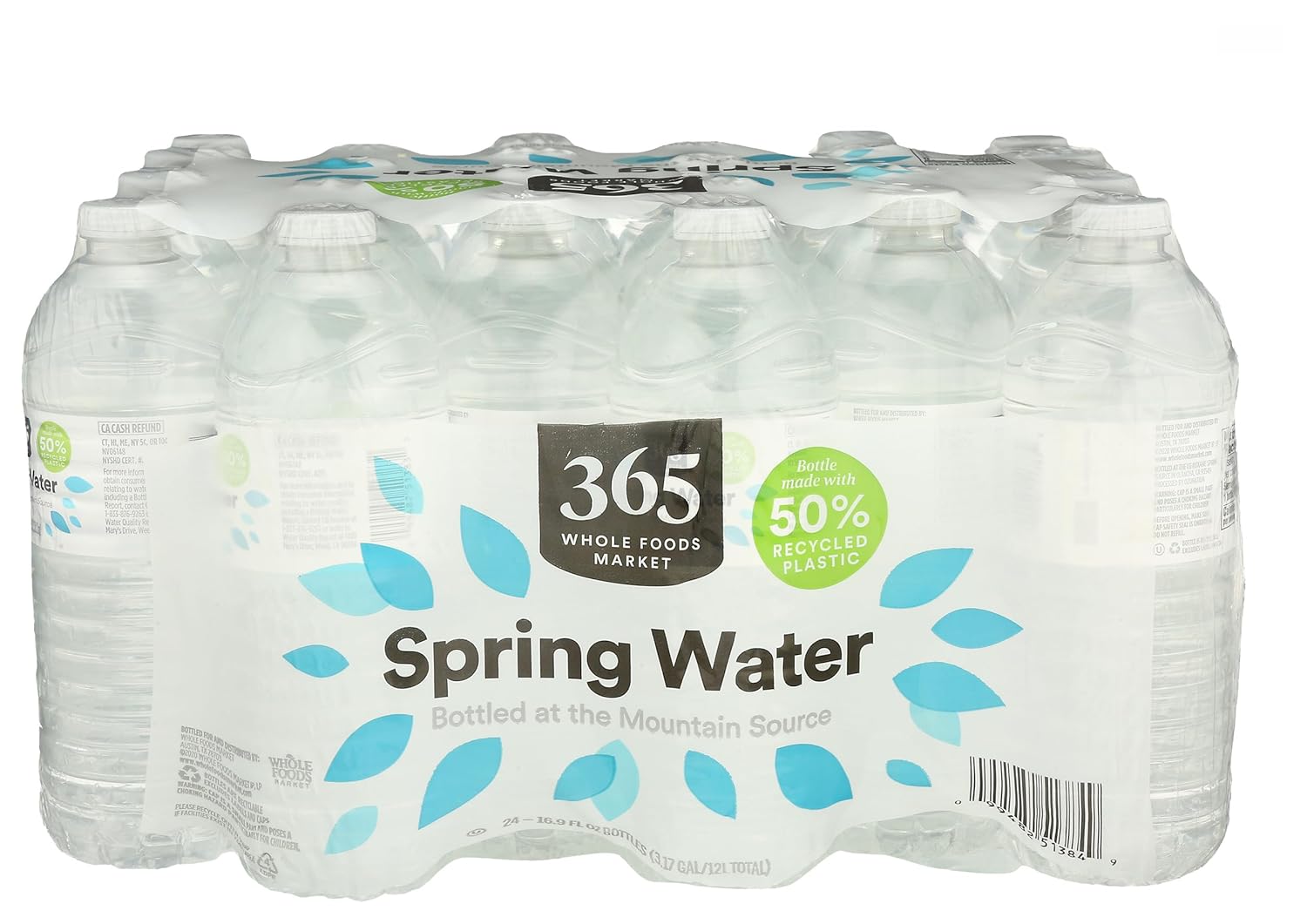
The 365 Whole Foods at $5.79 for a single 16.9oz bottle suggests specialty positioning (though that price seems unusually high—verify before purchasing).
Brand vs Store Brand Reality
National brands (Dasani, Aquafina, Pure Life) and store brands often come from similar sources and undergo comparable purification:
Dasani: Purified municipal water with minerals added for taste. Owned by Coca-Cola.
Aquafina: Purified municipal water. Owned by PepsiCo.
Pure Life: Purified water with minerals added. Owned by Nestlé (now One Rock Capital Partners).
Store brands: Often identical processing from local municipal sources.
The brand premium covers marketing, distribution efficiency, and brand recognition—not superior water quality. Blind taste tests rarely identify brand differences reliably.
When Bottled Water Makes Sense
Legitimate bottled water use cases include:
Travel and portability: Sealed bottles ensure safe hydration away from trusted water sources.
Emergency preparedness: Shelf-stable bottled water stores for years.
Compromised municipal supplies: Contamination events, boil orders, or lead concerns make bottled water temporarily essential.
Outdoor activities: Hiking, camping, and sports where tap access doesn't exist.
Genuine taste preference: Some people legitimately dislike their tap water's taste and find specific bottled waters more palatable.
When Bottled Water Doesn't Make Sense
Daily home hydration: A quality water filter (pitcher or tap-mounted) costs less annually than regular bottled water purchases and eliminates plastic waste.
Environmental concerns: Bottled water's plastic production, transportation, and disposal create environmental impact that filtered tap water eliminates.
Budget constraints: Bottled water costs 300-2000 times more per gallon than tap water, depending on product and local rates.
Plastic Considerations
Bottled water containers introduce considerations beyond the water itself:
BPA concerns: Most bottles now use BPA-free plastics, though other plastic compounds raise ongoing research questions.
Heat exposure: Plastic bottles left in hot cars potentially leach chemicals. Store cool and consume relatively quickly.
Single-use environmental impact: Recycling rates remain low. Most plastic bottles end up in landfills or waterways.
Reusable alternatives: Stainless steel or glass bottles with filtered tap water eliminate plastic concerns entirely.
Taste Differences
Water does taste different based on mineral content and source:
Mineral water has distinct taste from dissolved minerals—some people love it, others find it unpleasant.
Spring water varies by source—different springs produce noticeably different tastes.
Purified water tastes "flat" or "clean" to some palates—minerals removed means less flavor complexity.
Added minerals in some purified waters attempt to restore taste character removed during purification.
Taste preference is personal and legitimate. Paying more for water that tastes better to you makes sense; paying more for identical taste based on marketing doesn't.
Practical Recommendations
For everyday hydration: Invest in a quality water filter for home use. The annual cost beats bottled water quickly, and environmental impact drops dramatically.
For portability: Buy bulk packs of basic purified or spring water. Store brands match national brands at lower cost.
For emergencies: Stock sealed gallon jugs or cases of bottles. Rotate stock annually.
For taste preference: Try different sources to find what you like, but don't assume price correlates with quality. Expensive alkaline and enhanced waters don't hydrate better than basic options.
Skip: $80 "oxygen-infused alkaline" water and similar premium products. The markup funds marketing claims that physics and biology don't support.
The fundamental truth: water is water. Your body doesn't care about the marketing story—it cares about hydration. Pay for convenience and taste preference, not pseudoscientific health claims.
Frequently Asked Questions
¿Qué debo buscar al comprar agua embotellada?
Los factores clave incluyen la calidad de construcción, las revisiones de los usuarios y la relación calidad-precio. Las opciones de mejor valor como las botellas de agua purificada Pure Life Pure Life (4.7★ de 1931 reseñas) demuestran cómo se ve la calidad en esta categoría.
¿Cuánto cuesta típicamente el agua embotellada?
Los precios oscilan entre $2 y $95, con la mayoría de las opciones de calidad alrededor de $23. Las opciones económicas de menos de $3 funcionan para uso ocasional, mientras que los modelos Premium de más de $35 ofrecen una mejor durabilidad y características.
¿Qué agua embotellada son más populares en este momento?
Las botellas de agua purificada Pure Life están actualmente en la mejor categoría con 4.7★ desde 1931 reseñas verificadas. Consulte nuestra comparación completa en /Best/Bottled-Water para todas las mejores selecciones.