 PickPundit
📦 Cómo elegir los mejores barcos inflables: guía de compra completa

Complete inflatable boats buying guide. Learn what features matter, compare top products, and find the best inflatable boats for your budget.
View Top Picks →Table of Contents
Inflatable Boats: Construction Types, Use Cases, and Safety Considerations
Inflatable boats range from pool toys to serious watercraft. Understanding construction and appropriate applications helps select safe, suitable inflatable vessels.
Inflatable Boat Categories
Pool floats and recreational toys—not real boats.
Inflatable kayaks and SUPs—recreational watercraft.
RIBs (rigid inflatable boats)—serious marine vessels.
Inflatable dinghies—yacht tenders and fishing.
Construction Materials
PVC is affordable but less durable.
Hypalon (CSM) is professional-grade, UV resistant.
Pennel fabric is mid-range durability.
Material affects lifespan and repair options.
Air Chamber Design
Multiple air chambers provide safety redundancy.
Single-chamber failure shouldn't sink boat.
Separate floor chambers improve rigidity.
More chambers = safer design.
Floor Types
Inflatable floors are lightest, least stable.
Roll-up slat floors provide more rigidity.
Solid drop-stitch floors offer best stability.
Hard floors in RIBs for maximum performance.
Intended Use Matching
Calm lakes: basic inflatable boats work.
Rivers and whitewater: specialized designs needed.
Ocean use: serious construction required.
Match boat to actual conditions.
Size and Capacity
Capacity ratings include gear weight.
Two-person rating may be tight for two adults.
Consider realistic loading scenarios.
Overloading is dangerous.
Motor Compatibility
Some inflatables support outboard motors.
Transom design and motor rating matter.
Electric motors for smaller boats.
Motor weight affects stability.
Portability Advantage
Deflate and pack in car trunk.
Fly with inflatable kayaks.
Storage requires less space than hard boats.
Setup time is trade-off.
Durability Concerns
Punctures are inherent risk.
Repair kits essential for all use.
Quality construction reduces puncture risk.
UV exposure degrades materials.
Coast Guard Requirements
Vessels operating in navigable waters have requirements.
Life jackets, lights, registration may apply.
Know regulations for your waters.
"Pool toy" doesn't exempt from boating laws.
Inflation Methods
Hand pumps are portable but slow.
Foot pumps faster than hand.
Electric pumps fastest but need power.
Proper inflation critical for performance and safety.
Practical Recommendations
For casual lake recreation, quality inflatable kayaks ($200-500) provide good balance of portability and capability.
For serious water use, look for multiple air chambers and quality materials ($400-1000+).
Always carry repair kit and proper safety equipment.
Understand limitations—inflatables have different capabilities than hard boats.
Frequently Asked Questions
¿Qué debo buscar al comprar botes inflables?
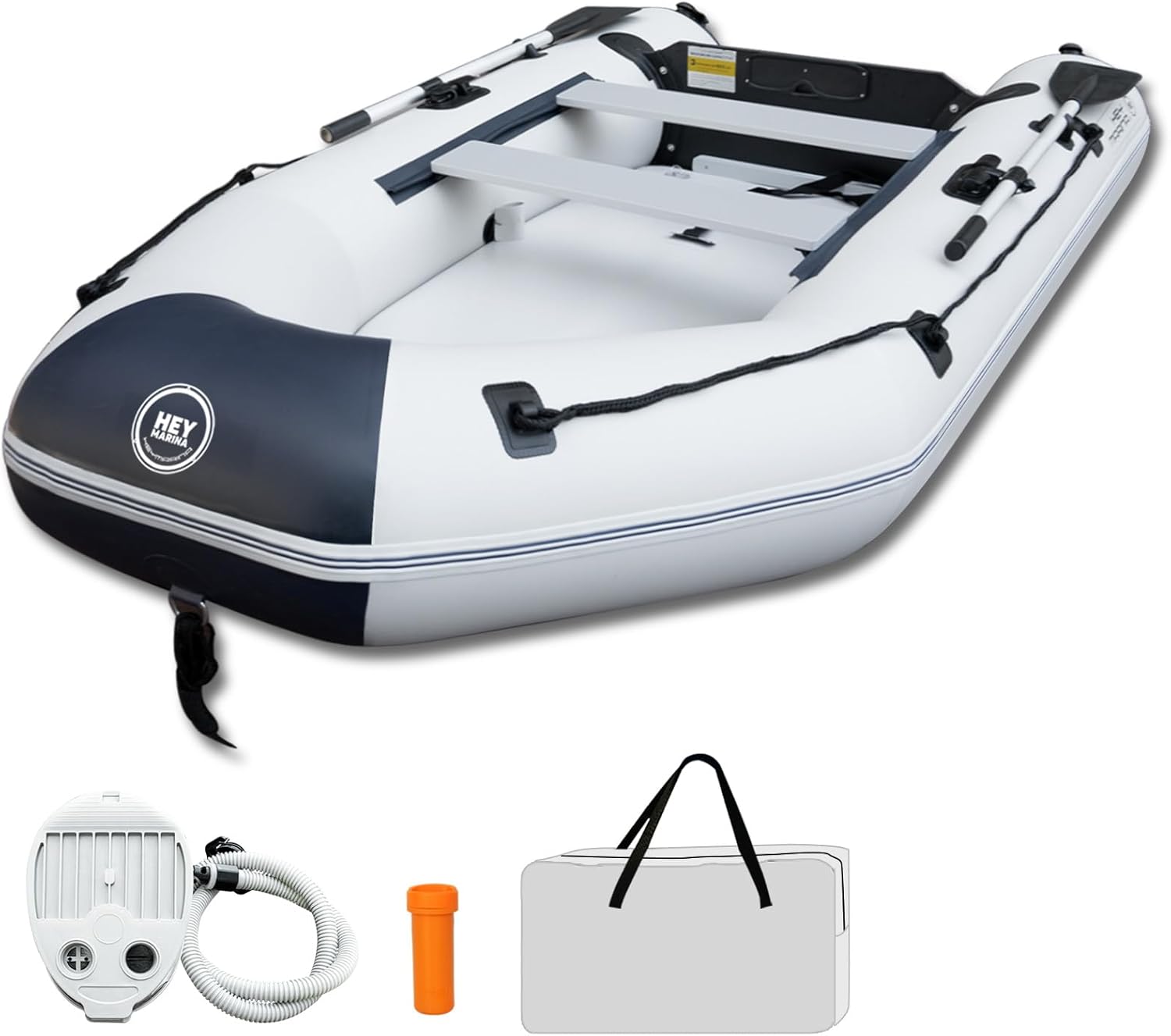
Los factores clave incluyen la calidad de construcción, las revisiones de los usuarios y la relación calidad-precio. Las opciones mejor calificadas como el bote inflable Heyboard de 10 pies para adultos con Drop-ST (4.7★ de 5 comentarios) demuestran cómo se ve la calidad en esta categoría.
¿Cuánto cuestan normalmente los barcos inflables?
Los precios oscilan entre $10 y $999, con la mayoría de las opciones de calidad alrededor de $323. Las opciones económicas de menos de $15 funcionan para uso ocasional, mientras que los modelos Premium de más de $485 ofrecen una mejor durabilidad y características.
¿Qué botes inflables son más populares en este momento?
El bote inflable de 10 pies para adultos con piso de punto de caída está actualmente en la mejor categoría con 4.7★ de 5 reseñas verificadas. Consulte nuestra comparación completa en /Best/Barcos inflables para conocer todas las mejores selecciones.