 PickPundit
📦 Cómo elegir los mejores centros de hogar inteligentes: guía de compra completa

Complete smart home hubs buying guide. Learn what features matter, compare top products, and find the best smart home hubs for your budget.
View Top Picks →Table of Contents
Smart Hubs: The Central Controller That Unifies Fragmented Smart Homes
Smart home devices increasingly require apps, ecosystems, and protocols that don't naturally communicate. Smart hubs solve this fragmentation—providing central control that connects devices across different brands, protocols, and ecosystems.
Understanding hub capabilities prevents purchasing hubs that don't actually solve your specific compatibility challenges.
Why Hubs Exist
Smart home fragmentation creates problems:
Multiple apps: Each brand requiring separate app for control
Incompatible protocols: Zigbee devices not talking to Z-Wave devices
Ecosystem lock-in: Alexa devices not integrating with Google Home devices
Automation limitations: Cross-brand automation impossible without hub
Hubs provide unified control and enable automation across disparate devices.
Protocol Support
Smart hubs communicate via various protocols:
Zigbee: Low-power mesh protocol used by many sensors and lights
Z-Wave: Another mesh protocol with different device ecosystem
WiFi: Standard network connectivity
Thread/Matter: Emerging universal protocol (not yet widely adopted)
Bluetooth: Short-range connectivity for some devices
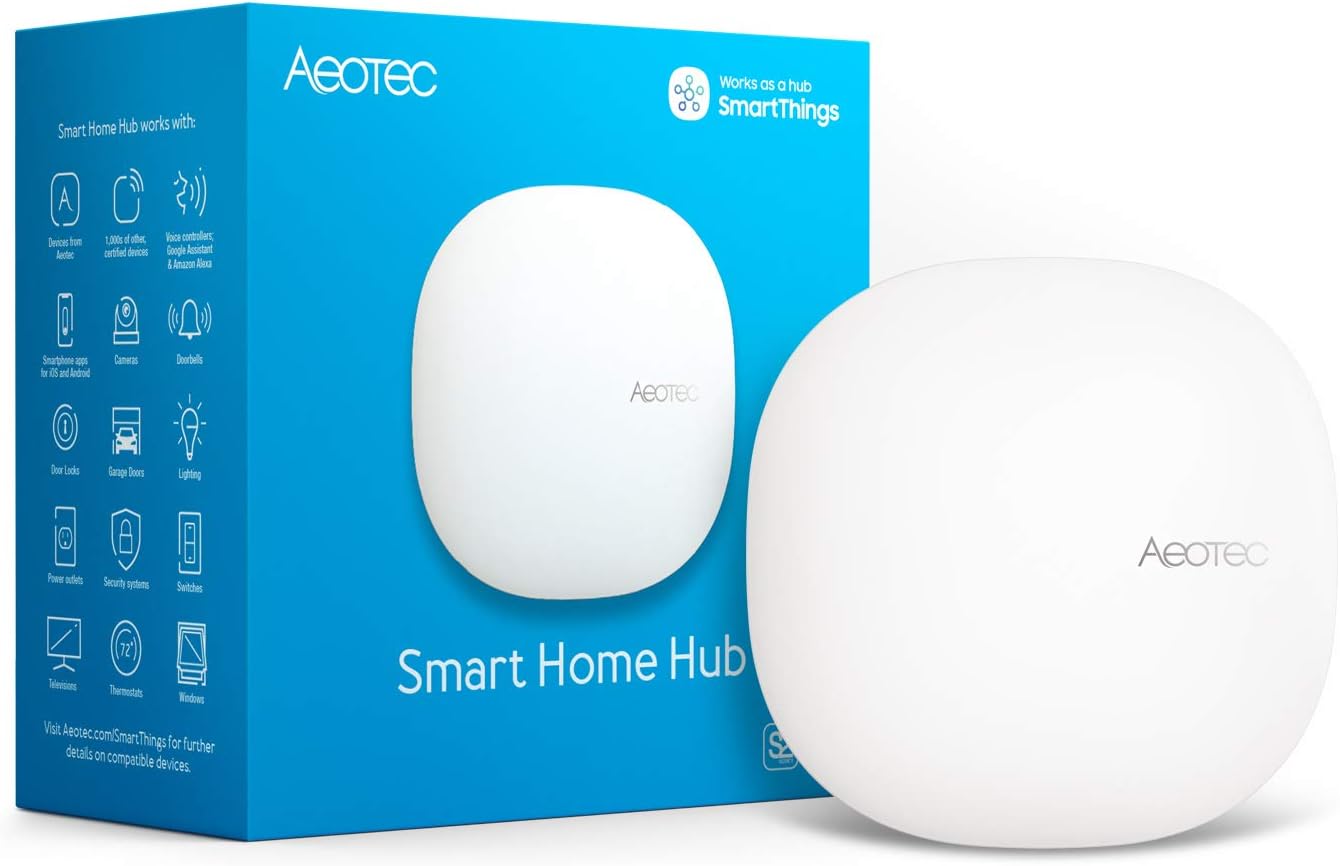
The Aeotec hub at $150 emphasizes Z-Wave. Home Assistant Green at $159 and Homey Pro at $349 support multiple protocols for maximum compatibility.
Local vs Cloud Processing
Hub processing location affects reliability and privacy:
Local processing: Commands processed on hub without internet. Works during internet outages, faster response, better privacy.
Cloud processing: Commands sent to servers for processing. Requires internet, potential latency, privacy concerns.
Home Assistant Green emphasizes local processing—control works without internet dependency. Many mainstream hubs require cloud connectivity.
Automation Capabilities
Hubs enable automation across devices:
If-this-then-that: Device triggers causing actions in other devices
Schedules: Time-based automations
Scenes: Multiple device states activated together
Complex logic: Advanced conditional automations
Automation depth varies significantly. Basic hubs offer simple automations; advanced hubs (Home Assistant, Homey Pro) enable highly complex logic.
Technical Complexity
Hub complexity varies dramatically:
Plug-and-play: Basic setup, limited customization (SmartThings, Aeotec)
Moderate technical: Configuration options, some technical knowledge helpful
Advanced/DIY: Home Assistant requires technical comfort for full utilization
The Home Assistant Green at $159 provides simpler entry to Home Assistant ecosystem but still requires more technical engagement than mainstream alternatives.
Device Compatibility
Hub value depends on compatible device ecosystem:
Native support: Devices work immediately without configuration
Community integrations: User-created connections to additional devices
API access: Enables custom integrations for technical users
Homey Pro at $349 emphasizes broad native compatibility. Home Assistant's community integrations cover exceptional device range but may require configuration effort.
Voice Assistant Integration
Most hubs integrate with voice assistants:
Alexa compatibility: Voice control through Amazon Echo devices
Google Assistant: Voice control through Google speakers/displays
Siri/HomeKit: Apple ecosystem integration
Local voice processing: Some hubs process voice locally for privacy
Hub choice doesn't typically restrict voice assistant choice—most support multiple assistants.
Cost Consideration
Smart hub pricing spans significant range:
Budget ($50-100): Basic functionality, limited protocol support
Mid-range ($150-200): Good protocol support, reasonable automation
Premium ($300+): Maximum capability, broadest compatibility
The Homey Pro at $349 represents premium—extensive protocol support, sophisticated automation, polished interface. Home Assistant Green at $159 provides comparable capability with more technical engagement.
Practical Recommendations
For technical users: Home Assistant provides unmatched flexibility and device support for those willing to learn.
For mainstream users: Aeotec/SmartThings hub at $150 provides accessible smart home control with good compatibility.
For maximum integration: Homey Pro at $349 combines broad compatibility with user-friendly interface.
For existing ecosystem users: Evaluate whether hub adds value or complicates existing working setup.
The key insight: smart hubs solve specific problems—device fragmentation and cross-ecosystem automation. Without those problems, hubs add complexity without value.
Frequently Asked Questions
¿Qué debo buscar al comprar centros inteligentes?
Los factores clave incluyen la calidad de construcción, las revisiones de los usuarios y la relación calidad-precio. Las opciones mejor valoradas como Homey Homey Pro (principios de 2023) | Smart Home Hub para el hogar A (3.7★ de 167 reseñas) demuestran cómo se ve la calidad en esta categoría.
¿Cuánto cuestan los centros inteligentes normalmente?
Los precios oscilan entre $19 y $350, con la mayoría de las opciones de calidad alrededor de $127. Las opciones económicas de menos de $29 funcionan para uso ocasional, mientras que los modelos Premium por encima de $191 ofrecen una mejor durabilidad y características.
¿Qué concentradores inteligentes son más populares en este momento?
El Homey Pro (principios de 2023) | Smart Home Hub para la automatización del hogar está actualmente en la mejor categoría con 3.7★ de 167 reseñas verificadas. Consulte nuestra comparación completa en /Best/Smart-Hubs para conocer todas las mejores selecciones.