 PickPundit
🚴 Kuinka valita parhaat kuntopyörät: Täydellinen ostoopas

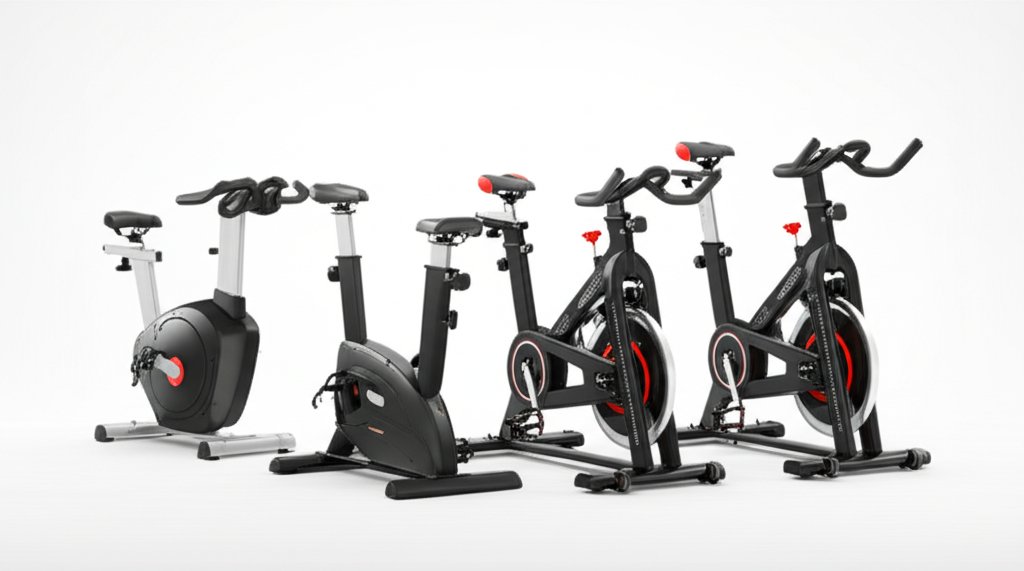
Complete exercise bikes buying guide. Learn what features matter, compare top products, and find the best exercise bikes for your budget.
View Top Picks →Table of Contents
Exercise Bikes: The Peloton Question Nobody Asks Directly
Exercise bike reviews eventually address it: "Is Peloton worth $1,500 plus $44/month subscription versus $300 bike with free YouTube classes?"
The price differential ($1,500 vs $300 for hardware, $528/year vs $0 for classes) represents one of largest cost gaps in fitness equipment. Understanding what that gap buys helps determine fit for individual situations.
The Subscription Class Structure vs Free YouTube
Peloton's value proposition: live classes with leaderboard competition, structured progression programs, instructor personalities creating parasocial motivation, metrics tracking across devices, community features.
Free YouTube classes: No structure, no metrics, no competition, no progression tracking, no community. But also no $44/month ongoing cost ($528/year, $2,640 over 5 years).
One Peloton convert's testimonial: "Tried YouTube classes for 3 months, couldn't maintain consistency. Peloton's live classes with leaderboard keep me accountable. The $44/month is my gym membership that I actually use."
One Peloton returner's counter-experience: "Paid for year subscription, used intensely first 2 months, then sporadically. Realized spending $44/month for 2-3 uses = $15-20 per workout. Canceled subscription, bike became clothes hanger."
The subscription value depends entirely on consistent use. At 20 uses/month, $44 = $2.20/workout (cheaper than gym). At 4 uses/month, $11/workout (expensive). Below 4 uses/month, unsustainable.
The Magnetic vs Friction Resistance Longevity
Magnetic resistance (common in $300-800 bikes): Quiet, long-lasting, precise adjustment, no wearing parts. Maintenance-free operation for years.
Friction resistance (brake pad on flywheel, common under $300): Noisy, pads wear out requiring replacement ($20-40 every 6-12 months with heavy use), less precise resistance adjustment.
For long-term home use, magnetic resistance's maintenance-free operation justifies $100-200 premium over friction systems that require ongoing pad replacements.
The Seat Comfort Long-Ride Reality
Stock bike seats prioritize compact design over comfort. For rides under 30 minutes, discomfort is tolerable. For 45-60 minute rides, seat pain becomes limiting factor preventing workout completion.
Nearly every long-term exercise bike user eventually upgrades seat. Gel seat covers ($20-40) provide cushioning. Complete seat replacements ($40-80) offer better ergonomics. Factor this additional cost into purchase planning.
One veteran user's advice: "Don't judge bike by stock seat - plan to upgrade seat regardless of bike price. Stock seats are universally uncomfortable for rides over 30 minutes."
The Console vs No-Console Minimalism
Budget bikes ($200-400): Basic consoles showing time, distance, calories, resistance level.
Mid-range ($500-800): Backlit displays, Bluetooth connectivity for apps, tablet holders, heart rate monitoring.
Premium ($1000-2000): Integrated screens (Peloton, NordicTrack), streaming classes, automatic resistance adjustment matching class intensity.
The minimalist argument: bike is mechanical resistance device - phone/tablet provides all needed tracking via apps. Paying $500 premium for built-in screen that obsoletes as technology advances (versus $300 bike + $200 tablet that upgrades independently) doesn't make economic sense.
The integrated-screen counter-argument: seamless experience without tablet mounting/positioning, automatic resistance syncing with classes, better screen size and positioning than makeshift tablet holder.
Framework
Budget testing commitment ($200-400): Friction or magnetic resistance, basic console, understanding stock seat will need upgrading, free YouTube classes.
Serious consistent user ($500-800): Magnetic resistance, Bluetooth app connectivity, tablet holder, quiet operation for apartment use.
Subscription class devotee ($1,000-1,500): Peloton or NordicTrack with integrated screen and class subscription, accepting $44/month ongoing cost.
Minimalist approach ($300-400): Quality magnetic resistance bike without fancy console, phone/tablet for tracking, free or cheap class apps.
The honest assessment from multi-year users: the bike that gets used is the one positioned conveniently (living room vs spare bedroom), with comfortable seat (after upgrade), at comfortable resistance level (not too hard early on), with content that maintains interest (whether paid classes or free videos). The $1,500 Peloton gathering dust is worth less than $300 budget bike used consistently.
Frequently Asked Questions
Mitä minun pitäisi ottaa huomioon ostaessani kuntopyöriä?
Keskeisiä tekijöitä ovat rakennuslaatu, käyttäjien arvostelut ja vastine rahalle. Parhaiten arvioidut vaihtoehdot, kuten Merach Merach -kuntopyörä (4,5★ alkaen 1 652 arvostelua), osoittavat, miltä laatu näyttää tässä kategoriassa.
Paljonko kuntopyörät yleensä maksavat?
Hinnat vaihtelevat 70 dollarista 450 dollariin, ja useimmat laatuvaihtoehdot ovat noin 178 dollaria. Alle 105 dollarin budjettivaihtoehdot toimivat satunnaiseen käyttöön, kun taas yli 267 dollarin premium-mallit tarjoavat paremman kestävyyden ja ominaisuudet.
Mitkä kuntopyörät ovat tällä hetkellä suosituimpia?
Merach-kuntopyörä on tällä hetkellä huippuluokan 4,5★ 1 652 vahvistetusta arvostelusta. Tarkista kaikki suosituimmat valinnat osoitteesta /best/exercise-bikes.


