 PickPundit
📦 Comment choisir les meilleurs écouteurs pour enfants : guide d'achat complet

Complete kids headphones buying guide. Learn what features matter, compare top products, and find the best kids headphones for your budget.
View Top Picks →Table of Contents
Kids Headphones: The Volume Limiting Question That Actually Matters
Children's headphones exist primarily to solve one problem: preventing hearing damage from excessive volume. The developing ears of children are particularly vulnerable to noise-induced hearing loss, and children often lack judgment about appropriate listening levels.
Volume limiting is the core feature—everything else is secondary to protecting hearing health.
Understanding Volume Limits
Kids headphones typically specify volume limits:
85 dB limit: Generally accepted as safe for extended listening. Recommended for younger children and general use.
94 dB limit: Louder, suitable for noisy environments (airplanes, classrooms) where background noise competes. Time-limited safe use.
Some headphones offer switchable limits—85 dB for home use, 94 dB for environments requiring more volume to hear content over noise.
The headphones at $8.54 specifying "85/94 dB volume limit" exemplify this adjustable approach.
The Volume Limiting Mechanism
Volume limiting implementations vary:
Passive limiting: Built into the headphone design, not adjustable. Reliable but inflexible.
Cable-based limiting: Limiting circuitry in the cable. Can be bypassed by using different cables.
Electronic limiting: Active circuitry preventing output above threshold. Most reliable but depends on circuitry quality.
Budget headphones may use simpler passive limiting; premium options more sophisticated electronic limiting. The implementation quality matters—poorly limited headphones may not actually protect at their specified levels.
Wired vs Wireless for Children
Children's headphones predominantly use wired connections for practical reasons:
Wired advantages for kids:
- No battery management (headphones always work)
- No pairing complexity
- Lower cost
- Durability (no electronic battery components to fail)
Wireless considerations:
- Battery dies at inconvenient times
- Pairing frustration for children
- Potential loss of volume limiting if battery depletes (on some models)
- Higher cost for equivalent quality
For younger children especially, wired simplicity outweighs wireless convenience. The Amazon Basics earbuds at $10 and similar wired options suit children's use patterns.
Over-Ear vs On-Ear vs Earbuds
Headphone form factors suit different children's needs:
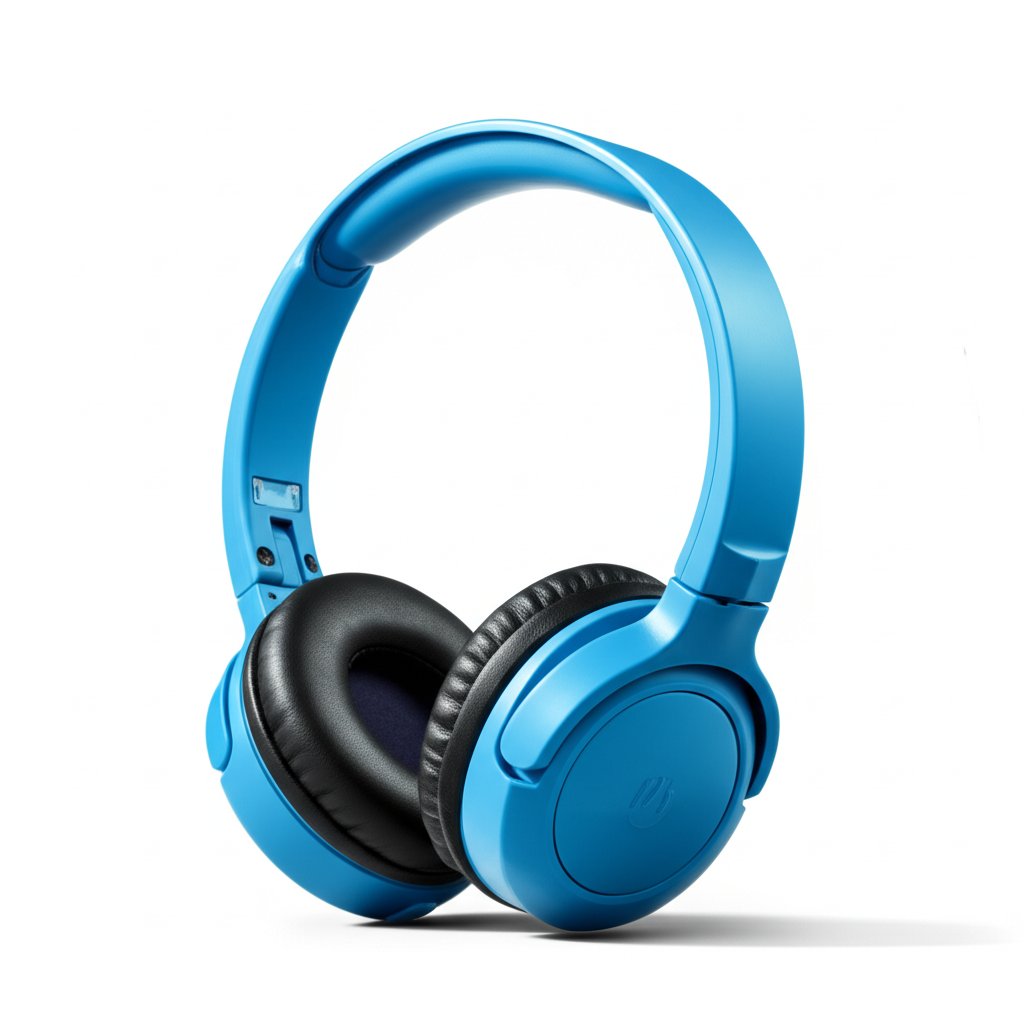
Over-ear: Cups surround ears completely. Better noise isolation, more comfortable for extended wear, but larger and potentially hot.
On-ear: Cups rest on ears. Smaller and lighter, but can create ear fatigue and provide less isolation.
Earbuds: Insert in ear canal. Most portable, but fit challenges with children's smaller ear canals, and potential hearing safety concerns from direct-to-canal sound delivery.
For most children's use (airplane travel, tablet watching, online learning), on-ear or over-ear headphones provide appropriate combination of volume safety, comfort, and durability.
Build Quality and Durability
Children stress headphones—drops, tangles, bends, and general rough treatment. Durability features matter:
Flexible headbands: Withstand bending without breaking
Replaceable ear pads: Extend headphone life when pads wear
Sturdy cables: Reinforced connections at stress points
Simple construction: Fewer moving parts means fewer failure points
The noot K11 at $13 emphasizes "foldable" and "tangle-free" designs addressing real children's use patterns.
Budget headphones may sacrifice durability for price. For children who go through headphones quickly, cheaper replaceable headphones may make more economic sense than premium durable options.
Sizing Considerations
Children's heads vary significantly by age, and adult headphones often don't fit properly:
- Too loose to stay positioned
- Too heavy causing neck strain
- Headband pressure uncomfortable on smaller heads
Purpose-built children's headphones address these fit issues with smaller cups, shorter adjustable headbands, and lighter weight.
Adjustable headbands that extend significantly can grow with children, extending usable life as heads grow.
Microphone Inclusion
Many children's headphones include microphones for:
- Online learning (Zoom, Google Meet)
- Gaming communication
- Phone calls (if using with phones)
The pandemic normalized children participating in video calls, making microphone capability increasingly standard. Headphones without microphones may limit functionality for school-required online activities.
Sharing and Daisy-Chaining
Some children's headphones include audio-out ports enabling:
- Sharing audio with siblings (multiple headphones from single source)
- Daisy-chaining headphones together
This feature suits families with multiple children watching shared content on road trips or at home. Not all children's headphones include this capability.
Air Conduction Headphones
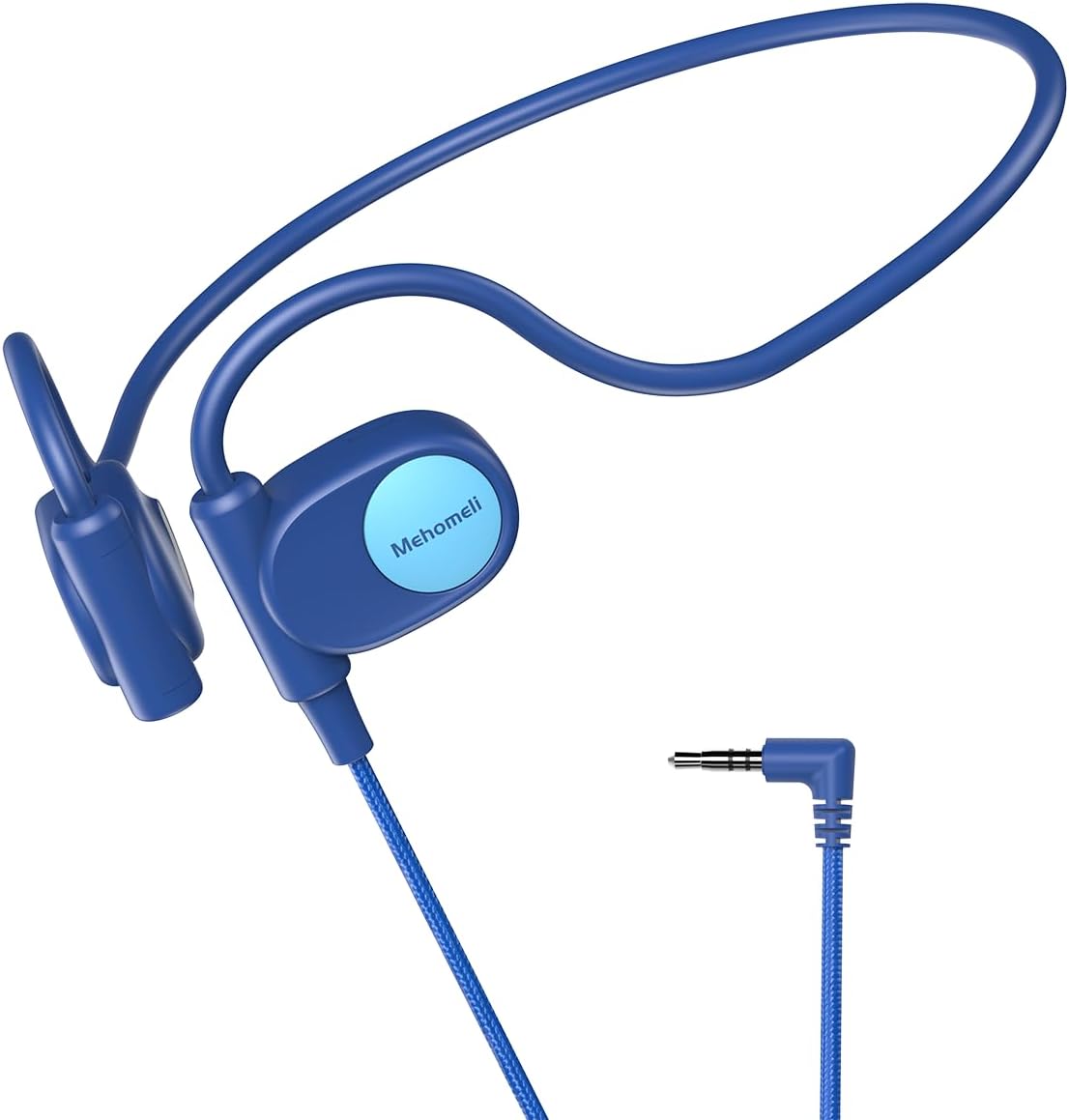
A newer category—air conduction headphones (like the $8.54 option)—sit near but not over the ear canal, allowing ambient sound awareness while still delivering audio:
Advantages:
- Situational awareness (children can hear parents, surroundings)
- Potentially reduced ear canal pressure and infection risk
- Comfort for children who dislike in-ear or on-ear pressure
Disadvantages:
- Sound leakage (others hear what child listens to)
- Less effective in noisy environments
- Different listening experience
For home use where awareness matters and privacy doesn't, air conduction offers interesting alternative to traditional designs.
Practical Recommendations
For young children (3-7): Simple wired headphones with reliable 85 dB limiting. Durability and fit matter more than features.
For school-age children (8-12): Volume-limited headphones with microphones for online learning. Consider durability for daily transport.
For travel use: Volume-limited with 94 dB option for airplane environments. Foldable design for packing.
For shared use: Headphones with sharing ports serve multi-child families well.
For maximum safety prioritization: Verified volume-limiting from reputable brands. Budget "volume limited" claims may not be accurate.
The key insight: children's headphones protect hearing first. Features, aesthetics, and brand matter far less than verified volume limiting and appropriate fit.
Frequently Asked Questions
Que dois-je rechercher lors de l'achat d'un casque pour enfants ?
Les facteurs clés comprennent la qualité de construction, les avis des utilisateurs et le rapport qualité-prix. Les options les mieux notées comme les écouteurs Mehomeli Kid pour l'école (4,5★ à partir de 439 avis) montrent à quoi ressemble la qualité dans cette catégorie.
Combien coûtent généralement les écouteurs pour enfants ?
Les prix varient de 7 $ à 99 $, avec la plupart des options de qualité autour de 18 $. Les options économiques inférieures à 10 $ fonctionnent pour une utilisation occasionnelle, tandis que les modèles premium de plus de 27 $ offrent une meilleure durabilité et des fonctionnalités.
Quels écouteurs pour enfants sont les plus populaires en ce moment ?
Le casque Kid pour l'école est actuellement le mieux noté avec 4,5★ à partir de 439 avis vérifiés. Consultez notre comparaison complète sur /best/enfants-casque pour tous les meilleurs choix.