 PickPundit
🔌 Comment choisir les meilleurs parasurtenseurs : guide d'achat complet

Complete surge protectors buying guide. Learn what features matter, compare top products, and find the best surge protectors for your budget.
View Top Picks →Table of Contents
Surge Protectors: What They Actually Protect and When They Fail
Surge protectors are insurance policies for electronics—invisible protection that matters only when something goes wrong. Understanding what surge protection actually means, how it degrades, and what it can't protect against helps make informed purchasing decisions.
Surge Protection vs Power Strips
Critical distinction:
Power strips: Multiple outlets, no protection. Just outlet multiplication.
Surge protectors: Include components that divert excess voltage. Actual protection.
Visual similarity: Both look alike. Check for joule rating or surge protection claims.
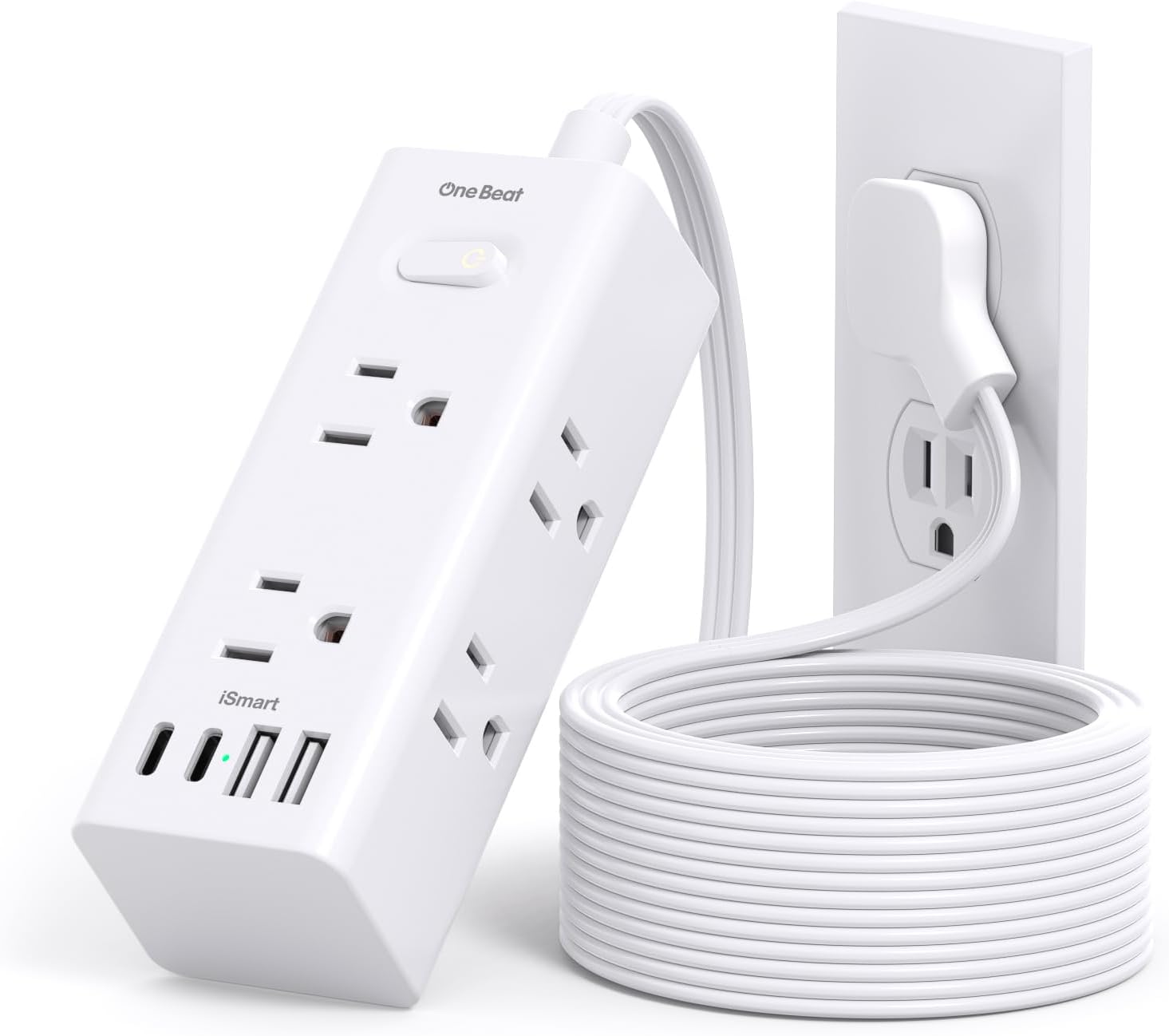
The listings here: The 10ft extension cord with multiple outlets and 6ft surge protector represent different protection levels.
How Surge Protection Works
The protection mechanism:
MOV (Metal Oxide Varistor): Main protective component in most units. Diverts excess voltage to ground.
Clamping voltage: Voltage level at which protection activates. Lower is better—330V is good, 400V adequate.
Response time: How quickly protection activates. Nanoseconds matter. Under 1 nanosecond is ideal.
Sacrifice design: MOVs degrade with each surge absorbed. They're sacrificial components.
Joule Ratings Explained
The capacity measurement:
Joules: Energy absorption capacity before failure. Higher generally means longer protection life.
Low (under 1000J): Basic protection, limited lifespan.
Medium (1000-2000J): Adequate for most home electronics.
High (2000+ J): Better for expensive equipment, areas with frequent surges.
Reality check: Joule ratings are cumulative—each surge reduces remaining capacity.
What Surges Actually Are
Understanding the threat:
Lightning strikes: The dramatic threat, but relatively rare to hit your specific line.
Utility switching: Power grid operations cause small surges. Common and cumulative.
Large appliances: HVAC, refrigerators, motors create surges when cycling. In your own home.
Construction: Nearby power tool use can cause voltage fluctuations.
Most surge damage: Cumulative small surges, not dramatic single events.
Degradation and Replacement
Surge protectors don't last forever:
No visible wear: Protection degrades invisibly. Old units may provide zero protection.
Indicator lights: Many units include "protected" LEDs that extinguish when protection fails.
Replacement timing: Replace after known surge events, after 2-3 years in surge-prone areas, or when indicator fails.
Insurance consideration: Some surge protectors include connected equipment warranties—check terms.
Outlet Configuration
The 8-outlet and 10-outlet options differ in practical ways:
Outlet count: More outlets for complex setups. Entertainment centers often need 8+.
Spacing: Widely-spaced outlets accommodate bulky adapters. Tightly-spaced outlets block neighbors.
Orientation: Perpendicular outlets versus parallel affects adapter fit.
USB ports: Integrated USB charging convenient but often lower amperage.
Cord Length Considerations
Cord length affects usability and safety:
Short cords (3-4 ft): Limits placement options but reduces voltage drop.
Long cords (6-10 ft): More placement flexibility. The 10ft option reaches further.
Daisy chaining danger: Never plug surge protectors into each other. Increases fire risk.
Extension cord combinations: Avoid long extension cords to surge protectors—affects protection.
Beyond Basic Surge Protection
Enhanced protection features:
Coaxial protection: Protects cable/satellite connections. Surges travel coax lines too.
Phone/ethernet protection: Network and phone line surge paths.
Noise filtering: EMI/RFI filtering improves signal quality for sensitive equipment.
Automatic shutdown: Some units disconnect when protection depletes.
What Surge Protectors Can't Do
Important limitations:
Direct lightning strikes: No consumer surge protector survives direct strikes. They mitigate nearby strikes.
Prolonged overvoltage: Surges are brief. Extended high voltage requires different protection.
Power quality: Surges protectors don't fix brownouts, sags, or frequency issues.
Guarantee: "Connected equipment warranty" claims have significant fine print and exclusions.
Whole-House Protection
The better approach for comprehensive protection:
Panel-mounted protectors: Installed at electrical panel, protect entire home.
Two-stage protection: Panel protection plus point-of-use protection for sensitive equipment.
Professional installation: Whole-house units require electrician installation.
Cost comparison: $200-500 installed versus dozens of individual protectors.
UPS vs Surge Protector
When battery backup matters:
Surge protectors: Voltage spike protection only. Power outage means shutdown.
UPS (Uninterruptible Power Supply): Battery backup plus surge protection. Maintains power during outages.
Use cases: Computers need UPS to prevent data loss during outages. TVs and basic electronics just need surge protection.
Practical Recommendations
For basic electronics (TV, router, etc.): Mid-range surge protector, 1000+ joules, adequate outlets.
For computers: UPS preferred for data protection, or high-joule surge protector minimum.
For whole-home protection: Panel-mounted surge protector plus point-of-use for sensitive equipment.
For replacement: Every 2-3 years in surge-prone areas, after known events, or when indicator fails.
The key insight: surge protection degrades invisibly over time. A 5-year-old surge protector may provide zero protection while appearing functional. Regular replacement matters more than buying the highest-joule unit once.
Frequently Asked Questions
Que dois-je rechercher lors de l'achat de parasurtenseurs ?
Les facteurs clés comprennent la qualité de construction, les avis des utilisateurs et le rapport qualité-prix. Les options les mieux notées comme le cordon d'extension Superdanny 10ft avec plusieurs prises (4,8★ de 2 352 avis) démontrent à quoi ressemble la qualité dans cette catégorie.
Combien coûtent généralement les parafoudres ?
Les prix varient de 9 $ à 26 $, avec la plupart des options de qualité autour de 13 $. Les options économiques inférieures à 13 $ fonctionnent pour une utilisation occasionnelle, tandis que les modèles premium de plus de 20 $ offrent une meilleure durabilité et des fonctionnalités.
Quels parasurtenseurs sont les plus populaires en ce moment ?
La rallonge de 10 pieds avec plusieurs prises est actuellement la mieux notée avec 4,8★ à partir de 2 352 avis vérifiés. Consultez notre comparaison complète sur /Best/Surge-Protectors pour tous les meilleurs choix.
⚖️ Quick Comparison
| Product | Price | Rating | Key Feature |
|---|---|---|---|
|
#1
|
$12.99 | 12 IN 1 Surge Protector Power Strip Features 8 AC outlets, 2 USB-C port, and 2 U... | |
| $9.99 | 8 Outlets and 4 USB Ports - Power up to 12 devices simultaneously with 8 AC outl... | ||
| $12.99 | Ultra Flat Plug - Slim design allows the plug to fit close to walls and behind f... |