 PickPundit
📦 How to Choose the Best Egg Cookers: Complete Buying Guide

Complete egg cookers buying guide. Learn what features matter, compare top products, and find the best egg cookers for your budget.
View Top Picks →Table of Contents
Egg Cookers: The Appliance That Shouldn't Exist But Actually Works
Electric egg cookers occupy peculiar kitchen territory: a single-purpose appliance for a task easily accomplished with a pot of water. Yet these devices sell remarkably well, and user satisfaction runs high. Understanding why reveals something about kitchen appliance value that extends beyond egg cookery.
The Case Against Egg Cookers
The skeptic's case is straightforward: boiling eggs requires a pot, water, and heat—equipment every kitchen already contains. An egg cooker adds cost, storage demand, and another appliance to maintain for a task requiring zero specialized equipment.
This argument is technically correct and completely misses the point.
The Case For Egg Cookers
Egg cookers succeed because they remove variables from a process with frustrating variability. Stovetop egg boiling involves judgment calls: How much water? When is "boiling"? How long for desired doneness? When to start timing? The results vary with altitude, stove characteristics, pot size, and starting water temperature.
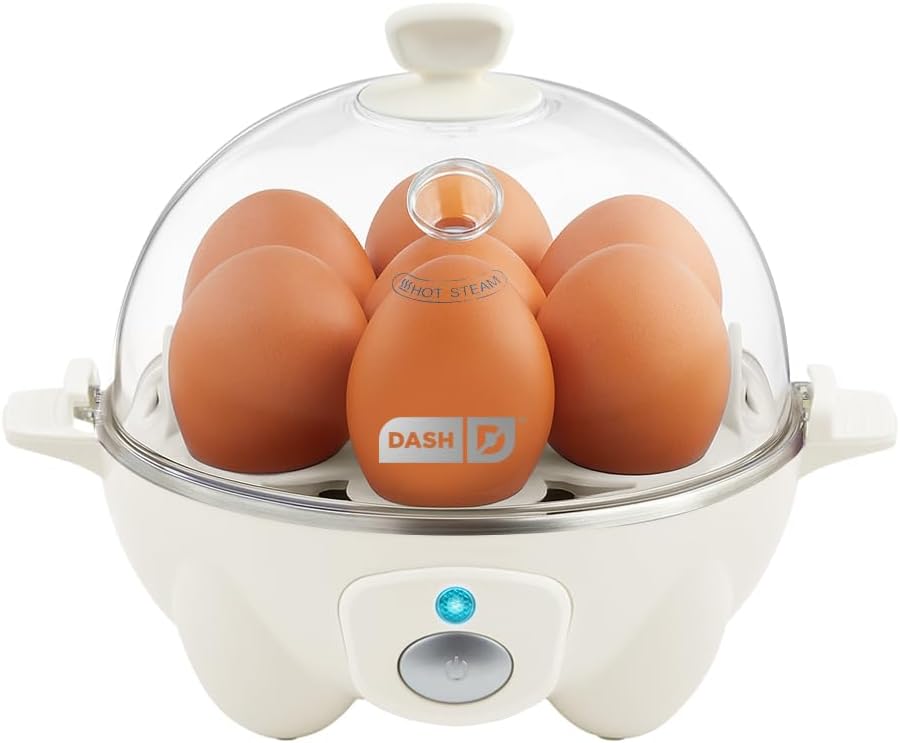
Electric egg cookers standardize the process. Add measured water (measured by included cup with markings for soft/medium/hard), place eggs, cover, press button. The cooker heats water to steam, cooks eggs through steam contact, and shuts off automatically when water evaporates. The water measurement determines cook time—more water means longer steaming and harder yolks.
This consistency is the entire value proposition. Users report achieving preferred doneness reliably after determining correct water level once, eliminating the repeated experimentation of stovetop methods.
The Steam Cooking Mechanism
Egg cookers don't boil eggs in the traditional sense—they steam them. The heating element boils a small amount of water, and the resulting steam cooks eggs in an enclosed chamber.
Steam cooking offers advantages: gentler heat distribution reduces cracking, and the enclosed environment maintains consistent temperature. The stovetop equivalent—steaming eggs over boiling water in a covered pot—works similarly but requires monitoring to prevent boiling dry.
The automatic shutoff when water evaporates is genuinely clever engineering. No timers needed; the physics of water evaporation determines cook time. This is why the water measurement (not clock time) determines doneness—you're specifying how long the steaming process runs before water exhausts.
Capacity Considerations
Egg cooker capacity ranges from 6-14 eggs, with 7-egg models most common. Capacity claims sometimes include poaching or omelet accessories, meaning "7-egg capacity" may mean 7 boiled OR 3 poached OR 1 omelet—not simultaneous.
For typical household use, 6-7 egg capacity handles most needs. Larger families or meal-prep focused users may prefer 12-14 egg capacity, though larger cookers require more counter space and storage volume.
The Dash Rapid at $20 and Hamilton Beach at $20 both offer 6-7 egg capacity in compact footprints—reasonable for most users.
Beyond Boiled Eggs
Most egg cookers include accessories for poaching and sometimes omelets or steamed vegetables. The poaching trays—small cups for cracking eggs into—produce results distinct from traditional poached eggs but acceptable for eggs Benedict or similar applications.
The honest assessment: poaching accessories produce "steamed eggs in a cup" rather than true poached eggs. If you care about poaching technique (swirling water, vinegar, careful temperature control), the cooker approach disappoints. If you want runny-yolked eggs on toast without precision technique, the accessories deliver adequately.
Omelet trays on larger cookers create steam-cooked folded eggs. These work for quick protein preparation but produce different texture than pan-fried omelets. Consider these as "bonus features" rather than primary functionality.
Peeling Reality
Many egg cooker reviews emphasize "easy-peel" results, and there's science here: steam cooking may reduce the bond between shell membrane and egg white, easing shell removal.
However, peelability depends significantly on egg freshness (older eggs peel easier regardless of cooking method), and individual results vary. Steam cooking probably helps peeling difficulty but doesn't guarantee perfect peeling every time. Buyers expecting revolutionary peeling should moderate expectations.
The ice bath shock (immediately cooling eggs after cooking) matters more for peeling than cooking method. Egg cookers that dump eggs directly into an included tray without cooling still produce peeling difficulty.
Price Tier Analysis
The $14-20 tier (Elite Gourmet, Dash Rapid, Hamilton Beach) provides the core functionality most users need: automatic cooking, reasonable capacity, basic accessories. These units accomplish the primary value proposition—consistent automated egg cooking—without premium pricing.
The $25-35 tier (Dash Deluxe, larger Hamilton Beach models) adds capacity, expanded accessories, or features like auto-off buzzers. The incremental value depends on whether you need specific additions.
Above $35, egg cookers increasingly become specialty items with features (double-decker capacity, digital controls) that few users require. The diminishing returns curve is steep—a $20 cooker accomplishes 90% of what a $50 cooker achieves.
The Single-Purpose Appliance Debate
Egg cookers crystallize the single-purpose appliance debate. Kitchen space is finite; every specialized appliance displaces potential storage for other items. Is dedicated egg cooking worth the space commitment?
The honest answer depends on usage patterns. Users who eat eggs regularly (4+ times weekly) and value consistency find egg cookers worthwhile. The space commitment trades for eliminated variability and freed attention during cooking.
Users who eat eggs occasionally gain less value. The cooker sits unused most days, occupying space that might better serve other purposes.
Durability and Longevity
Budget egg cookers aren't built for decade-long service. The heating elements, thermostats, and plastic components use economical materials with corresponding lifespan limitations. Expect 2-4 years of regular use from sub-$25 cookers.
This disposability is acceptable given pricing. A $15 cooker used 200 times costs under $0.08 per use—trivial compared to egg costs. When the heating element eventually fails, replacement costs little more than repair would.
Premium cookers with better construction might last longer, but the additional investment rarely returns through extended lifespan. The eggs don't cook better in expensive cookers; they just cook in more durable housings.
Practical Recommendations
For regular egg eaters: Dash Rapid or Hamilton Beach at $20 provides the core functionality at appropriate investment. The branded options offer slightly better build quality than generic alternatives at similar prices.
For large families or meal preppers: 12-14 egg capacity models justify modest premiums through batch cooking capability.
For occasional egg consumption: Consider whether the counter/storage space commitment justifies the consistency benefit. A pot of water works fine for occasional eggs.
For skeptics: The egg cooker is one single-purpose appliance that actually delivers on its premise. The consistency improvement is genuine, and the price point is low enough that experimentation costs little.
The egg cooker's existence proves that convenience and consistency have value beyond raw capability. You don't need one—but you might find you want one after understanding what it actually provides.
Frequently Asked Questions
What should I look for when buying egg cookers?
Key factors include build quality, user reviews, and value for money. Top-rated options like the Hamilton Beach Hamilton Beach 3-in-1 Electric Egg Cooker for Hard (4.4★ from 2,579 reviews) demonstrate what quality looks like in this category.
How much do egg cookers typically cost?
Prices range from $12 to $49, with most quality options around $24. Budget options under $18 work for occasional use, while premium models over $36 offer better durability and features.
Which egg cookers are most popular right now?
The Hamilton Beach 3-in-1 Electric Egg Cooker for Hard Boiled Eg is currently top-rated with 4.4★ from 2,579 verified reviews. Check our full comparison at /best/egg-cookers for all top picks.