 PickPundit
🔦 How to Choose the Best Flashlights: Complete Buying Guide

Complete flashlights buying guide. Learn what features matter, compare top products, and find the best flashlights for your budget.
View Top Picks →Table of Contents
Flashlights: The Lumen Race and Why Brightness Rarely Matters Most
Flashlight marketing obsesses over lumens—2000 lumens! 5000 lumens!—creating the impression that more brightness is always better. This framing misleads because most flashlight use involves close-to-medium range illumination where excessive brightness creates glare problems rather than visibility improvements.
Understanding flashlight selection requires considering use case, beam characteristics, and build quality rather than chasing maximum lumen counts.
The Lumen Reality
Lumens measure total light output—a useful specification but incomplete for flashlight comparison. A 2000-lumen flashlight isn't "twice as good" as a 1000-lumen light; the relationship between perceived brightness and lumen count isn't linear.
More importantly, lumens don't describe how light distributes. A 500-lumen flashlight with tight beam focus may throw light farther than a 1000-lumen light with wide flood beam. The "better" choice depends entirely on intended use.
For most household and general use, 200-500 lumens provides ample illumination. Walking in darkness, power outage navigation, and general-purpose lighting rarely benefit from exceeding this range. Higher lumens suit specific applications—search and rescue, security patrol, outdoor exploration—not general use.
EDC (Everyday Carry) Considerations
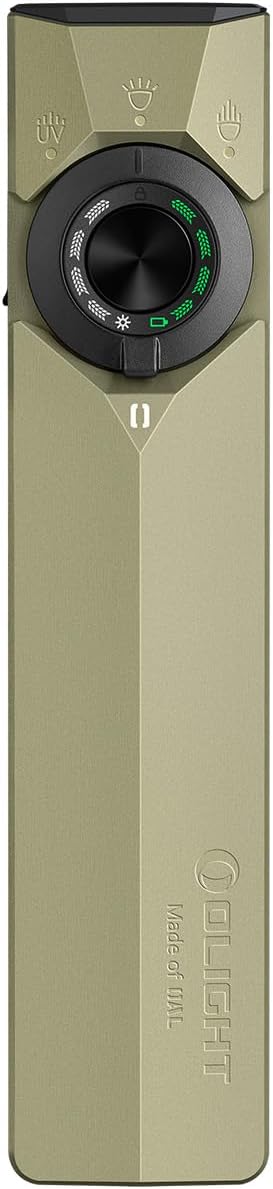
The everyday carry flashlight category (OLIGHT ArkPro and similar) prioritizes portability and convenience alongside performance. These compact lights fit pockets or clip to bags, always available when needed.
EDC design trade-offs include:
- Smaller batteries limiting runtime and maximum output
- Compact size limiting heat dissipation at high outputs
- Pocket-friendly form factors limiting optical throw capability
The OLIGHT ArkPro's flat design represents modern EDC optimization—credit-card profile fits pockets better than traditional cylindrical lights while maintaining useful output. The $100-130 price reflects premium construction, rechargeable convenience, and sophisticated electronics.
For users who will actually carry a light daily, EDC design justifies premium pricing. For lights that live in junk drawers or glove compartments, traditional form factors at lower prices serve equally well.
Rechargeable vs Disposable Batteries
The rechargeable flashlight transition has accelerated, with built-in USB charging becoming standard in quality lights. The convenience advantages are obvious—no buying batteries, no finding dead batteries when you need the light.
The trade-offs deserve acknowledgment:
- Rechargeable lights with dead batteries are useless until charged; disposable-battery lights accept fresh batteries immediately
- Long-term storage may drain built-in batteries; stored disposable batteries retain charge longer
- Built-in batteries eventually degrade (typically 3-5 years), potentially obsoleting the entire flashlight
For regular use, rechargeable makes sense—the convenience far outweighs edge cases. For emergency storage (earthquake kits, car emergency equipment), disposable-battery lights or lights with replaceable rechargeable batteries may prove more reliable.
The budget rechargeable 2-pack at $24 provides reasonable value—USB-C charging, claimed high lumens, and dual-light convenience for backup or multi-location placement.
Beam Characteristics
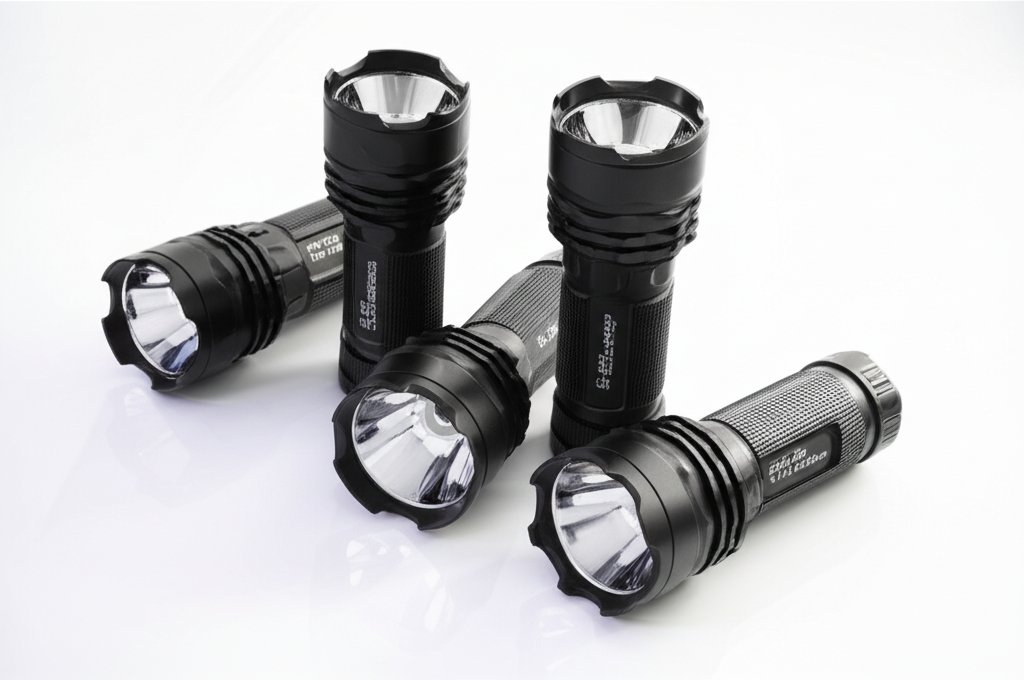
Flashlight beam design varies between focused throw (tight beam reaching long distances) and wide flood (diffuse light covering broader area nearby). Many lights include zoom or adjustable focus to transition between modes.
Throw-focused lights suit outdoor exploration, searching, and situations requiring seeing distant objects clearly. The tight beam concentrates lumens into smaller area, maximizing visible distance.
Flood-focused lights suit walking, working close at hand, and general illumination. The wide beam covers peripheral vision, reducing constant aiming requirements.
Adjustable focus seems ideal—both capabilities in one light—but introduces mechanical complexity (zoom mechanisms can fail) and optical compromise (adjustable designs rarely equal fixed-focus quality at either extreme).
For most users, moderate flood with some throw capability suits typical needs. Pure throw lights are specialty tools for specific applications.
Build Quality Indicators
Quality flashlight construction includes:
Aluminum body with anodized finish: Provides durability, heat dissipation, and corrosion resistance. Plastic bodies may save weight but sacrifice durability and thermal management.
O-ring sealing: Water and dust resistance rated as IPX numbers (IPX4 splash-resistant, IPX7 submersible). Unsealed lights fail in wet conditions.
Quality LED emitters: CREE and other brand-name emitters provide consistent color and efficiency. Generic LED quality varies widely.
Intelligent electronics: Proper drivers regulate power delivery, protect batteries, and manage heat through output reduction when needed.
Budget flashlights ($15-25) may compromise any or all of these elements. The lights work initially but may fail sooner, provide worse color quality, or lack the durability for demanding use.
The OLIGHT Premium
OLIGHT dominates the premium EDC flashlight segment through consistent quality, innovative form factors, and ecosystem features (magnetic charging, multi-light charging docks). The $100+ prices seem steep compared to $20 alternatives.
The premium buys:
- Refined electronics with consistent performance
- Durable construction surviving daily carry abuse
- Premium LED emitters with good color rendering
- Convenient charging systems
- Company backing with warranty support
Whether this premium provides value depends on use intensity. Daily carriers who rely on their flashlight justify premium investment. Occasional users—the light lives in a drawer until power outages—may find budget options adequate.
Magnetic and Multi-Function Features
Modern flashlights increasingly add features beyond illumination:
- Magnetic bases for hands-free positioning
- Red/green auxiliary lights for night vision preservation
- SOS and strobe modes for signaling
- Power bank capability (using flashlight battery to charge phones)
Magnetic bases (like the magnetic flashlight at $18) provide genuine utility for automotive work, home repairs, and any application requiring hands-free positioning.
Colored auxiliary lights suit specialized applications—red light for astronomy, green for hunting—but add rarely-used complexity for general users.
Emergency modes (SOS, strobe) provide marginal emergency-preparedness value for most users but cost little to include.
Runtime Considerations
Lumen claims typically represent maximum output; runtime claims represent minimum output. A flashlight advertising "5000 lumens" and "8 hours runtime" provides those figures at opposite extremes—maximum brightness might last 30 minutes while 8-hour runtime occurs at 50 lumens.
For actual use, medium modes providing reasonable brightness with reasonable runtime matter most. Few situations require maximum brightness for extended periods; most use involves moderate output for whatever duration the task requires.
Examine runtime specifications at the mode you'll actually use rather than the extremes that dominate marketing.
Practical Recommendations
For general home use: A budget rechargeable flashlight ($15-25) with 300-500 lumens and USB charging serves most needs without significant investment.
For EDC daily carry: Premium compact lights ($75-130) like OLIGHT models justify their pricing through pocket-friendly design and daily-use durability.
For outdoor/tactical use: Purpose-built lights with appropriate throw, weather resistance, and output levels suit specific applications. Generic "outdoor" flashlights may underperform dedicated designs.
For emergency preparedness: Consider both rechargeable lights for regular use and disposable-battery backup lights for long-term storage. Diversification prevents single-point failure.
For automotive: Magnetic-base lights provide hands-free utility that standard flashlights lack. Consider this feature for car-kit placement.
Frequently Asked Questions
What should I look for when buying flashlights?
Key factors include build quality, user reviews, and value for money. Top-rated options like the TrixHub Rechargeable Flashlights 2 Pack (4.6★ from 2,234 reviews) demonstrate what quality looks like in this category.
How much do flashlights typically cost?
Prices range from $7 to $130, with most quality options around $34. Budget options under $11 work for occasional use, while premium models over $51 offer better durability and features.
Which flashlights are most popular right now?
The Rechargeable Flashlights 2 Pack is currently top-rated with 4.6★ from 2,234 verified reviews. Check our full comparison at /best/flashlights for all top picks.