 PickPundit
📦 How to Choose the Best Foosball Tables: Complete Buying Guide

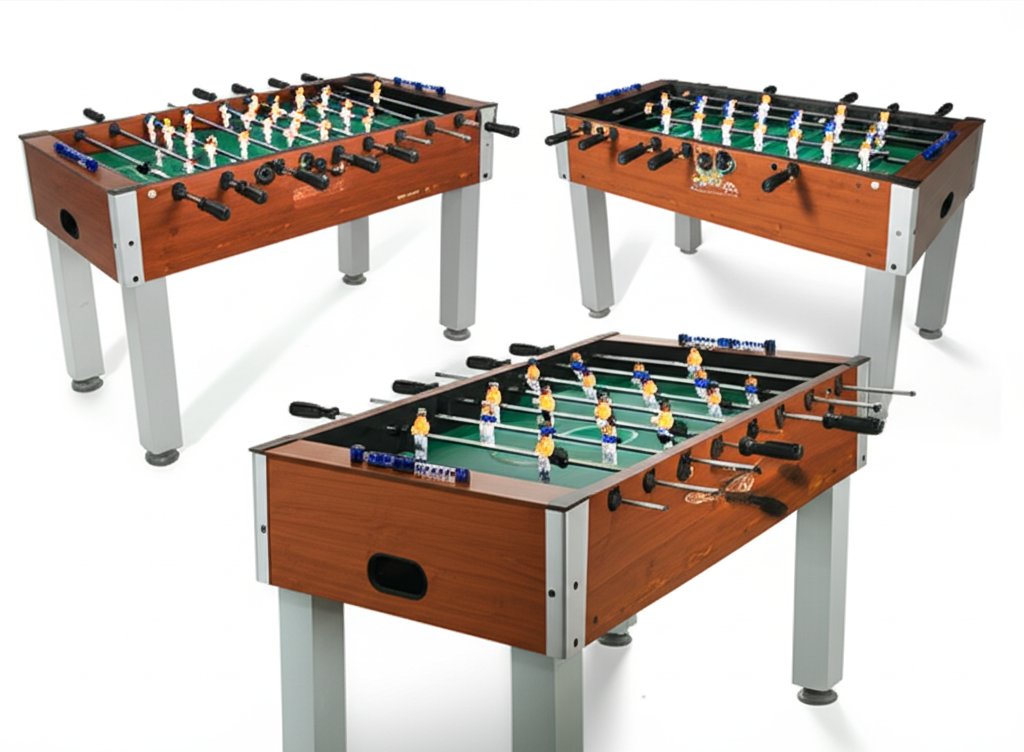
Complete foosball tables buying guide. Learn what features matter, compare top products, and find the best foosball tables for your budget.
View Top Picks →Table of Contents
Foosball Tables: Rod Types, Table Weight, and Tournament vs Recreational Play
Foosball tables range from lightweight recreation to tournament-grade precision. Understanding construction differences helps select tables matching intended use.
Table Weight Categories
Lightweight (under 100 lbs): portable, affordable, limited durability.
Mid-weight (100-200 lbs): good home tables with solid play.
Heavy (200-350 lbs): tournament-quality, maximum stability.
Weight indicates overall construction quality.
Cabinet Construction
MDF cabinets are standard—quality varies with thickness and finish.
Solid wood cabinets are premium but uncommon.
Metal cabinets suit commercial/outdoor use.
Leg levelers accommodate uneven floors.
Rod Types: Hollow vs Solid
Hollow rods are lighter, faster, and reduce arm fatigue.
Solid rods are heavier, more durable, and better for passing techniques.
One-piece rods are standard; telescoping rods are safer for children.
Telescoping Rods
Rods don't protrude from opposite side—safety benefit.
Heavier and slower than standard rods.
Best for households with young children.
Bearing Quality
Smooth bearings enable fast, precise rod movement.
Cheap bearings stick and slow play.
Ball bearings outperform bushings for smooth action.
Playing Surface
Smooth, consistent surfaces enable predictable ball behavior.
Textured surfaces slow ball and change game character.
Glass playing surfaces are premium—smooth, visible, durable.
Goal Design
Three-man goals are standard for most play.
One-man goalies suit specific rule variants.
Ramps behind goals return balls to play automatically.
Figure Design
Figure foot shape affects ball control and passing.
Crosshatched feet grip ball; smooth feet slide.
Tournament figures balance control and power.
Ball Types
Cork balls are traditional and quiet.
Smooth urethane balls are fast and consistent.
Textured balls offer more control but slower play.
Table Leveling
Leg levelers are essential for fair play.
Quality tables have robust adjustment mechanisms.
Uneven play surfaces create biased games.
Tournament vs Recreational
Tournament tables prioritize consistent play and competition standards.
Recreational tables prioritize durability and casual fun.
Unless competing, recreational features often suffice.
Assembly and Setup
Large tables ship partially assembled.
Full assembly may require multiple people and hours.
Professional assembly is sometimes available.
Practical Recommendations
For casual home play, mid-weight tables ($300-600) with hollow rods provide good play experience.
For families with young children, telescoping rod models ($200-500) improve safety.
For serious play, tournament-weight tables ($800-2000+) provide competition-quality experience.
Frequently Asked Questions
What should I look for when buying foosball tables?
Key factors include build quality, user reviews, and value for money. Top-rated options like the Giantex Giantex 54 Inch Foosball Table - Wood Football Tab (4.2★ from 13 reviews) demonstrate what quality looks like in this category.
How much do foosball tables typically cost?
Prices range from $61 to $650, with most quality options around $255. Budget options under $92 work for occasional use, while premium models over $383 offer better durability and features.
Which foosball tables are most popular right now?
The Giantex 54 Inch Foosball Table - Wood Football Table Competi is currently top-rated with 4.2★ from 13 verified reviews. Check our full comparison at /best/foosball-tables for all top picks.


