 PickPundit

Complete bike racks buying guide. Learn what features matter, compare top products, and find the best bike racks for your budget.
View Top Picks →Table of Contents
Bike Racks: The "It Scratched My Paint" Learning Experience
The car roof rack installation reviews follow predictable pattern: initial excitement about new rack, followed by discovery of paint scratches from improper padding or installation, concluding with either return or acceptance of cosmetic damage.
Understanding this pattern prevents the expensive mistake of permanently damaging vehicle finish through rack installation errors.
The Roof Rack vs Hitch Rack Safety Divide
Roof racks: Require lifting bike overhead onto vehicle roof. For heavy electric bikes (50-70 pounds) or users with limited upper body strength, this becomes dangerous. The lift-and-secure-overhead process while standing beside vehicle in traffic areas creates injury and accident risk.
Hitch racks: Bikes load at waist height, eliminating overhead lifting. For heavy bikes, elderly users, or anyone with back/shoulder limitations, hitch racks are safer choice. The trade-off: requires vehicle with tow hitch (add $200-400 for hitch installation if not present).
The Weight Capacity Reality Check
Most bike racks specify per-bike weight limit (typically 35-50 pounds) and total rack capacity (70-200 pounds depending on model). E-bikes frequently exceed 50 pounds. Carbon fiber road bikes might be under 20 pounds.
Exceeding weight limits doesn't immediately cause failure - it causes gradual weakening of mounting points, eventually leading to rack detachment while driving. One review documents this: "Used rack for two years, seemed fine. Then highway driving with bikes loaded, heard noise, bikes were tilting - mounting bolts had loosened from vibration and weight stress."
The Frame Contact vs Wheel-Mount Design Philosophy
Frame-contact racks: Clamp onto bike frame directly. Risk: carbon fiber frames can crack under clamping pressure if rack applies force to wrong frame points. High-end bikes with unique frame geometries might not fit standard clamps.
Wheel-mount racks: Support bikes by wheels only, never touching frame. Eliminates frame damage risk. Works with any bike geometry. The trade-off: typically more expensive and sometimes require front wheel removal.
The Bike-to-Bike Contact Problem
Racks holding 2-4 bikes must prevent bikes from touching each other during transport. Inadequate spacing or poor securing causes handlebars, pedals, and frames to contact neighboring bikes, causing scratches and damage.
Reviews repeatedly mention: "Bikes shifted during highway driving, handlebars scratched neighbor bike's frame." Quality racks include adjustable arms enabling spacing customization. Budget racks use fixed spacing that might not accommodate specific bike combinations.
The Security vs Quick-Release Trade-Off
Locking systems: Integrated locks securing bikes to rack and rack to vehicle. Prevents theft but adds setup/removal time. For frequent use (daily commuting), the lock/unlock cycle becomes tedious.
Quick-release systems: Fast mounting and removal, convenient for regular use. Provides zero theft protection. For valuable bikes left unattended, this is unacceptable. For supervised use or low-value bikes, the convenience might justify risk.
The Trunk Rack Limitation
Trunk-mounted racks (straps attaching to trunk lid/hatch) represent cheapest option ($50-100 vs $200-500 for roof/hitch racks). The limitations: blocks rear visibility, obstructs trunk access with bikes mounted, limited to 2-3 bikes maximum, potential paint scratching from strap contact points.
For occasional use (few times per year), trunk racks suffice. For regular use (weekly), the inconvenience and limitations justify investing in proper roof or hitch systems.
Framework
Occasional use, budget: Trunk racks ($50-100), accepting limitations and careful padding to prevent scratches.
Regular use, standard bikes: Hitch racks ($200-400) for safety and convenience, or roof racks if hitch installation not feasible.
E-bikes or heavy bikes: Hitch racks mandatory - overhead lifting unsafe.
High-value bikes: Wheel-mount designs eliminating frame contact risk, integrated locking systems.
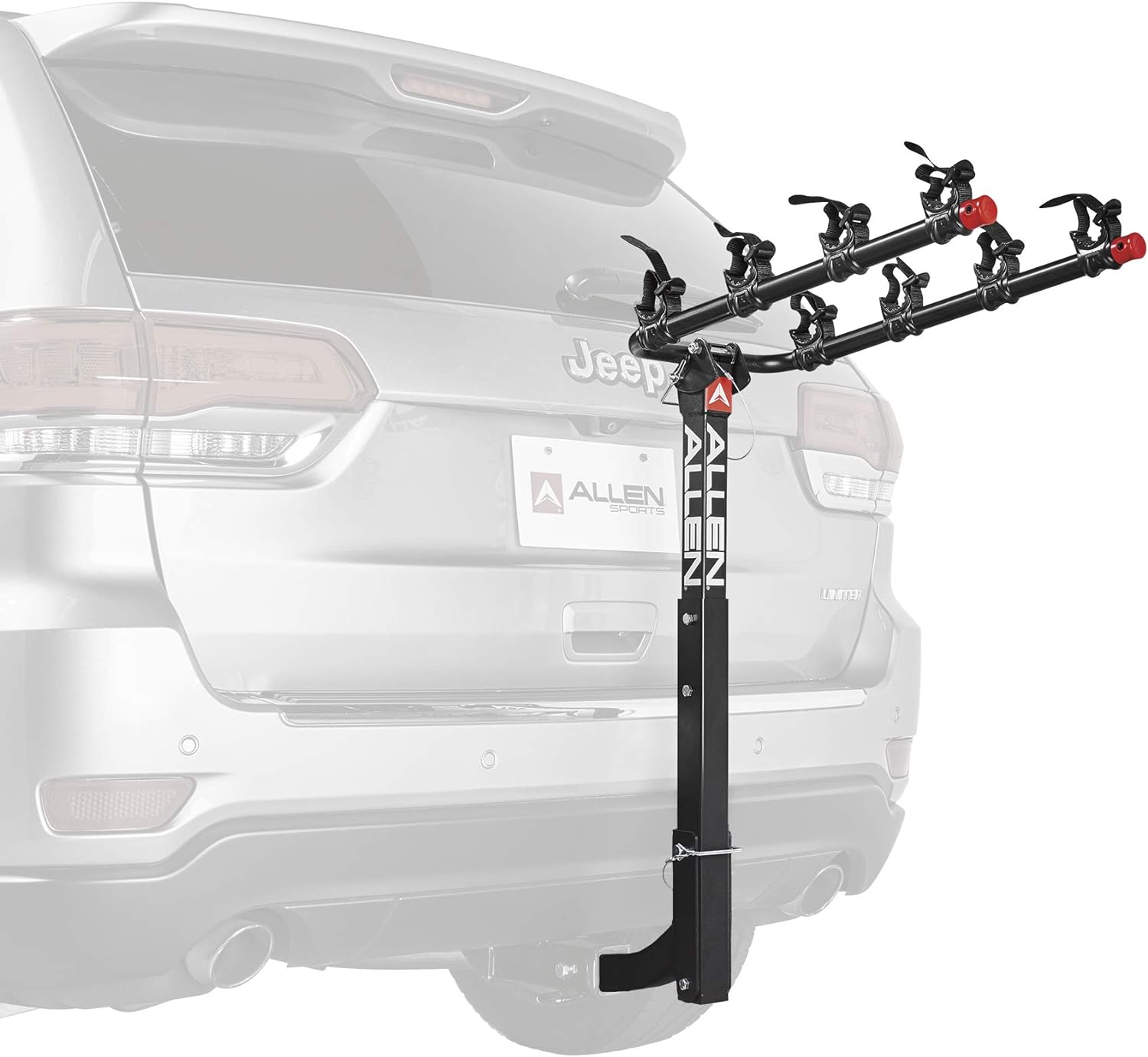
Multiple bikes regularly: 4-bike capacity hitch racks with individual adjustable arms preventing bike-to-bike contact.
The paint scratch problem is preventable through proper installation, adequate padding at all contact points, and regular inspection of mounting security. But once scratches occur, they're permanent. The "measure twice, install once carefully" advice applies literally - taking extra 30 minutes during initial installation prevents cosmetic damage costing hundreds to repair.
Frequently Asked Questions
自転車ラックを購入するときは何を探すべきですか?
主な要因には、ビルドの品質、ユーザー レビュー、およびコストパフォーマンスが含まれます。 Retrospec Retrospec Stash Rack 2 (2,198 レビューから 4.1★) などの最高評価のオプションは、このカテゴリの品質を示しています。
自転車ラックの通常料金はいくらですか?
価格は 25 ドルから 181 ドルで、ほとんどの高品質オプションは約 64 ドルです。 37 ドル未満の予算オプションは、時折使用できる場合に使用できますが、96 ドルを超えるプレミアム モデルはより優れた耐久性と機能を提供します。
現在最も人気のあるバイク ラックは?
Retrospec Stash Rack 2 は現在、2,198 件の検証済みレビューから 4.1 ★ で最高評価を得ています。 すべてのトップ ピックについては、/best/bike-racks で完全な比較を確認してください。