 PickPundit

Complete model kits buying guide. Learn what features matter, compare top products, and find the best model kits for your budget.
View Top Picks →Table of Contents
Model Kits: The Skill-Building Hobby That Rewards Patience
Model kit building combines manual dexterity, patience, attention to detail, and creative satisfaction in ways few hobbies match. Whether building cars, aircraft, ships, or figures, the process transforms boxes of plastic parts into finished displays of craftsmanship.
Understanding model kit types and skill requirements prevents frustration and ensures satisfying building experiences.
Skill Level Categories
Model kits explicitly categorize by skill level:
Skill Level 1-2 (Beginner): Snap-together construction, minimal parts, basic painting if any, clear instructions. Suitable for children or adults new to modeling.
Skill Level 3 (Intermediate): Glue required, more parts, some painting expected, moderate detail. Suitable for those with basic modeling experience.
Skill Level 4-5 (Advanced/Expert): Complex construction, many small parts, significant painting and finishing expected, challenging techniques required. For experienced modelers.
The Revell Chevy Street Pickup at $32 as "83-piece Skill Level 2" represents accessible intermediate building.
Kit Types
Model kits span diverse subjects:
Automotive: Classic cars, muscle cars, trucks, motorcycles. The Maisto Ford Model A at $30 represents die-cast assembly rather than traditional plastic kits.
Aircraft: Military and civilian planes from WWI biplanes to modern jets.
Ships: Naval vessels from sailing ships to modern warships.
Military vehicles: Tanks, trucks, artillery from various eras.
Figures: Character models, often from franchises, increasingly crossing with collectibles.
Sci-fi/Fantasy: Movie vehicles, mechs, fantastical subjects.
Subject preference is personal; skill requirements vary by kit regardless of subject.
Assembly Types
Modern model kits use various assembly approaches:
Traditional cement assembly: Parts require plastic cement or super glue for permanent bonding. Allows seamless joins but requires careful application. Most traditional kits use this approach.
Snap-together: Parts friction-fit without glue. Easier assembly but visible seam lines. Common in beginner kits and Japanese "Gunpla" style models.
Die-cast assembly: Metal and plastic parts assembled without modeling skills. More toy-like than traditional model building.
Tools Required
Basic model building requires essential tools:
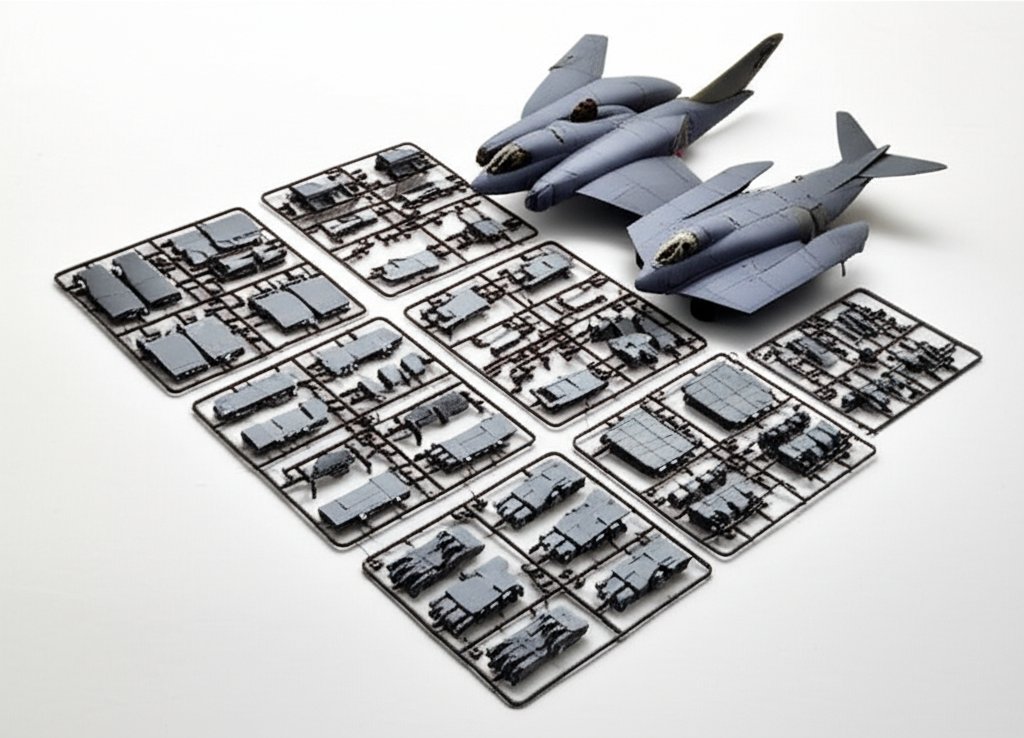
Cutting: Sprue cutters or hobby knife to remove parts from plastic frames
Cleaning: Files and sandpaper to remove nub marks
Assembly: Tweezers for small parts, cement applicators for gluing
Painting: Brushes or airbrush, paints, thinners
The $15 tool kit represents starter tool sets providing basic necessities. Serious modelers accumulate specialized tools over time.
Painting Approaches
Model finishing ranges from unpainted assembly to contest-level artistry:
Unpainted: Assembled without paint. Acceptable for snap-together kits with colored plastic.
Brush painting: Hand-brushed acrylic or enamel paints. Accessible but challenging to achieve smooth finishes.
Spray cans: Rattle-can spray paints for base colors. Easier smooth finishes than brushing.
Airbrush: Spray gun with compressor for professional finishes. Investment in equipment but superior results.
Paint quality significantly affects results—modeling paints (Tamiya, Vallejo, Mr. Color) outperform generic craft paints for plastic models.
Scale Explained
Model scale indicates size relationship to real subject:
1:24 / 1:25: Common for cars—models approximately 6-8 inches long
1:48: Common for aircraft—moderate size with good detail
1:72: Smaller aircraft and military vehicles
1:35: Standard for military vehicles and figures
1:350 / 1:700: Ship models at various sizes
Larger scales show more detail but require more space. Smaller scales fit collections but limit visible detail. Scale choice often depends on display space and detail preferences.
Brand Quality Variations
Model kit quality varies significantly by manufacturer:
Premium brands (Tamiya, Hasegawa, Bandai): Excellent fit, clear instructions, quality plastic. Higher prices reflect engineering quality.
Mid-range brands (Revell, Airfix): Good quality with occasional fit issues. Reasonable value for hobbyists.
Budget brands: Variable quality, potential fit problems, sometimes unclear instructions. Suitable for practice but potentially frustrating.
Brand choice affects building experience as much as final result. Fighting poorly fitting parts frustrates beginners and experienced modelers alike.
Age Appropriateness
Model kits suit various ages depending on complexity:
Ages 6-10: Snap-together kits with large parts, minimal tools required
Ages 10-14: Simple cement kits with supervision, basic painting
Teen and adult: Full range of complexity based on interest and developed skills
Matching kit complexity to builder ability prevents frustration and builds skills progressively.
Investment Considerations
Model building involves ongoing investment:
Kits: $15-100+ depending on subject, scale, and quality
Tools: $15-50 for basics, more for specialized equipment
Paints: $3-8 per bottle, accumulating as color needs grow
Workspace: Adequate lighting, ventilation, and storage
The hobby can be inexpensive (simple kits, basic tools) or significant investment (premium kits, airbrush equipment, extensive paint collections).
Practical Recommendations
For absolute beginners: Start with snap-together Skill Level 1 kits to learn handling small parts and following instructions before introducing glue and paint.
For children: Age-appropriate snap kits with parental involvement. Shared building creates positive experiences.
For returning hobbyists: Mid-complexity kits from quality brands rebuild skills without overwhelming.
For experienced modelers: Premium brands and advanced kits provide challenges matching developed abilities.
For tool acquisition: Start with basic tool set, add specialized tools as specific needs arise during building.
The key insight: model building rewards patience and practice. Starting appropriately and building skills progressively leads to satisfying results and lasting hobby engagement.
Frequently Asked Questions
モデルキットを購入するときは何を探すべきですか?
主な要因には、ビルドの品質、ユーザー レビュー、およびコストパフォーマンスが含まれます。 Rustark 21 個のモデラー ベーシック ツールのような最高評価のオプション (5,189 レビューから 4.7★ レビューから 4.7★) は、このカテゴリーでどのような品質が見られるかを示しています。
モデルキットの通常の費用はいくらですか?
価格は 9 ドルから 80 ドルで、ほとんどの品質オプションは 34 ドル前後です。 13 ドル未満の予算オプションは、時折使用できるように機能しますが、51 ドルを超えるプレミアム モデルはより優れた耐久性と機能を提供します。
現在最も人気のあるモデル キットはどれですか?
21 個のモデラー 基本ツール クラフト セット ホビー ビルディング ツール キットは、現在、5,189 件の検証済みレビューから 4.7 ★ で最高評価です。 すべてのトップ ピックについては、/best/model-kits で完全な比較を確認してください。


