 PickPundit
📦 How to Choose the Best Studio Monitors: Complete Buying Guide

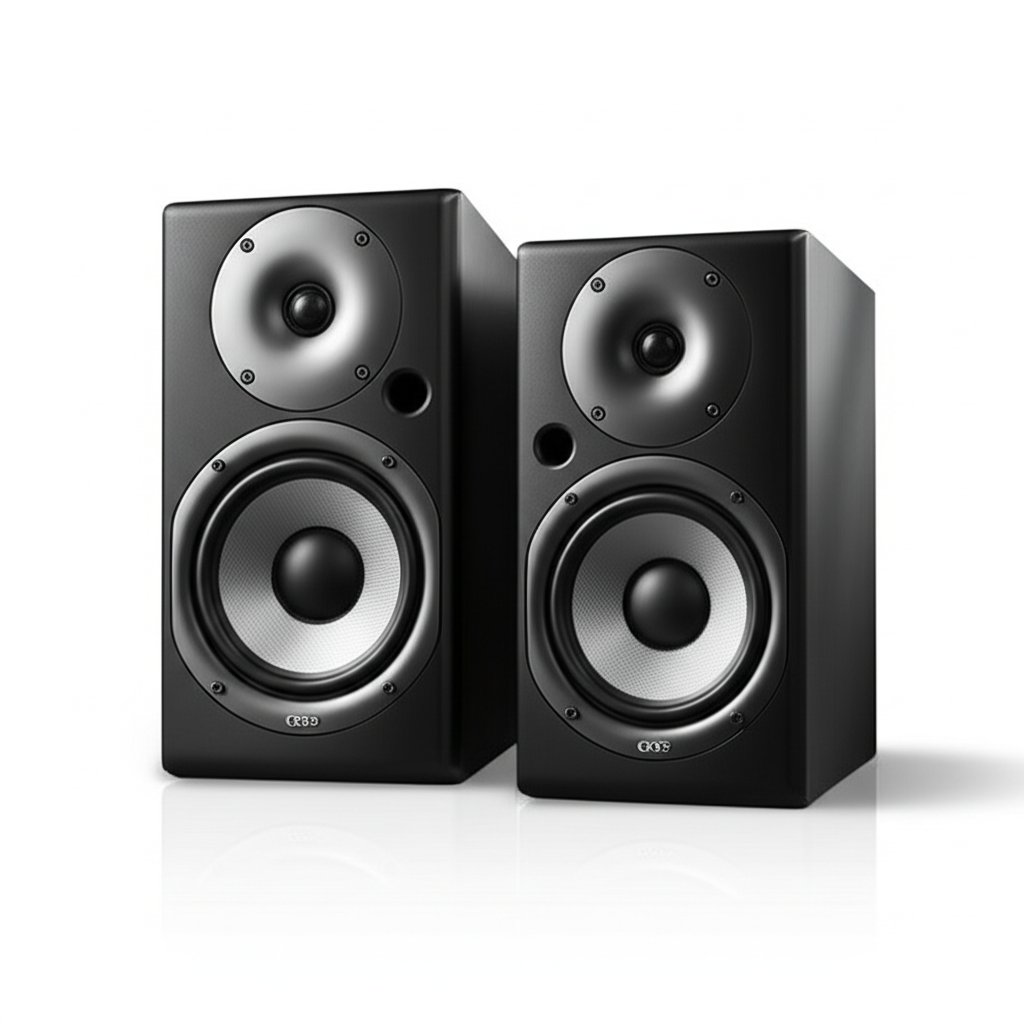
Complete studio monitors buying guide. Learn what features matter, compare top products, and find the best studio monitors for your budget.
View Top Picks →Table of Contents
Studio Monitors: The Truth-Telling Speakers for Audio Production
Studio monitors differ fundamentally from consumer speakers in their design philosophy: they reveal exactly what recordings contain rather than flattering listeners with enhanced bass or boosted treble. This honesty serves production and mixing; it may not serve casual listening enjoyment.
Why Accuracy Matters for Production
Studio monitors serve production needs:
Mix translation: Mixes that sound good on accurate monitors translate to various playback systems
Problem identification: Flat response reveals issues that colored speakers hide
Reference standard: Consistent reference enables consistent decisions
The PreSonus Eris E5 at $110 and Edifier R1700BT at $170 represent different positions—PreSonus targeting production accuracy, Edifier blending studio aesthetics with consumer-friendly sound.
Powered vs Passive
Studio monitors are typically powered (self-amplified):
Powered monitors: Built-in amplification matched to drivers
Passive monitors: Require separate amplifier selection and matching
Most modern home studio monitors are powered, simplifying setup. The amplifier-speaker matching is handled by the manufacturer, ensuring optimal performance.
Near-Field Design
Studio monitors typically operate as "near-field" speakers:
Listening distance: Designed for 2-4 feet listening distance
Room interaction: Minimized room influence through close positioning
Stereo imaging: Precise imaging in sweet spot position
Near-field positioning differs from living room speaker placement. Monitors work best on stands at ear level, equidistant from listener, in triangle formation.
Frequency Response
Monitor specifications include frequency response:
Low frequency extension: How deep bass reaches
High frequency extension: Treble reproduction range
Flatness claim: How even the response across the range
5-inch monitors like the Eris E5 typically reach 50-80Hz—adequate for most mixing but lacking deep bass that larger woofers or subwoofers provide.
Room Acoustics Impact
Studio monitors reveal room acoustic problems consumer speakers mask:
Bass buildup: Corners and walls reinforce low frequencies
Reflections: Hard surfaces create interference patterns
Standing waves: Room dimensions create frequency peaks and nulls
Proper monitor use often requires acoustic treatment—bass traps, absorption panels, diffusers—to hear what monitors actually reproduce rather than room coloration.
Connectivity
Studio monitor inputs determine integration:
TRS/XLR (balanced): Professional connectivity minimizing noise
RCA (unbalanced): Consumer connectivity, shorter cable runs
Bluetooth: The Edifier adds wireless for convenience
For serious production, balanced connections provide cleaner signal, especially over longer cable runs. For casual monitoring, consumer connections work adequately.
Listening Fatigue
Accurate monitors can cause listening fatigue:
Honest highs: Revealing harshness that colored speakers soften
Detailed midrange: Every imperfection audible
Extended sessions: Accuracy can tire ears faster than flattering speakers
Some monitors include high-frequency adjustment (Eris E5 includes this) enabling slight softening for extended sessions while maintaining general accuracy.
The Consumer Alternative
Some buyers purchase studio monitors for general listening, attracted by "accuracy" marketing:
Different optimization: Production accuracy may not equal enjoyment
Bass expectations: Near-field monitors often need subwoofers for satisfying bass
Room requirements: Accuracy benefits diminish without acoustic treatment
For pure listening enjoyment, consumer speakers designed to please may outperform monitors designed to reveal truth.
Practical Recommendations
For home production: Budget monitors ($100-200/pair) like PreSonus Eris provide adequate accuracy for learning and basic production.
For serious mixing: Invest in room treatment alongside monitors—untreated rooms undermine monitor accuracy.
For casual listening: Consider whether accuracy or enjoyment matters more. Consumer speakers may provide more satisfaction.
For limited space: Near-field design suits desktop and small room placement where monitors are positioned close to listener.
The key insight: studio monitors serve production by revealing truth. For pure listening enjoyment, that same honesty may detract rather than add value.
Frequently Asked Questions
What should I look for when buying studio monitors?
Key factors include build quality, user reviews, and value for money. Top-rated options like the PreSonus PreSonus Eris E5 2-Way 5.25" Near Field Studio Mon (4.5★ from 1,329 reviews) demonstrate what quality looks like in this category.
How much do studio monitors typically cost?
Prices range from $29 to $358, with most quality options around $141. Budget options under $43 work for occasional use, while premium models over $212 offer better durability and features.
Which studio monitors are most popular right now?
The PreSonus Eris E5 2-Way 5.25" Near Field Studio Monitor is currently top-rated with 4.5★ from 1,329 verified reviews. Check our full comparison at /best/studio-monitors for all top picks.


