 PickPundit

Complete drones buying guide. Learn what features matter, compare top products, and find the best drones for your budget.
View Top Picks →Table of Contents
Drones: Flying Cameras, Learning Curves, and Legal Reality
Consumer drones range from $50 toys to $1500+ professional platforms, with camera quality, flight characteristics, and regulatory requirements varying dramatically across the price spectrum. Understanding what's realistic at different price points helps set appropriate expectations and avoid frustration.
Drone Categories
Price tiers indicate fundamentally different products:
Toy drones ($30-80): Basic cameras (720p-1080p), limited flight time (5-10 minutes), minimal stabilization, indoor/calm outdoor use. Good for learning but limited photography utility.
Entry camera drones ($100-300): The products listed fall here. 1080p-4K cameras, 15-25 minute flight time, GPS positioning, basic stabilization. Adequate for casual aerial photography.
Prosumer drones ($500-1000): DJI Mini series, quality 4K cameras, 30+ minute flight time, advanced stabilization and features. Serious photography capability.
Professional drones ($1000-3000+): DJI Mavic/Air series and competitors. Maximum camera quality, longest range and flight time, professional features.
Camera Quality Reality
Drone cameras vary enormously:
4K claims at lower prices often disappoint—sensor size, lens quality, and stabilization matter more than resolution marketing.
EIS (Electronic Image Stabilization) helps but can't match mechanical gimbal stabilization on premium drones.
Sensor size determines low-light capability and dynamic range—budget drones use tiny sensors.
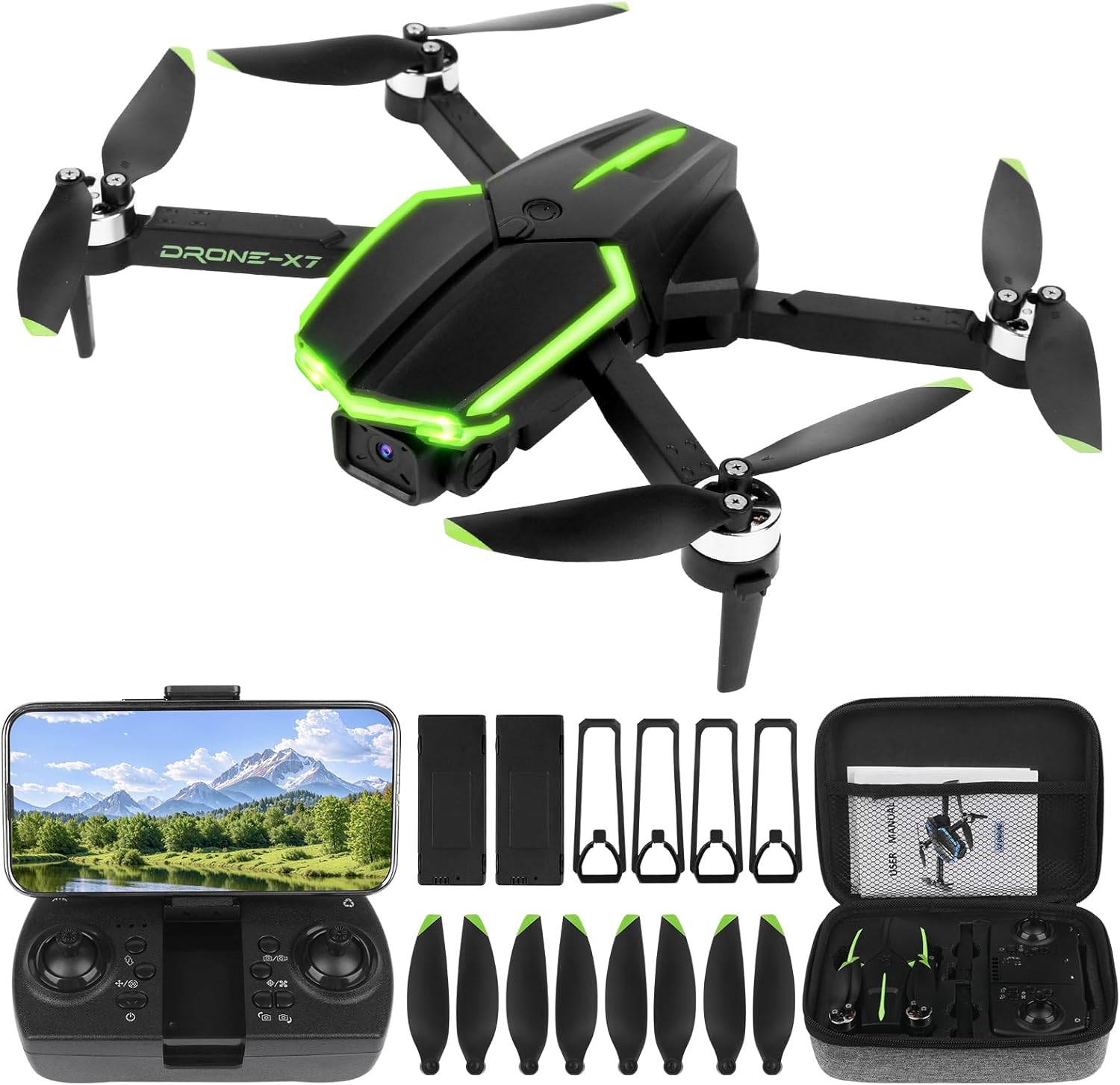
The GPS Drone at $136 and Potensic ATOM SE at $200 offer 4K but with significant quality differences from $800+ drones.
Flight Time Expectations
Battery life limits vary:
Marketed flight time represents ideal conditions—calm air, minimal maneuvering, new battery.
Real-world flight time typically runs 60-80% of marketed time.
Multi-battery strategy extends total flying time—many drones offer spare battery bundles.
Charge time often exceeds flight time significantly.
The $46 beginner drone likely provides 10-15 minutes real flying; the Potensic at $200 may approach 25 minutes.
GPS and Positioning
Positioning technology affects usability:
GPS-enabled drones hold position automatically, return home when signal is lost, and enable automated flight paths.
Non-GPS drones require constant pilot input, drift in wind, and lack return-home capability.
GPS lock time varies—some drones require minutes to acquire sufficient satellites.
Indoor limitations: GPS doesn't work indoors, requiring alternative positioning or manual control.
For any outdoor photography, GPS capability is essentially required.
Range and Signal
Control range varies by technology:
WiFi control (most budget drones) provides 100-300 meter range with potential interference.
Dedicated radio control extends range to 1000+ meters with more reliable connection.
FPV (First Person View) range may differ from control range.
Regulatory note: Flying beyond visual line of sight violates FAA rules for recreational flyers regardless of control range capability.
Learning Curve
Flying drones requires practice:
Beginner drones are more appropriate for learning—crashes are less expensive.
Simulator practice using apps or software builds skills without crash risk.
Progressive skill building from hovering to maneuvering to photography takes time.
Crash inevitability: New pilots will crash. Budget for spare propellers and accept minor damage as learning cost.
The $46 drone makes sense for absolute beginners; the $200 Potensic suits pilots with some experience.
Registration and Regulations
Legal requirements apply to most drones:
FAA registration required for drones over 0.55 lbs (250g)—most camera drones require registration.
Sub-250g drones (DJI Mini, etc.) avoid registration requirement—the Potensic ATOM SE emphasizes this.
Recreational flying rules: Must maintain visual line of sight, avoid airports and restricted airspace, yield to manned aircraft.
Local restrictions: Many parks, beaches, and public areas prohibit drone flying.
Commercial use requires additional Part 107 certification.
Weather Limitations
Drones can't fly in all conditions:
Wind limits vary by drone size and power—budget drones struggle in light breeze.
Rain damages electronics—most consumer drones lack waterproofing.
Temperature extremes affect battery performance.
Fog/mist affects visibility and camera performance.
Realistic flying conditions are more limited than marketing suggests.
Obstacle Avoidance
Collision prevention varies:
Premium drones include obstacle detection sensors preventing crashes.
Budget drones have no obstacle detection—pilot judgment is the only protection.
Sensor limitations: Even equipped drones may miss thin obstacles like power lines.
Manual override necessity: Tight quarters require disabling obstacle avoidance that prevents intended maneuvers.
Photography Features
Camera drones include shot automation:
Follow modes track moving subjects automatically.
Orbit modes circle points of interest.
Waypoint navigation follows pre-planned routes.
Panorama and HDR modes combine multiple images.
Quick Shot modes execute pre-programmed maneuvers.
Feature availability increases with price—budget drones may lack automation available on premium models.
Maintenance and Durability
Drone ownership involves upkeep:
Propeller replacement after crashes or wear.
Battery maintenance (storage charge levels, temperature management).
Firmware updates for flight controller and camera.
Calibration may be required periodically.
Repair costs can exceed drone value for budget models.
Practical Recommendations
For learning to fly: Budget drones ($50-80) that can survive crashes without financial pain.
For casual aerial photography: Entry-level GPS drones ($100-200) offering 1080p+ video with position hold.
For quality photos and video: Prosumer drones ($300-500) with mechanical stabilization and larger sensors.
For avoiding registration: Sub-250g drones like Potensic ATOM SE—lighter doesn't mean less capable.
For all buyers: Understand regulations before purchase. Flying drones illegally creates liability and damages the hobby for everyone.
The honest assessment: $200 drones produce notably inferior footage to $800 drones. Budget for what you actually need or accept limitations of entry-level equipment.
Frequently Asked Questions
드론을 구입할 때 무엇을 확인해야 합니까?
주요 요소에는 빌드 품질, 사용자 리뷰 및 가격 대비 가치가 있습니다. 성인용 EIS 4K 카메라가 장착된 TopBlasterBox GPS 드론(57개 리뷰에서 4.6★)과 같은 최고 등급의 옵션은 이 카테고리에서 어떤 품질이 보이는지 보여줍니다.
드론은 보통 얼마인가요?
가격은 $40에서 $699 사이이며 대부분의 품질 옵션은 $223입니다. $60 미만의 예산 옵션은 가끔 사용하는 데 사용되며 $335 이상의 프리미엄 모델은 더 나은 내구성과 기능을 제공합니다.
현재 가장 인기 있는 드론은?
57개의 검증된 리뷰에서 4.6%의 성인용 EIS 4K 카메라가 장착된 GPS 드론의 현재 최고 등급입니다. 모든 최고의 선택에 대한 /best/drones에서 전체 비교를 확인하십시오.
⚖️ Quick Comparison
| Product | Price | Rating | Key Feature |
|---|---|---|---|
|
#1
|
$135.99 | 4K UHD Camera - Equipped with a 4K adjustable lens, captures 3840×2160 photos wi... | |
| $45.59 | 1080P Camera - Adjustable angle allows for aerial views and inspections, with ph... | ||
| $199.99 | Lightweight Design - Weighs under 249g, eliminating the need for FAA registratio... |