 PickPundit

Complete kitchen knives buying guide. Learn what features matter, compare top products, and find the best kitchen knives for your budget.
View Top Picks →Table of Contents
Kitchen Knives: Steel, Sharpness, and What You Actually Need
Kitchen knife marketing emphasizes exotic steels and hand-forging while home cooks often struggle with basic knife skills and maintenance. Understanding what makes knives cut well—and stay sharp—matters more than premium branding.
The Essential Knife
What you actually need:
Chef's knife (8"): Handles 80% of kitchen tasks. The one indispensable knife.
Paring knife (3-4"): Detail work, peeling, small items.
Serrated knife: Bread, tomatoes—anything that benefits from sawing action.
Everything else: Nice to have, not essential. Build collection slowly based on actual use.
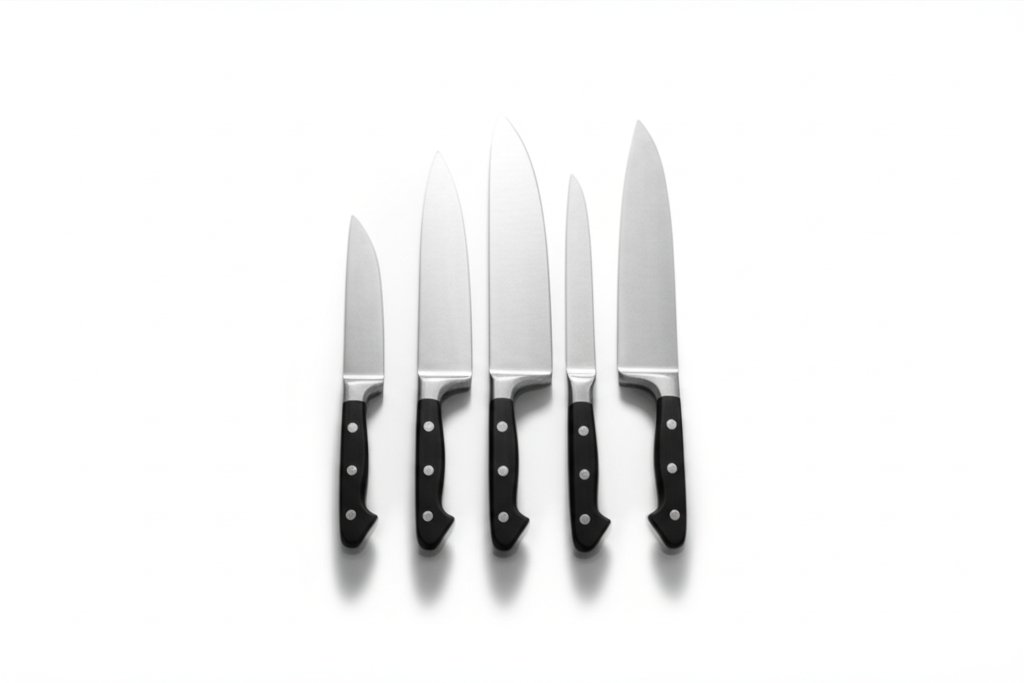
The Matsato chef knife and butcher set represent different approaches—single quality knife vs set variety.
Knife Steel Basics
What metal composition means:
Carbon content: Higher carbon = harder, sharper edge, more brittleness, easier rust.
Stainless steel: Chromium added. Rust resistant, easier maintenance, often slightly softer edge.
Carbon steel: Traditional. Takes incredible edge, requires more care, patinas.
Damascus: Layered steels, beautiful pattern, marketing often exceeds performance claims.
High-carbon stainless: Best of both worlds—sharp edge with stain resistance.
Hardness and Sharpness
Understanding Rockwell hardness (HRC):
Softer steel (54-56 HRC): German knives typically. Easier sharpening, duller faster.
Harder steel (58-62 HRC): Japanese knives typically. Stays sharp longer, more brittle, harder to sharpen.
Home cook reality: Softer steel that you sharpen regularly cuts better than hard steel you don't maintain.
Edge Geometry
How the cutting edge is shaped:
Western grind (20-25° per side): Robust edge. Good for rocking cuts and abuse.
Japanese grind (15-18° per side): Thinner, sharper, more delicate.
Single bevel: One-sided edge. Traditional Japanese, specialty use.
Practical impact: Thinner edges cut easier but chip easier. Match to cutting style and maintenance willingness.
Forged vs Stamped
Manufacturing methods:
Forged: Hammered from single piece. The "hand forged Serbian" butcher knives emphasize this.
Stamped: Cut from sheet steel. Historically cheaper, modern stamped knives can be excellent.
Full tang: Blade steel extends through handle. Traditionally preferred for durability.
Partial tang: Handle attached to blade portion. Can be excellent or weak—depends on construction.
Handle Considerations
Where you grip matters:
Handle material: Wood (traditional, requires care), composite (durable, dishwasher-safe sometimes), metal (sleek, slippery when wet).
Shape: Personal preference varies. Western handles are rounder, Japanese often octagonal.
Pinch grip: Most efficient grip. Make sure bolster/heel doesn't interfere.
Maintenance Reality
Keeping knives cutting:
Honing: Regular realignment with steel rod. Maintenance, not sharpening.
Sharpening: Removing metal to create new edge. Needed periodically.
Whetstone: Traditional sharpening. Requires technique.
Pull-through sharpeners: Convenient but remove more metal, may damage edges.
Professional sharpening: Send knives out annually if you don't sharpen yourself.
Cutting Boards and Edge Life
What you cut on matters:
Wood: Kind to edges. Bacteria concerns largely debunked.
Plastic: Generally fine. Score marks harbor bacteria.
Bamboo: Harder than wood, okay for edges.
Glass, ceramic, stone: Destroys edges immediately. Never use these.
Set vs Individual Knives
Collection building strategies:
Block sets: Convenient, include unnecessary items, storage solved.
Individual selection: Better knives for same money, choose what you need.
Starter recommendation: Quality chef's knife plus paring knife. Add as needed.
The 3-piece butcher set: Specialty knives for specific tasks—not everyday essentials.
Budget Considerations
What money buys:
Under $30: Functional but limited. Good for learning before investing.
$30-100: Quality entry level. Excellent home cook knives available. Matsato tier.
$100-250: Premium home cook. Will last decades with care.
$250+: Professional or collector. Diminishing returns for home use.
Specialty Knives
Beyond basics:
Santoku: Japanese all-purpose. Alternative to chef's knife, not addition.
Nakiri: Vegetable knife. Flat edge for up-down cutting.
Butcher/cleaver: Heavy knife for breaking down meat. The Serbian butcher set serves this purpose.
Fillet knife: Flexible blade for fish. Unnecessary unless you process fish regularly.
Practical Recommendations
For beginners: One quality chef's knife ($50-100 range). Learn technique before expanding.
For intermediate cooks: Add paring knife and serrated. Three knives handle almost everything.
For meat processing: Butcher/cleaver set like the Serbian 3-piece addresses specific cutting tasks.
For serious cooks: Build collection slowly with quality pieces based on actual use patterns.
The key insight: knife skills and maintenance matter more than steel quality. A $40 knife that you keep sharp and use properly outperforms a $200 knife that sits dull in a drawer.
Frequently Asked Questions
주방 나이프를 살 때 무엇을 확인해야합니까?
주요 요소에는 빌드 품질, 사용자 리뷰 및 가격 대비 가치가 있습니다. Topfeel 3pcs Butcher Knife 세트(1,394 리뷰에서 4.7★)와 같은 최고 등급의 옵션은 이 범주에서 어떤 품질이 보이는지 보여줍니다.
주방 나이프의 비용은 일반적으로 얼마입니까?
가격은 $24에서 $145 사이이며 대부분의 품질 옵션은 $54입니다. $35 미만의 예산 옵션은 가끔 사용하는 데 사용되며 $81 이상의 프리미엄 모델은 더 나은 내구성과 기능을 제공합니다.
현재 가장 인기 있는 주방 나이프는?
3PCS 정육점 나이프 세트는 현재 1,394개의 검증된 리뷰에서 4.7★로 최고 등급입니다. 모든 최고의 선택에 대한 /best/kitchen-knives에서 전체 비교를 확인하십시오.
⚖️ Quick Comparison
| Product | Price | Rating | Key Feature |
|---|---|---|---|
| $65.99 | Multifunctional Cleaver Knife Set - Includes a 7" Serbian Chef Knife, 7" Butcher... | ||
| $27.99 | Chef knife for every kitchen | Whether you are a home cook or a professional che... | ||
|
#3
|
$52.00 | For home chefs & professionals. This Fibro Pro chef's knife has been the top cho... |


