 PickPundit
📦 How to Choose the Best DJ Controllers: Complete Buying Guide

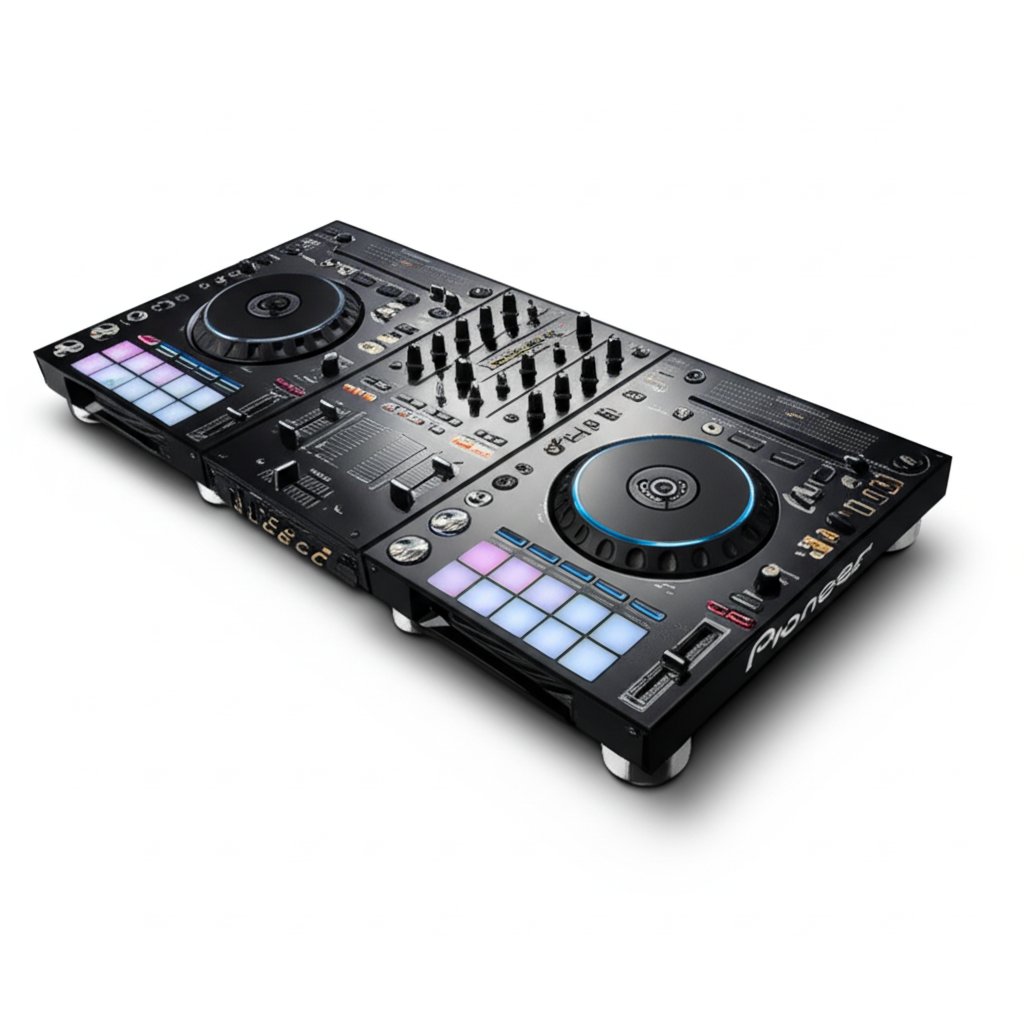
Complete dj controllers buying guide. Learn what features matter, compare top products, and find the best dj controllers for your budget.
View Top Picks →Table of Contents
DJ Controllers: The Bedroom-to-Club Equipment Ladder
DJ controllers exist on a clear progression from bedroom practice to club performance, with price correlating strongly to build quality, feature sophistication, and software integration depth. Understanding where you sit on this progression—and where you realistically aim to reach—prevents both overspending on features you won't use and underspending on equipment you'll quickly outgrow.
The Controller vs Traditional DJ Setup
Traditional DJ setups use separate components: two turntables or CDJs, a mixer, and potentially effects units. This modular approach offers flexibility and professional-standard equipment but costs thousands and requires significant space.
Controllers integrate all functions into single units—platters (or touch strips), mixer section, and computer interface. The computer running DJ software (Rekordbox, Serato, Traktor) provides the audio engine; the controller provides tactile interface. This approach costs less, occupies less space, and offers features impossible on traditional equipment (waveform displays, automatic beat sync, sophisticated effects).
The trade-off: controllers depend on computers (failure points, latency concerns) and don't directly transfer skills to club CDJ setups. Professional DJs often use controllers for preparation and practice while maintaining CDJ proficiency for club performances.
Entry Level: Learning the Fundamentals
The Numark DJ2GO2 Touch at $78 represents true entry-level—minimal investment to answer "do I actually enjoy DJing?" before committing serious money. This credit-card-sized controller provides two channels, basic mixing capability, and software access.
The limitations are obvious: tiny platters limit scratch and beatmatching practice, minimal controls require software interaction for many functions, and build quality suits bedroom use rather than regular gigging. These limitations are acceptable for exploration—discovering whether DJing interests you enough to invest further.
The Hercules DJControl Inpulse 200 MK2 at $120 offers the true beginner sweet spot: full-size jog wheels enable realistic beatmatching practice, dedicated controls reduce software dependence, and the "learn" features (beat-matching assistance lights, tutorial integration) support skill development.
Most aspiring DJs should start here rather than jumping to professional equipment. The Inpulse capabilities exceed what beginners can utilize, and the price point allows upgrade when skills genuinely outgrow the controller.
Mid-Range: Serious Hobbyist Territory
Pioneer DJ's DDJ-FLX4 at $329 and FLX2 at $189 occupy the serious hobbyist territory—controllers capable of small venue performance while remaining accessible to developing DJs.
Pioneer's dominance in professional DJ equipment (the CDJ series is industry standard) means their controllers share software ecosystems and control layouts with professional gear. Skills developed on DDJ controllers transfer more directly to club CDJs than skills from other brands.
The FLX2's compact form factor suits limited space while maintaining serious functionality. The FLX4 adds performance pads and expanded effects control for DJs incorporating more complex techniques.
At this price tier, software unlocks matter significantly. Pioneer controllers typically include Rekordbox DJ and Serato DJ Lite, with upgrade options for full software versions. Verify which software version includes with the controller—the difference between "Lite" and full versions affects available features substantially.
Software Lock-In Considerations
DJ controllers function through software (Rekordbox, Serato, Traktor, Virtual DJ), and not all controllers work with all software. Pioneer controllers prioritize Rekordbox and Serato compatibility. Numark and Hercules typically work with Serato and Virtual DJ.
This matters because DJ software choices affect your entire workflow—library management, playlist preparation, effects availability, and performance features. Switching software later means relearning interfaces and potentially rebuilding music libraries.
For beginners, this consideration is secondary—learn fundamentals on available software before developing strong preferences. For serious hobbyists, software alignment with your intended DJ path matters more.
Build Quality Progression
Controller build quality directly correlates with price, affecting both durability and feel during use. Budget controllers use lighter plastics, smaller components, and less robust connections. Premium controllers incorporate metal chassis, full-size jog wheels with tension adjustment, and professional-grade faders.
The practical impact: budget controller jog wheels feel loose and imprecise for scratch techniques. Faders on cheap controllers wear faster and develop audio issues. Build quality that seems adequate for bedroom use reveals limitations when gigging regularly or practicing intensively.
If you're certain DJ equipment will see regular, serious use, investing in mid-tier build quality from the start often costs less than budget-tier followed by upgrade. If you're testing interest, budget controllers' limitations are acceptable for exploratory purposes.
Feature Analysis: What Actually Matters
DJ controller marketing emphasizes feature counts—performance pads, effect knobs, display screens—that may or may not matter for your actual use.
Performance pads enable cue point triggering, sample launching, and loop control. Essential for modern DJ techniques incorporating samples and cue point juggling. Less relevant for traditional mixing focused on track transitions.
Jog wheel size and quality affects beatmatching feel and scratch capability. Larger, heavier wheels with adjustable tension provide more realistic traditional DJ feel. Smaller wheels suit basic mixing but limit technique development.
Effects sections provide hands-on control of software effects without screen interaction. Important for DJs incorporating effects heavily; less critical for clean mixing approaches.
Display screens show waveforms, track information, and BPM without looking at laptop screens. Reduces computer dependence during performance. Absent on budget controllers, increasingly common in mid-tier and standard in professional units.
The Laptop Dependence Question
Controllers require connected computers running DJ software—a dependency that adds failure points and setup complexity. Some DJs prefer this approach for its flexibility and feature access; others find the laptop presence and potential technical issues problematic.
Standalone units that function without laptops (Pioneer XDJ series, Denon Prime series) exist but cost significantly more. For most hobbyist and semi-professional use, controller+laptop setups provide appropriate functionality at reasonable cost.
Laptop performance matters for controller use. Audio processing creates CPU load, and underpowered laptops introduce latency or audio glitches. Mid-range laptops from the past 3-4 years typically handle DJ software adequately; older or budget machines may struggle.
Practical Buying Guidance
For testing interest: Numark DJ2GO2 Touch or similar ultra-compact controller at $75-100 provides exploration capability at minimal investment.
For committed beginners: Hercules Inpulse 200 MK2 or similar full-featured entry controller at $120-150 supports genuine skill development with room to grow.
For serious hobbyists: Pioneer DDJ-FLX4 or equivalent at $300-400 provides performance capability while building toward professional-ecosystem familiarity.
For developing professionals: Consider saving for CDJ/mixer setups or flagship controllers ($600+) that match club standard equipment rather than intermediate steps.
The key insight: purchase for your current skill level plus modest growth room rather than aspirational features you might use someday. Beginners on professional equipment waste capability; advanced users on budget equipment fight limitations constantly.
Frequently Asked Questions
What should I look for when buying dj controllers?
Key factors include build quality, user reviews, and value for money. Top-rated options like the Hercules Hercules DJControl Inpulse 200 MK2 – Compact DJ Co (4.4★ from 839 reviews) demonstrate what quality looks like in this category.
How much do dj controllers typically cost?
Prices range from $78 to $1729, with most quality options around $523. Budget options under $117 work for occasional use, while premium models over $785 offer better durability and features.
Which dj controllers are most popular right now?
The Hercules DJControl Inpulse 200 MK2 – Compact DJ Controller w is currently top-rated with 4.4★ from 839 verified reviews. Check our full comparison at /best/dj-controllers for all top picks.


