 PickPundit
🐕 Hoe de beste halsbanden te kiezen: complete koopgids

Complete dog collars buying guide. Learn what features matter, compare top products, and find the best dog collars for your budget.
View Top Picks →Table of Contents
Dog Collars: Fit, Safety Features, and Choosing Between Collar Types
Dog collars serve identification, leash attachment, and control purposes, but inappropriate collars can cause injury or escape. Understanding collar types helps select safe, effective options.
Basic Collar Types
Flat buckle collars are standard—simple, adjustable, comfortable for most dogs. ID tags attach easily; escape is possible if fit is loose.
Martingale collars tighten under pressure without choking, preventing slip-outs for dogs with narrow heads (greyhounds, whippets). Safer than choke chains with similar anti-escape function.
Breakaway collars release under pressure to prevent strangulation hazards. Important for unsupervised dogs who may catch collars on objects.
Proper Fit
Two-finger rule: you should be able to fit two fingers between collar and neck. Tighter restricts breathing; looser allows escape.
Check fit regularly on growing puppies—they outgrow collars quickly. Adults may fluctuate seasonally.
Different collar widths suit different necks. Wide collars distribute pressure; narrow collars suit small dogs.
ID Tag Attachment
All dogs need identification visible to anyone who finds them. Microchips require scanners; tags provide instant contact info.
Split rings secure tags more reliably than S-hooks. Lost tags mean lost dogs stay lost.
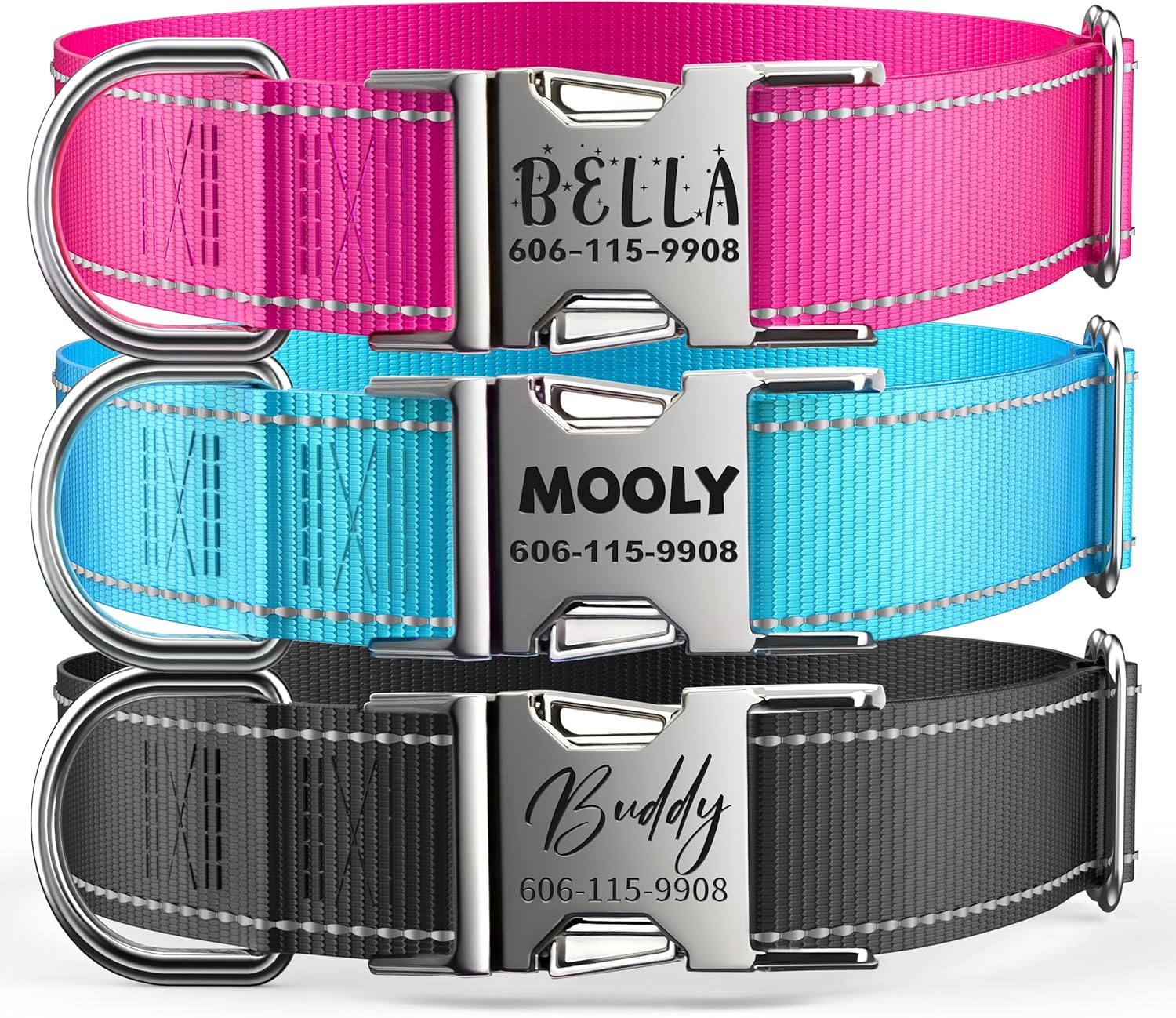
Slide-on or riveted ID plates eliminate dangling tags that catch on objects. Useful for active dogs.
Personalized collars with embroidered or printed contact information eliminate tags entirely—nothing to lose or catch.
Material Considerations
Nylon webbing is affordable, available in countless colors, easy to clean. It absorbs odors and may cause irritation on some dogs.
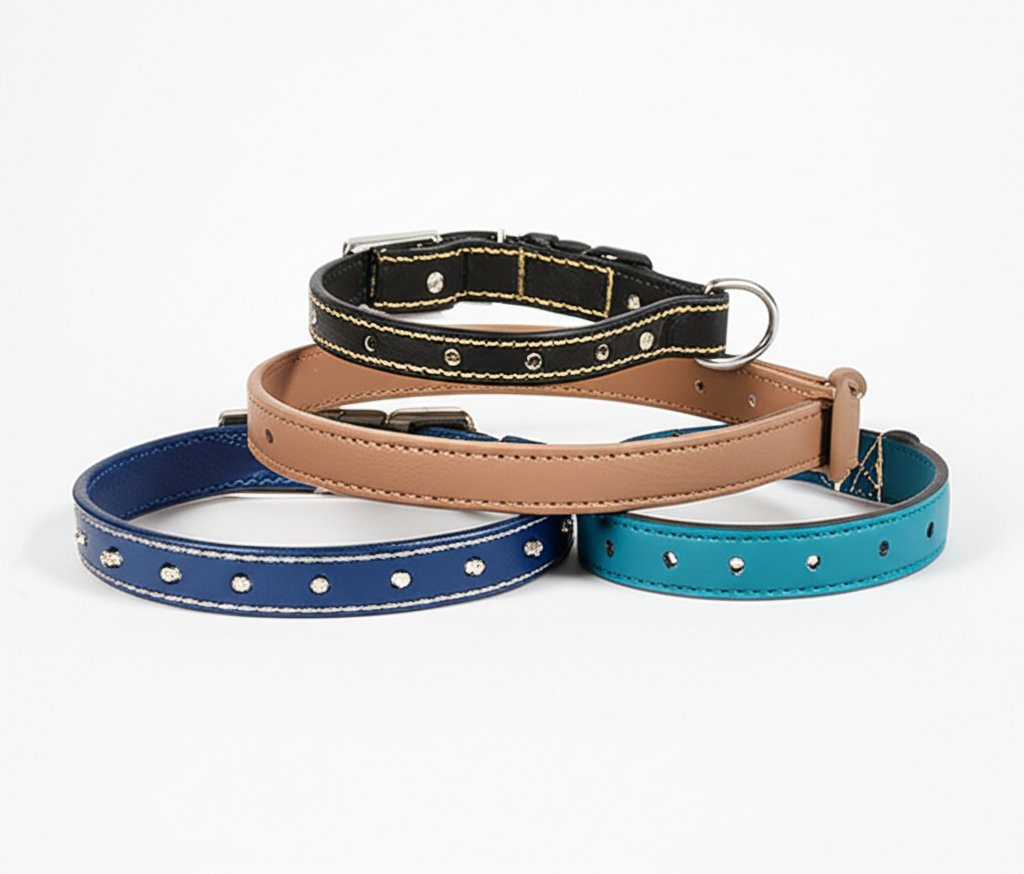
Leather is durable, comfortable, develops patina with age. Requires occasional conditioning; not suitable for swimming dogs.
Biothane (waterproof synthetic) handles water and mud without absorbing odor. Popular for hunting and water dogs.
Chain and metal collars are controversial—training tools that require expertise. Improper use causes injury; many trainers prefer alternatives.
Safety Concerns
Collars left on unsupervised dogs create strangulation risks. Catches on crates, fences, or playmates' mouths cause fatalities.
Breakaway collars or supervised-only collar wearing addresses this risk.
Avoid collars during play with other dogs—jaw entanglement during play has killed dogs.
Training Collar Considerations
Standard flat collars work for trained dogs walking nicely. They provide control without correction.
Martingales correct pulling without choking. Humane alternative to choke chains for pulling dogs.
Head halters (Gentle Leader, Halti) control head direction, giving handlers steering advantage. Require acclimation; some dogs resist.
Harnesses move pressure from necks to chests and shoulders. Better for dogs with respiratory issues or trachea concerns.
Visibility Features
Reflective collars improve nighttime visibility. Essential for dogs walked in low light.
LED collars actively glow for maximum visibility. Battery requirements add maintenance.
Bright colors help visibility in daytime wooded areas or hunting situations.
Collar vs Harness Debate
Collars suit dogs who walk nicely and have no neck/throat issues. Simple and effective for trained dogs.
Harnesses suit pullers, dogs with respiratory issues, or those prone to slipping collars. More control, less neck pressure.
Many dogs benefit from both—collars for ID, harnesses for walking. Use each appropriately.
GPS Tracking Options
GPS-enabled collars locate lost dogs via smartphone. Technology adds cost and bulk.
Consider separately whether GPS collars work for your situation—they're useful for escape artists or dogs in large properties.
Battery life and subscription costs add to initial purchase price. Evaluate total ownership cost.
Practical Recommendations
For most dogs, quality flat nylon or leather collars ($15-30) with secure buckles and ID tags serve basic needs.
For escape-prone dogs, martingale collars ($15-25) prevent slip-outs without choking.
For unsupervised dogs or homes with strangulation risks, breakaway collars ($15-20) provide essential safety.
Frequently Asked Questions
Waar moet ik op letten bij het kopen van halsbanden?
Belangrijke factoren zijn onder meer bouwkwaliteit, gebruikersrecensies en waar voor uw geld. Hoogst beoordeelde opties zoals de Gotags Gotags gepersonaliseerde halsband (4.6 ★ van 32.165 beoordelingen) laten zien hoe kwaliteit eruitziet in deze categorie.
Hoeveel kosten hondenhalsbanden doorgaans?
Prijzen variëren van $ 5 tot $ 40, met de meeste kwaliteitsopties rond de $ 16. Budgetopties onder de $ 8 werken voor incidenteel gebruik, terwijl premiummodellen van meer dan $ 24 betere duurzaamheid en functies bieden.
Welke hondenhalsbanden zijn momenteel het populairst?
De Gotags gepersonaliseerde halsband is momenteel de best beoordeelde met 4,6 van 32.165 geverifieerde beoordelingen. Bekijk onze volledige vergelijking bij /best/dog-halsbanden voor alle topkeuzes.
⚖️ Quick Comparison
| Product | Price | Rating | Key Feature |
|---|---|---|---|
| $18.95 | Personalization that WOWs Give your four legged companion the VIP treatment they... | ||
| $9.99 | Premium Durable Nylon Crafted from high-strength nylon, this personalized dog co... | ||
| $7.91 | Adjustable Fit - Designed for everyday wear, providing comfort for dogs of all s... |