 PickPundit
🎎 Hoe de beste poppen te kiezen: complete koopgids

Complete dolls buying guide. Learn what features matter, compare top products, and find the best dolls for your budget.
View Top Picks →Table of Contents
Dolls: Age Appropriateness, Play Value Development, and Durability Considerations
Dolls serve developmental purposes beyond simple entertainment—fostering nurturing behaviors, imaginative play, and social-emotional learning. Understanding what makes dolls developmentally appropriate helps select beneficial options.
Age-Appropriate Features
Infants and toddlers need soft bodies, secured features, and no small parts. Safety trumps all other considerations.
Preschoolers handle more complex dolls with removable clothes and accessories. Fine motor skills are developing but not refined.
School-age children can manage detailed dolls with small pieces and complex features.
Developmental Benefits
Nurturing play teaches empathy and caregiving behaviors. Dolls receive the care children observe and experience.
Dramatic play develops imagination and narrative skills. Children create scenarios and work through experiences.
Social play with dolls practices interpersonal dynamics. Dolls become characters in social learning.
Role reversal (child as caregiver) helps children process their own care experiences.
Doll Body Types
Baby dolls encourage nurturing play—feeding, diaper changing, comforting. Classic developmental purpose.
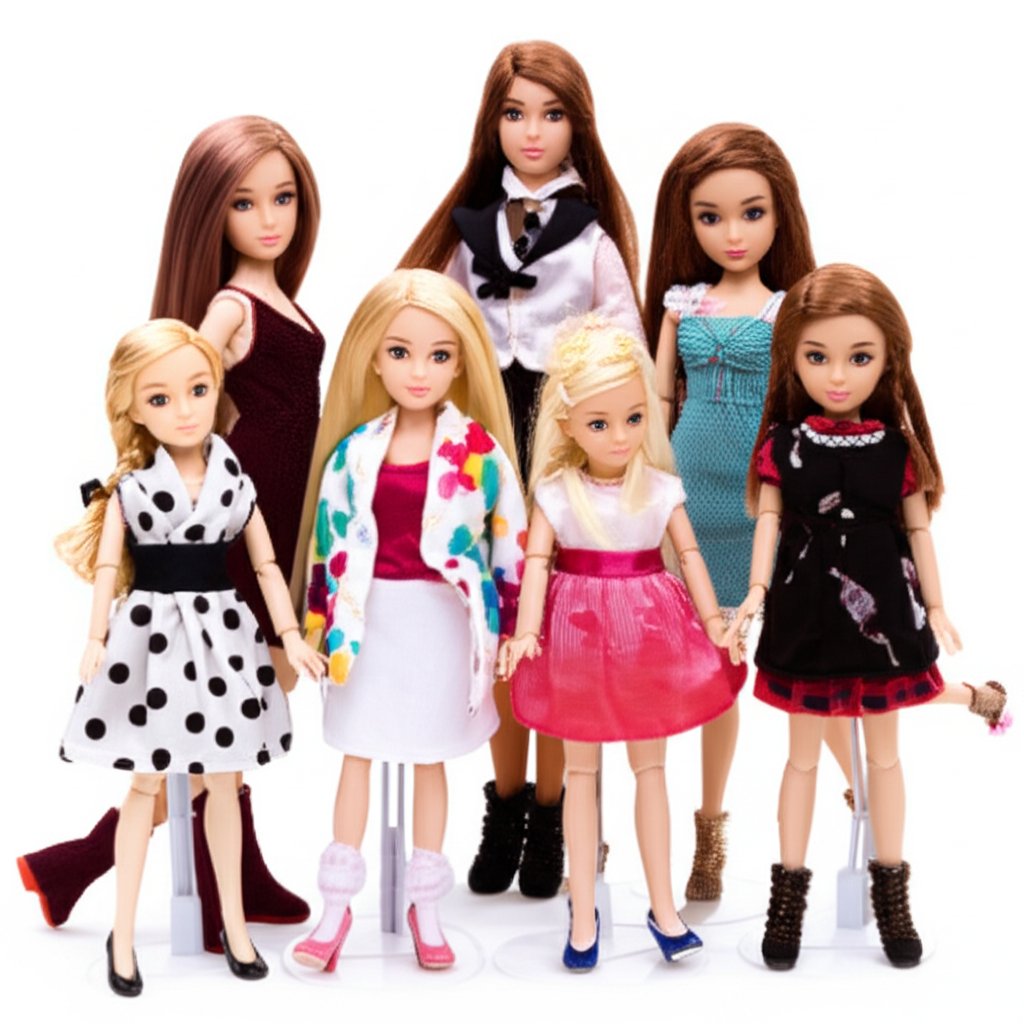
Fashion dolls (Barbie-type) focus on dress-up and imaginative scenarios. Different play dynamics than baby dolls.
Character dolls (from media properties) provide pre-made narratives and character relationships.
Anatomically diverse dolls represent various body types, abilities, and ethnicities. Representation matters for children's self-image and worldview.
Material Considerations
Soft-bodied dolls are cuddlier, safer for young children, and more forgiving of play intensity.
Vinyl/plastic dolls allow more realistic features and more complex articulation. Standard for fashion dolls.
Fabric dolls with minimal hard parts suit children who want softness without the baby-doll format.
Hair and Feature Durability
Rooted hair tangles, mats, and can be pulled out. Realistic but maintenance-intensive.
Molded plastic hair is indestructible but less interactive. Appropriate for younger children.
Painted features last longer than applied features. Stickers and decals peel.
Accessory Considerations
Accessories increase play value but create small-part hazards for young children.
Losing accessories frustrates children and parents. Consider storage solutions.
Proprietary accessories (fitting only specific dolls) increase long-term costs. Universal compatibility provides flexibility.
Battery-Operated Features
Electronic features (sounds, movement, interactive responses) can enhance or distract from imaginative play.
Batteries need replacement; mechanisms eventually fail. Consider longevity of electronic toys.
Simple dolls without electronics often inspire more creative play. Children supply the imagination rather than the doll.
Durability Reality
Active play stresses doll construction. Limbs detach, clothes tear, hair mats.
Quality construction withstands play that destroys cheap dolls. Consider cost-per-play-month rather than purchase price.
"Favorite" dolls see intensive use. Having replacements or repairs available may matter for beloved dolls.
Collectible vs Play Dolls
Collectible dolls are intended for display, not play. They're inappropriate as children's toys despite doll format.
Children's play dolls should be durable and intended for handling. Don't expect play dolls to remain collectible-quality.
Mixing purposes frustrates everyone—children can't play appropriately with fragile collectibles.
Cultural Representation
Dolls representing diverse ethnicities, abilities, and family structures help children see themselves and others reflected.
Representation quality varies—some diverse dolls are thoughtfully designed; others are token additions.
Consider what messages specific dolls convey about bodies, roles, and expectations.
Practical Recommendations
For toddlers, soft-bodied baby dolls ($15-30) with secure features provide safe nurturing play.
For preschoolers, durable dolls with simple accessories ($20-40) allow developing play while surviving enthusiastic handling.
For school-age children, quality dolls with appropriate complexity ($15-50) support imagination without frustrating limitations.
Frequently Asked Questions
Waar moet ik op letten bij het kopen van poppen?
Belangrijke factoren zijn onder meer bouwkwaliteit, gebruikersrecensies en waar voor uw geld. Top-rated opties zoals de Spin Master Ms. Rachel Official Cuddle & Comfort Doll (4.8 ★ van 1.260 beoordelingen) laten zien hoe kwaliteit eruitziet in deze categorie.
Hoeveel kosten poppen doorgaans?
Prijzen variëren van $ 9 tot $ 48, met de meeste kwaliteitsopties rond de $ 23. Budgetopties onder de $ 13 werken voor incidenteel gebruik, terwijl premiummodellen van meer dan $ 35 betere duurzaamheid en functies bieden.
Welke poppen zijn nu het populairst?
De Ms. Rachel Official Cuddle & Comfort-pop is momenteel best beoordeeld met 4,8 van 1.260 geverifieerde beoordelingen. Bekijk onze volledige vergelijking op /best/dolls voor alle topkeuzes.
⚖️ Quick Comparison
| Product | Price | Rating | Key Feature |
|---|---|---|---|
|
#1
|
$8.84 | OFFICIAL MS. RACHEL TOYS Super-soft, huggable, and squeezable plush toy doll fea... | |
|
#2
|
$15.99 | OFFICIAL MS. RACHEL TOYS Interactive touch-activated Ms. Rachel doll that plays ... | |
|
#3
|
$10.49 | Posable doll & unicorn set Based on the popular NETFLIX show and best-selling ki... |


