 PickPundit
📦 Hoe de beste elektrische koekenpannen te kiezen: complete koopgids

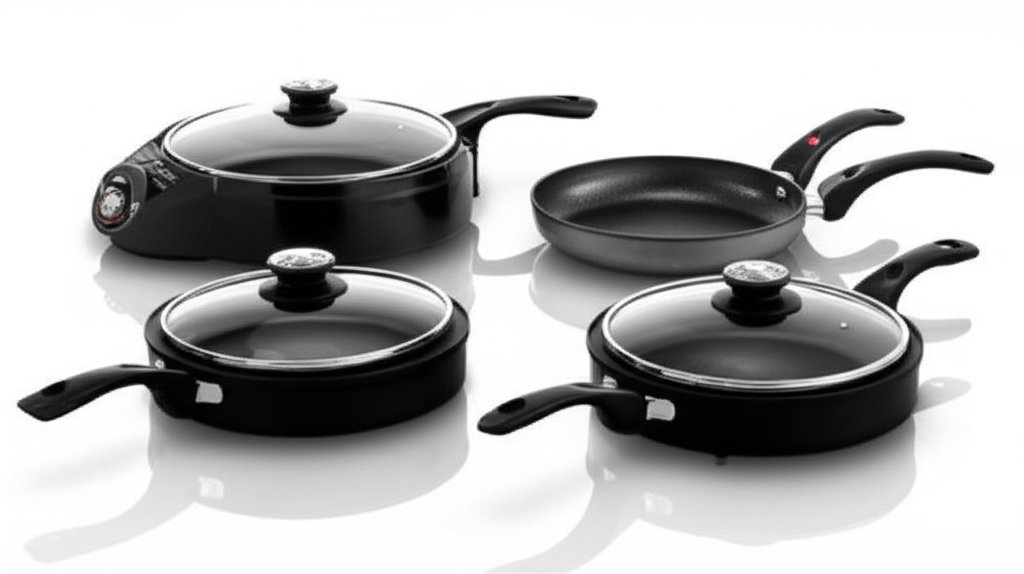
Complete electric skillets buying guide. Learn what features matter, compare top products, and find the best electric skillets for your budget.
View Top Picks →Table of Contents
Electric Skillets: Temperature Control, Size Selection, and When They Beat Stovetop Pans
Electric skillets provide consistent, portable cooking surfaces independent of stovetops. Understanding their advantages over traditional pans helps determine if they suit your cooking needs.
Why Choose Electric Skillets
Precise temperature control maintains consistent heat that stovetops struggle to match. The thermostat holds set temperatures automatically.
Portable cooking moves off the stove—buffet serving, outdoor cooking, additional cooking surface during holidays.
Even heat distribution across the entire cooking surface eliminates hot spots common in stovetop pans.
Freeing up stovetop burners during complex meal preparation provides extra cooking capacity.
Temperature Range and Control
Most electric skillets range from 200°F to 450°F. Higher maximums allow proper searing; lower minimums handle delicate simmering.
Dial controls are simple but approximate. Digital controls provide precise temperature setting.
Temperature recovery (returning to set temp after cold food addition) varies by heating element power. Higher wattage recovers faster.
Size Considerations
Small skillets (10-11 inch) suit couples or small families. Adequate for most weeknight cooking.
Medium skillets (12 inch) handle family-sized meals. Most versatile size for general use.
Large skillets (14-16 inch) cook for crowds or batch cooking. Require significant counter space.
Deep skillets (3+ inch sides) function as both skillets and roasting pans. Versatile for braising, one-pot meals.
Material Types
Non-stick coatings simplify cooking and cleanup. Quality varies—cheap coatings deteriorate quickly.
Cast aluminum provides even heating without cast iron weight. Most common construction.
Stainless steel surfaces allow browning and fond development. Require more oil; harder to clean.
Cast iron electric skillets exist but are heavy and slower to respond to temperature changes.
Lid Considerations
Glass lids allow monitoring without heat loss. Most practical for general use.
Vented lids release steam for crisper results. Essential for frying; optional for braising.
Domed lids accommodate larger items. Flat lids waste less storage space.
Lid fit affects moisture retention. Loose lids allow more evaporation.
Cleaning and Maintenance
Most electric skillets have non-removable heating elements—no submersion washing. Wipe clean only.
Some models have detachable heat controls allowing base washing. Verify before purchasing if this matters.
Non-stick surfaces require gentle cleaning. Avoid abrasives that damage coating.
Heat Element Design
Embedded heating elements provide most even heat. Element pattern affects hot spot formation.
Single large elements may have center cold spots. Multiple elements or continuous elements perform better.
Wattage (1200-1800W typical) affects heating speed and recovery time. Higher wattage for larger skillets.
Versatility Assessment
Electric skillets handle most stovetop tasks: frying, sautéing, pan-frying, braising, one-pot meals.
They don't replace ovens for baking or stovetops for rapid boiling.
For many cooks, electric skillets supplement rather than replace traditional cookware.
Storage Considerations
Electric skillets consume cabinet space. Consider storage before purchasing large models.
Stacking with traditional cookware may damage non-stick surfaces or heating elements.
Wall mounting or dedicated storage locations protect equipment.
Practical Recommendations
For most households, 12-inch non-stick skillets with glass lids ($40-80) provide versatile, reliable cooking surfaces.
For serious cooks wanting browning capability, stainless steel models ($60-100) offer professional results.
Consider how often you'll actually use a skillet. Occasional use may not justify counter or storage space.
Frequently Asked Questions
Waar moet ik op letten bij het kopen van elektrische koekenpannen?
Belangrijke factoren zijn onder meer bouwkwaliteit, gebruikersrecensies en waar voor uw geld. Top-rated opties zoals de Bella Bella Electric Skillet en koekenpan met Glass L (4.5 ★ van 16.014 reviews) laten zien hoe kwaliteit eruitziet in deze categorie.
Hoeveel kosten elektrische koekenpannen doorgaans?
Prijzen variëren van $ 15 tot $ 150, met de meeste kwaliteitsopties rond de $ 64. Budgetopties onder de $ 22 werken voor incidenteel gebruik, terwijl premiummodellen van meer dan $ 96 betere duurzaamheid en functies bieden.
Welke elektrische koekenpannen zijn op dit moment het populairst?
De Bella Electric Skillet en koekenpan met glazen deksel is momenteel best beoordeeld met 4,5 van 16.014 geverifieerde beoordelingen. Bekijk onze volledige vergelijking op /best/elektrische skilles voor alle topkeuzes.


