 PickPundit
🧹 How to Choose the Best Vacuum Cleaners: Complete Buying Guide

Complete vacuum cleaners buying guide. Learn what features matter, compare top products, and find the best vacuum cleaners for your budget.
View Top Picks →Table of Contents
Vacuum Cleaners: The Dyson Price Premium vs Performance Reality
Vacuum reviews eventually address the elephant: "Is Dyson worth $400-600 versus $150 comparable-spec competitors?"
The engineering quality, filtration efficiency, and long-term durability justify premium for some buyers. For others, diminishing returns make premium unjustifiable. Understanding what that price gap actually buys enables informed decision.
The Bagged vs Bagless Long-Term Cost
Bagged vacuums: Require replacement bags ($15-30 for 6-pack, lasting 2-6 months depending on use). Bags trap dust completely, better for allergies. Changing bags is cleaner (sealed disposal).
Bagless vacuums: No ongoing bag cost. Dump dust bin ($0 ongoing cost). Also: dumping bin releases dust into air (problem for allergies), filters require regular cleaning/replacement ($20-40 annually).
The lifetime cost calculation: Bagged vacuum with $30 annual bag cost = $150-300 over 5-10 year lifespan. Bagless with $30 annual filter cost = $150-300 over same period. The cost difference is minimal despite bagless's "no bag cost" marketing.
The allergy consideration tips balance toward bagged - sealed bag disposal prevents dust exposure during emptying that bagless dumping creates.
The Corded vs Cordless Runtime Reality
Corded vacuums: Unlimited runtime, consistent suction power, lighter weight (no battery). The 25-30 foot cord creates range limitations and outlet-switching hassle.
Cordless stick vacuums: 20-60 minute runtime depending on battery/mode, power fades as battery depletes, heavier (battery weight), convenience of no cord management. Battery degrades over 2-3 years requiring $80-150 replacement.
The house size calculation: 1,500 square feet vacuums in 20-30 minutes on low power mode. Large homes (2,500+ square feet) exceed single-battery runtime, requiring mid-cleaning recharge or second battery ($100-200).
For small homes/apartments (under 1,500 sq ft), cordless convenience justifies limitations. For large homes, corded's unlimited runtime prevents the battery-anxiety frustration.
The HEPA Filter Marketing vs Actual Sealing
"HEPA filtration" marketing appears on $80 vacuums and $500 vacuums. True HEPA (High Efficiency Particulate Air) captures 99.97% of 0.3-micron particles.
The catch: filter alone doesn't guarantee clean exhaust. Gaps in vacuum sealing allow unfiltered air bypass. Cheap vacuums with HEPA filters but poor sealing emit unfiltered exhaust despite HEPA claims.
Premium vacuums (Dyson, Miele) engineer sealed systems where ALL exhaust passes through HEPA filter. The premium partly pays for this complete sealing versus just filter inclusion.
For allergy sufferers, the sealed-system specification matters more than HEPA filter presence alone.
The Carpet Height Adjustment Necessity
Adjustable height settings enable optimizing suction for carpet types: low pile, medium pile, high pile, bare floors.
Fixed-height vacuums work adequately on single carpet type but struggle with variety. Too-high setting on low pile reduces suction efficiency. Too-low setting on high pile creates excessive resistance and potential motor strain.
For homes with varied flooring (hardwood + low pile + area rugs), adjustable height provides optimal performance across surfaces. For uniform flooring, fixed height suffices.
The Upright vs Canister Maneuverability Trade-Off
Upright vacuums: Self-standing storage, larger dustbin capacity, typically more powerful suction. Also: heavier, less maneuverable around furniture, difficulty with stairs.
Canister vacuums: Lightweight wand, superior furniture navigation, excellent for stairs and above-floor cleaning. Also: canister body pulled behind creates furniture/wall bumping, requires storage space for non-standing design.
For large open floor areas, uprights provide power and capacity. For furniture-heavy rooms or multi-story homes, canisters provide maneuverability.
The Noise Level vs Power Correlation
Higher suction power creates more noise through increased airflow velocity. Silent vacuums sacrifice suction for quiet operation.
The decibel range: 65-75 dB typical, 75-85 dB high-power models, under 65 dB quiet models with reduced suction.
For apartment dwellers with noise sensitivity (thin walls, evening cleaning), quieter models justify suction compromise. For houses where noise doesn't matter, maximum power provides fastest cleaning.
Framework
Budget reliable ($100-200): Bagged upright with adjustable height, corded for unlimited runtime, accepting basic features.
Allergy priority ($250-500): Sealed-system HEPA (Miele, premium Shark), bagged disposal, verifying complete sealing not just filter inclusion.
Convenience priority ($300-500): Cordless stick (Dyson V-series, Shark cordless), accepting battery management and replacement cost.
Large homes ($200-400): Corded upright with large capacity, powerful motor, accepting cord management for unlimited runtime.
Stairs/furniture-heavy ($250-450): Canister vacuum, lightweight wand, superior maneuverability, accepting canister body storage requirement.
The Dyson premium specifically buys: engineered sealed HEPA systems, long-term durability (5-7 year typical lifespan vs 3-4 for budget), advanced filtration, and brand prestige. Whether these justify 2-3x price premium depends on whether longevity and filtration quality matter enough to you personally.
The budget vacuum lasting 3 years at $150 costs $50/year. Dyson lasting 7 years at $450 costs $64/year. The annual cost difference is modest - the upfront capital requirement is the real barrier.
Frequently Asked Questions
What should I look for when buying vacuum cleaners?
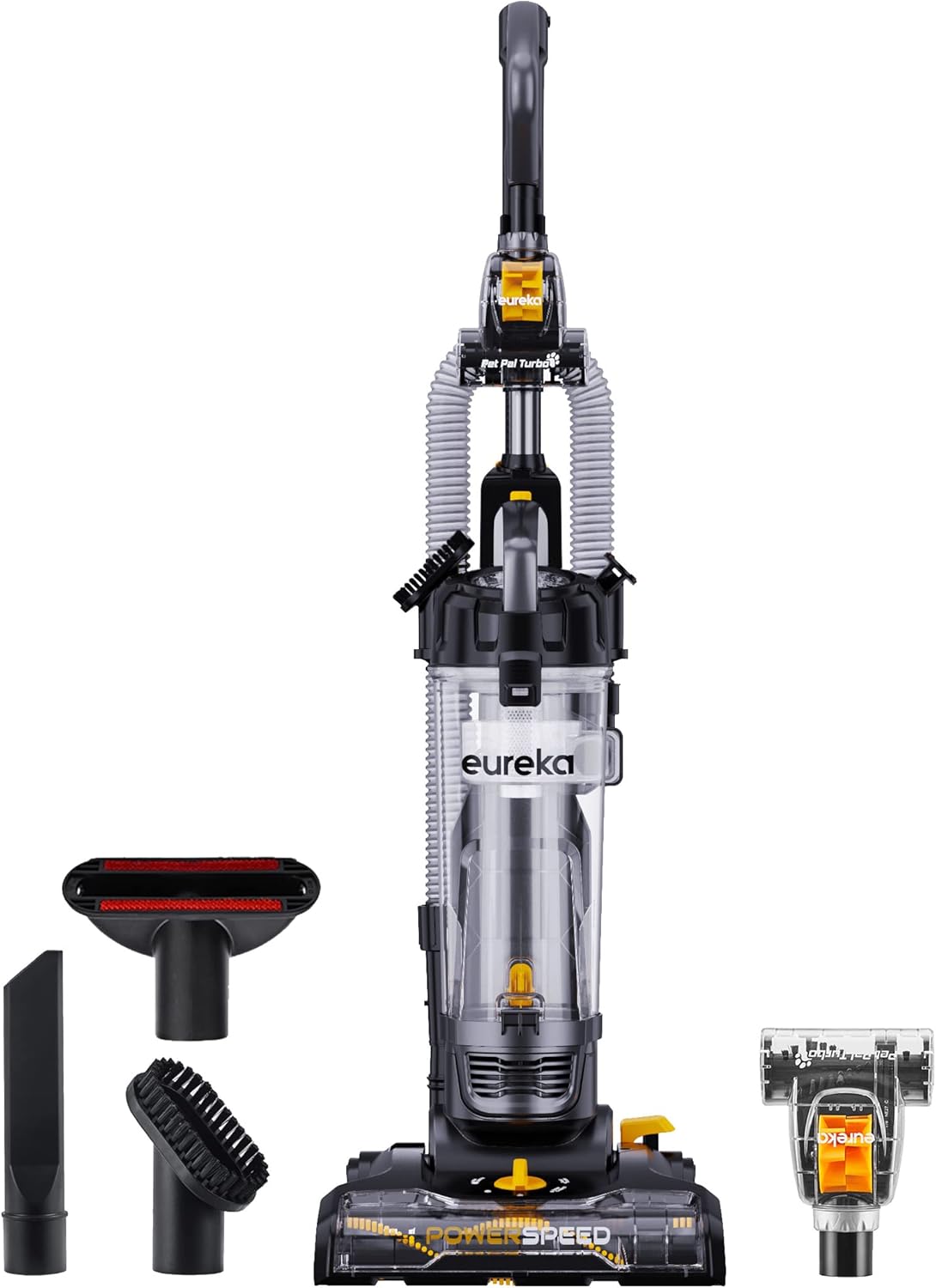
Key factors include build quality, user reviews, and value for money. Top-rated options like the Eureka EUREKA PowerSpeed Lightweight Powerful Upright Vac (4.3★ from 35,484 reviews) demonstrate what quality looks like in this category.
How much do vacuum cleaners typically cost?
Prices range from $39 to $269, with most quality options around $127. Budget options under $58 work for occasional use, while premium models over $191 offer better durability and features.
Which vacuum cleaners are most popular right now?
The EUREKA PowerSpeed Lightweight Powerful Upright Vacuum Cleane is currently top-rated with 4.3★ from 35,484 verified reviews. Check our full comparison at /best/vacuum-cleaners for all top picks.