 PickPundit
🪒 How to Choose the Best Electric Razors for Men: Complete Buying Guide

Complete electric razors for men buying guide. Learn what features matter, compare top products, and find the best electric razors for men for your budget.
View Top Picks →Table of Contents
Electric Razors for Men: The Wet-Shave Expectation Problem
Electric razor reviews from first-time buyers consistently express disappointment: "Doesn't shave as close as manual razor, requires multiple passes, leaves slight stubble visible."
These aren't product defects - they're fundamental technology differences between blade-cutting (manual razors) and oscillating-head capture-and-cut (electric razors). Managing expectations prevents the dissatisfaction cycle.
The Closeness vs Skin Irritation Trade-Off
Manual razors cut hair at or slightly below skin surface, providing closest possible shave. This close cutting also creates highest irritation risk - razor burn, ingrown hairs, nicks.
Electric razors cut hair slightly above skin surface (0.5-1mm), never achieving manual razor closeness. This clearance prevents direct blade-to-skin contact, dramatically reducing irritation, razor burn, and ingrown hairs. The trade-off is visible - stubble becomes noticeable by end of day versus staying smooth.
For men with sensitive skin, frequent ingrown hairs, or razor burn problems, electric razor's slight closeness sacrifice eliminates skin issues. For men with tough skin wanting absolute closest shave, manual razors remain superior.
The Rotary vs Foil Cutting Technology
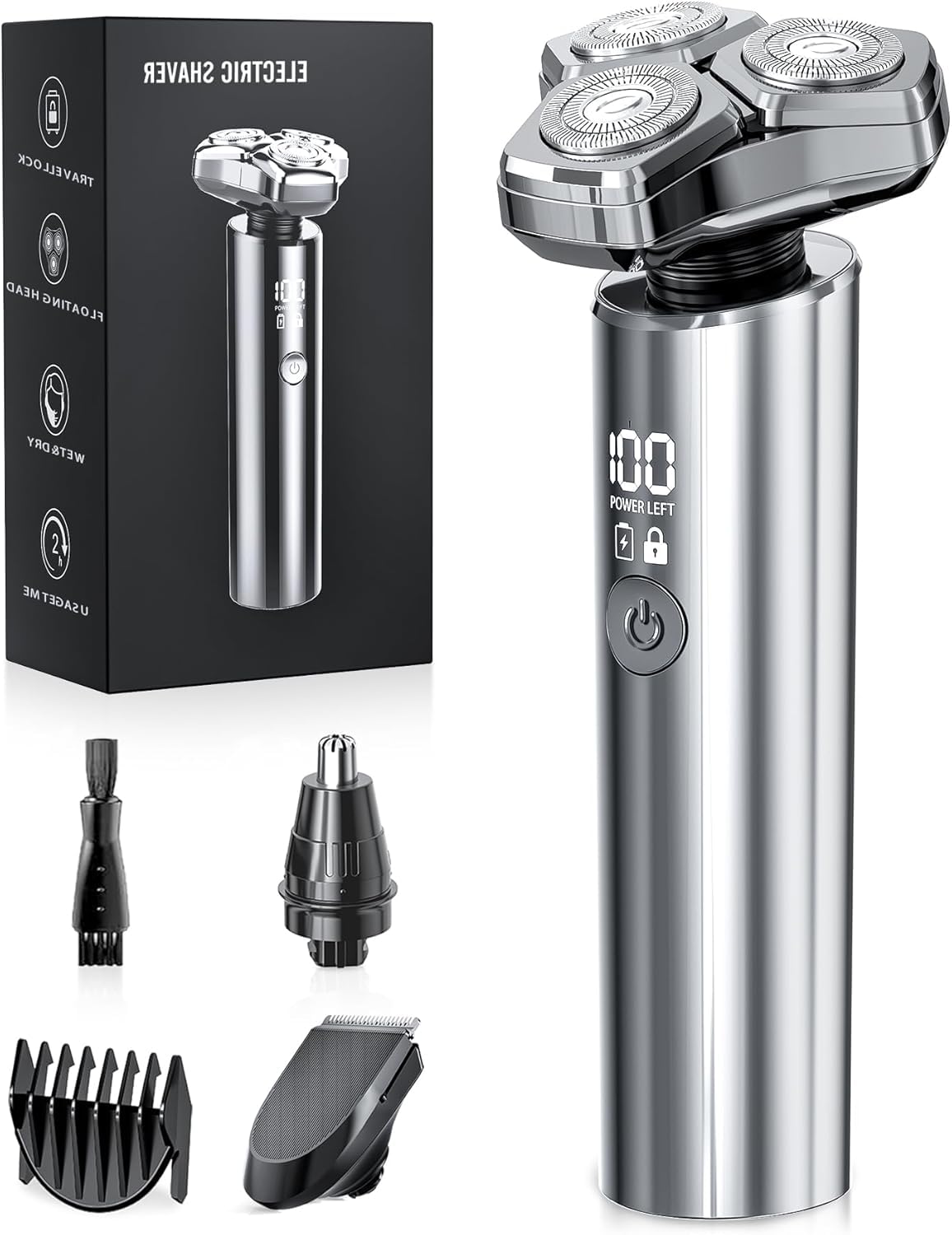
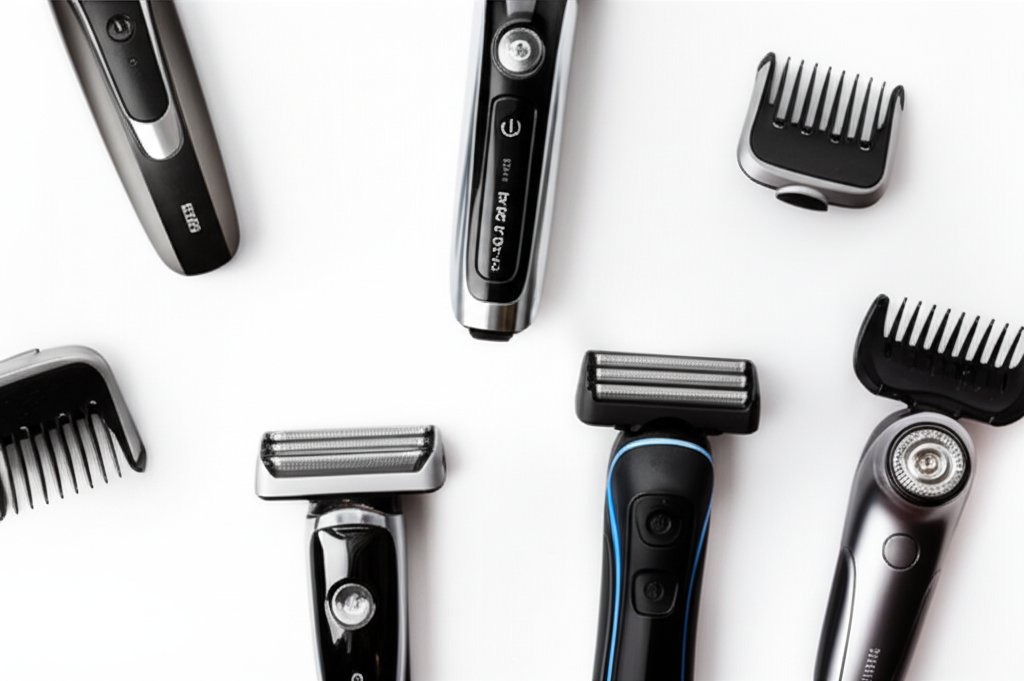
Rotary razors (Philips Norelco typical design): Three circular cutting heads with spinning blades underneath. Hair enters through slots in protective screen, gets cut by rotating blades. Works well for thick, coarse facial hair and accommodates curved facial contours through individual head flexing.
Foil razors (Braun typical design): Straight oscillating blades beneath thin metal foil. Hair pokes through foil holes, oscillating blades cut. Provides closer shave on flat facial areas but struggles with neck curves and jaw angles. Better for fine-to-medium hair thickness.
The choice matters: thick beard = rotary performs better. Sensitive skin on curved areas = rotary's flexibility reduces irritation. Desire for closest possible electric shave on flat cheek areas = foil excels.
The Wet vs Dry Shaving Capability
Modern electric razors often claim wet/dry capability - usable with shaving cream in shower or dry without cream. The reality: electric razors designed for dry shaving receive wet capability as afterthought. True wet-shaving performance requires water-sealed motors and special blade coatings.
Reviews document: "Advertised as wet/dry but performance much better dry. Wet shaving with cream creates gummy buildup on blades requiring extensive cleaning." The wet capability enables shower use and easier rinsing for cleaning, but doesn't necessarily match dedicated wet-shave electric razors.
The Cleaning Station Premium Justification
Higher-end electric razors include cleaning/charging stations that automatically clean, lubricate, and charge razor. These add $50-100 to purchase price.
The value proposition: manual cleaning requires disassembly, rinsing, drying, periodic lubrication - 5-10 minutes per cleaning. Cleaning stations reduce this to inserting razor, pressing button - 30 seconds active time. For daily shavers, the time savings compounds to 30-60 hours annually.
The station also ensures consistent cleaning (manual cleaning often gets abbreviated when rushed) and proper lubrication extending blade life. For committed electric razor users, the station justifies cost through convenience and longer blade lifespan.
The Blade Replacement Economics
Electric razor blades/heads require replacement every 12-18 months for maintained performance. Replacement cost: $30-70 depending on model.
This ongoing cost transforms the purchase economics: $100 razor with $50 annual replacement costs becomes $200-250 over 3 years. $250 razor with $70 replacements becomes $450+ over 3 years.
For budget buyers, the low initial cost can be misleading without considering total cost of ownership including replacements.
Framework
Testing electric transition: Budget $60-100 razor without cleaning station, accepting might return to manual if not satisfied.
Sensitive skin converts: Rotary head designs (Philips Norelco), wet/dry capability for shaving cream option if desired.
Daily committed shavers: Premium with cleaning station ($150-250), accepting replacement costs as ongoing investment for time savings and skin comfort.
Closest electric shave priority: Foil designs (Braun), understanding still won't match manual razor closeness but provides best electric option.
The realistic expectation: electric razors solve skin irritation and speed problems for daily shaving routine, accepting slight closeness sacrifice. Buyers expecting manual-razor closeness will be disappointed regardless of price point or brand.
Frequently Asked Questions
What should I look for when buying electric razors men?
Key factors include build quality, user reviews, and value for money. Top-rated options like the Braun Braun Electric Series 3 Razor with Precision Trimm (4.3★ from 26,257 reviews) demonstrate what quality looks like in this category.
How much do electric razors men typically cost?
Prices range from $20 to $67, with most quality options around $38. Budget options under $30 work for occasional use, while premium models over $57 offer better durability and features.
Which electric razors men are most popular right now?
The Braun Electric Series 3 Razor with Precision Trimmer is currently top-rated with 4.3★ from 26,257 verified reviews. Check our full comparison at /best/electric-razors-men for all top picks.