 PickPundit
🌀 Hvordan velge de beste husholdningsfansen: Komplett kjøpsguide

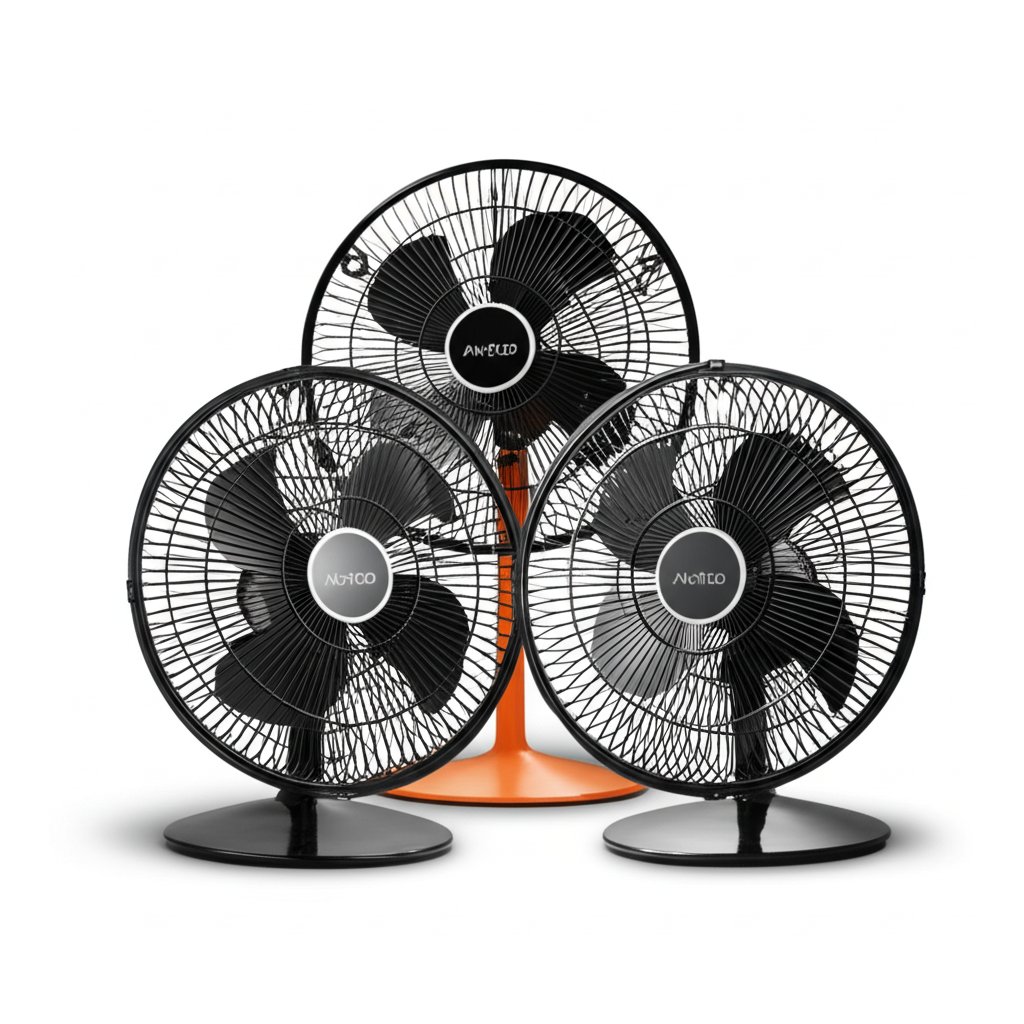
Complete household fans buying guide. Learn what features matter, compare top products, and find the best household fans for your budget.
View Top Picks →Table of Contents
Fans: The CFM Specification That Actually Matters
Fan marketing emphasizes blade count, oscillation range, remote controls, and aesthetic design while burying the single specification that determines actual cooling effectiveness: CFM (cubic feet per minute) airflow rating.
A 3-blade fan with 2000 CFM moves more air than a 5-blade fan with 1200 CFM, regardless of how impressive the 5-blade design appears. Understanding CFM enables cutting through marketing to identify fans that actually cool effectively.
The CFM vs Room Size Matching
Room CFM requirement calculation: Room volume (length × width × height in feet) ÷ 2 = minimum CFM needed for adequate air circulation.
Example: 12ft × 12ft × 8ft room = 1,152 cubic feet ÷ 2 = 576 CFM minimum.
Budget fans (under $30) typically produce 400-800 CFM. Mid-range fans ($40-80) produce 1,000-2,000 CFM. Premium fans ($100+) reach 3,000+ CFM.
The under-CFM problem: buying 600 CFM fan for 1,200 cubic foot room means inadequate air circulation, fan runs constantly, room never cools adequately. Buyers blame fan quality when actually they under-sized CFM to room volume.
The Tower vs Pedestal vs Box Fan Design Philosophy
Tower fans: Vertical oscillating design, small footprint, quieter operation through bladeless airflow technology, typically 400-1,000 CFM. Best for small rooms or supplemental cooling where space is limited.
Pedestal fans: Adjustable height standing fans, 800-2,000 CFM typical, wider oscillation range, louder operation. Best for medium-large rooms where floor space available.
Box fans: Square window-mount or floor-placement design, 1,500-3,000 CFM, loudest operation, least aesthetic. Best for maximum airflow or window ventilation where noise and appearance don't matter.
The design choice should follow CFM requirement first, then consider space/noise/aesthetic constraints within adequate CFM range.
The Noise Level vs Airflow Trade-Off
Higher CFM inherently creates more noise - moving more air requires faster blade speeds or larger blade surface areas, both increasing sound.
Tower fans sacrifice CFM for quieter operation through bladeless technology. For bedroom use during sleep, the quiet operation might justify lower cooling effectiveness.
Pedestal fans balance CFM and noise. Box fans prioritize CFM over noise entirely.
The decibel ratings help: Under 40 dB (whisper-quiet, bedroom-appropriate), 40-50 dB (noticeable but tolerable), 50-60 dB (conversation-interfering, cooling-only priority).
The Oscillation Range Impact
90-degree oscillation: Covers seating area directly in front of fan.
180-degree oscillation: Covers half room.
360-degree oscillation: Full room coverage.
Wider oscillation spreads airflow across larger area but reduces directed cooling at any single point. For personal cooling (desk fan, bedside), narrow oscillation or no oscillation provides stronger direct airflow. For whole-room circulation, wide oscillation distributes cooling.
The Energy Efficiency Misnomer
All fans labeled "energy efficient" - they use 30-100 watts versus 1,000+ watts for air conditioning. The efficiency comparison is fans vs AC, not fan vs fan.
Within fans, higher CFM fans use more watts. A 3,000 CFM box fan using 100 watts is more "efficient" per CFM than 800 CFM tower fan using 40 watts, despite tower using fewer total watts.
For cooling effectiveness per energy dollar, choose adequate CFM for room size, then minimize watts within that CFM range.
Framework
Bedroom/quiet priority: Tower fans 400-800 CFM, under 40 dB, accepting slower cooling for quiet operation.
Living room/family areas: Pedestal fans 1,000-2,000 CFM, adjustable height, oscillation matching room coverage needs.
Maximum cooling/workshops: Box fans 2,000-3,000 CFM, accepting noise for performance.
Personal/desk cooling: Small pedestal or tower with no oscillation, 400-600 CFM adequate for directed personal airflow.
The CFM-first approach: calculate room volume requirement, then shop within adequate CFM range for features (quiet operation, oscillation, remote, aesthetic). Buying quiet attractive fan with inadequate CFM leaves room warm regardless of other features.
Frequently Asked Questions
Hva bør jeg se etter når jeg kjøper fans?
Nøkkelfaktorer inkluderer byggekvalitet, brukeranmeldelser og verdi for pengene. Topprangerte alternativer som Amazon Basics Amazon Basics Air Circulator-vifte (4,3★ fra 68 225 anmeldelser) viser hvordan kvalitet ser ut i denne kategorien.
Hvor mye koster vifter vanligvis?
Prisene varierer fra $16 til $90, med de fleste kvalitetsalternativer rundt $46. Budsjettalternativer under $23 fungerer for sporadisk bruk, mens premiummodeller over $69 tilbyr bedre holdbarhet og funksjoner.
Hvilke fans er mest populære akkurat nå?
Amazon Basics Air Circulator-viften er for øyeblikket topprangert med 4,3★ fra 68 225 bekreftede anmeldelser. Sjekk vår fullstendige sammenligning hos /BEST/Fans for alle toppvalg.


