 PickPundit
🌡️ Hvordan velge de beste kjøtttermometrene: Komplett kjøpsguide

Complete meat thermometers buying guide. Learn what features matter, compare top products, and find the best meat thermometers for your budget.
View Top Picks →Table of Contents
Meat Thermometers: Food Safety and Perfect Doneness
Meat thermometers transform guessing into precision—the only reliable way to ensure safe cooking temperatures and consistent doneness. Understanding thermometer types, probe placement, and temperature targets makes the difference between perfectly cooked meat and food poisoning risks.
Why Thermometers Matter
The case for temperature measurement:
Food safety: Pathogens die at specific temperatures. Guessing risks illness.
Consistent results: Same doneness every time, regardless of meat thickness or cooking method.
No more cutting open: Checking visually releases juices. Thermometer preserves them.
Learning tool: Understanding how temperatures rise teaches cooking intuition.
Instant-Read vs Leave-In
Two main thermometer categories:
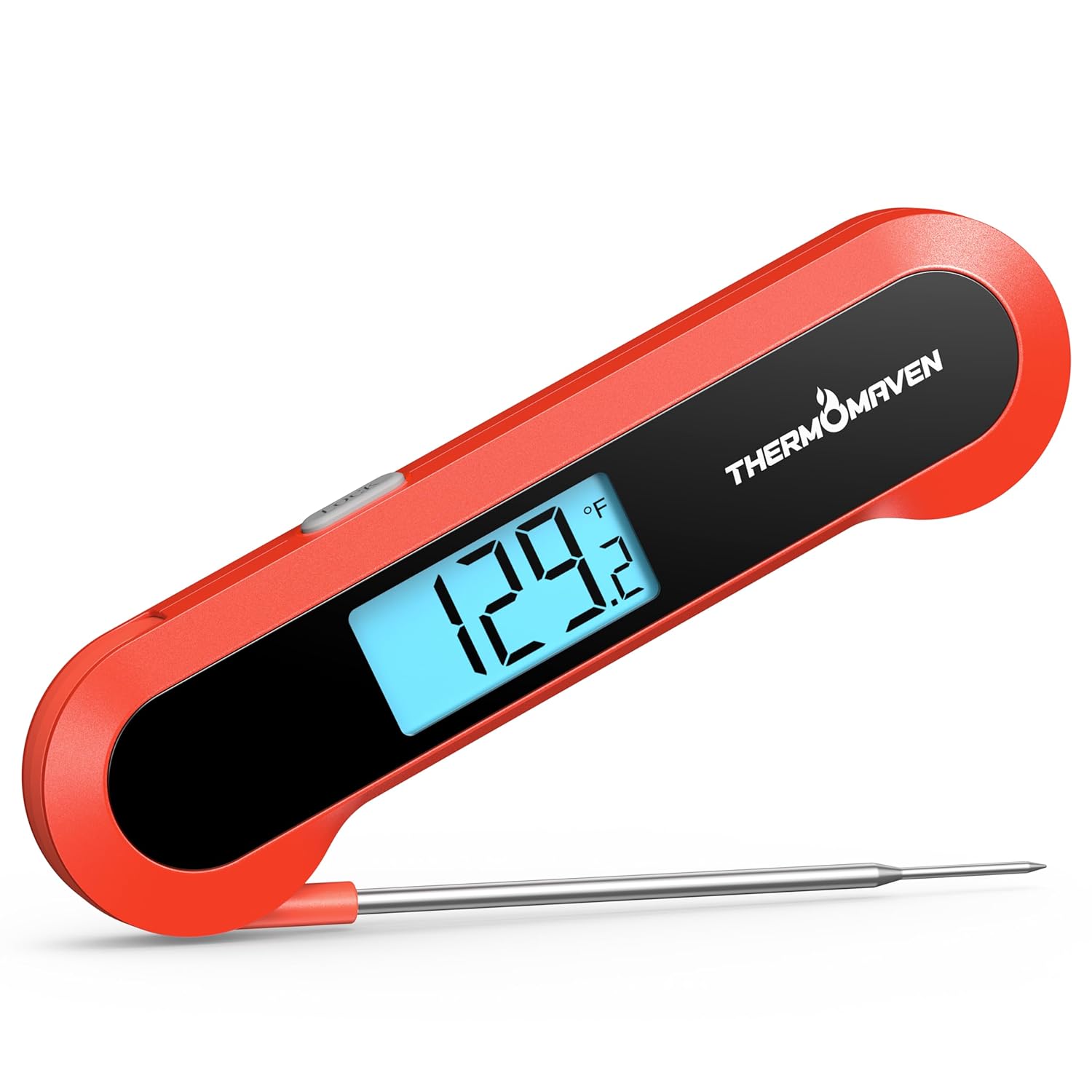
Instant-read: Check temperature manually. The Lonicera digital type.
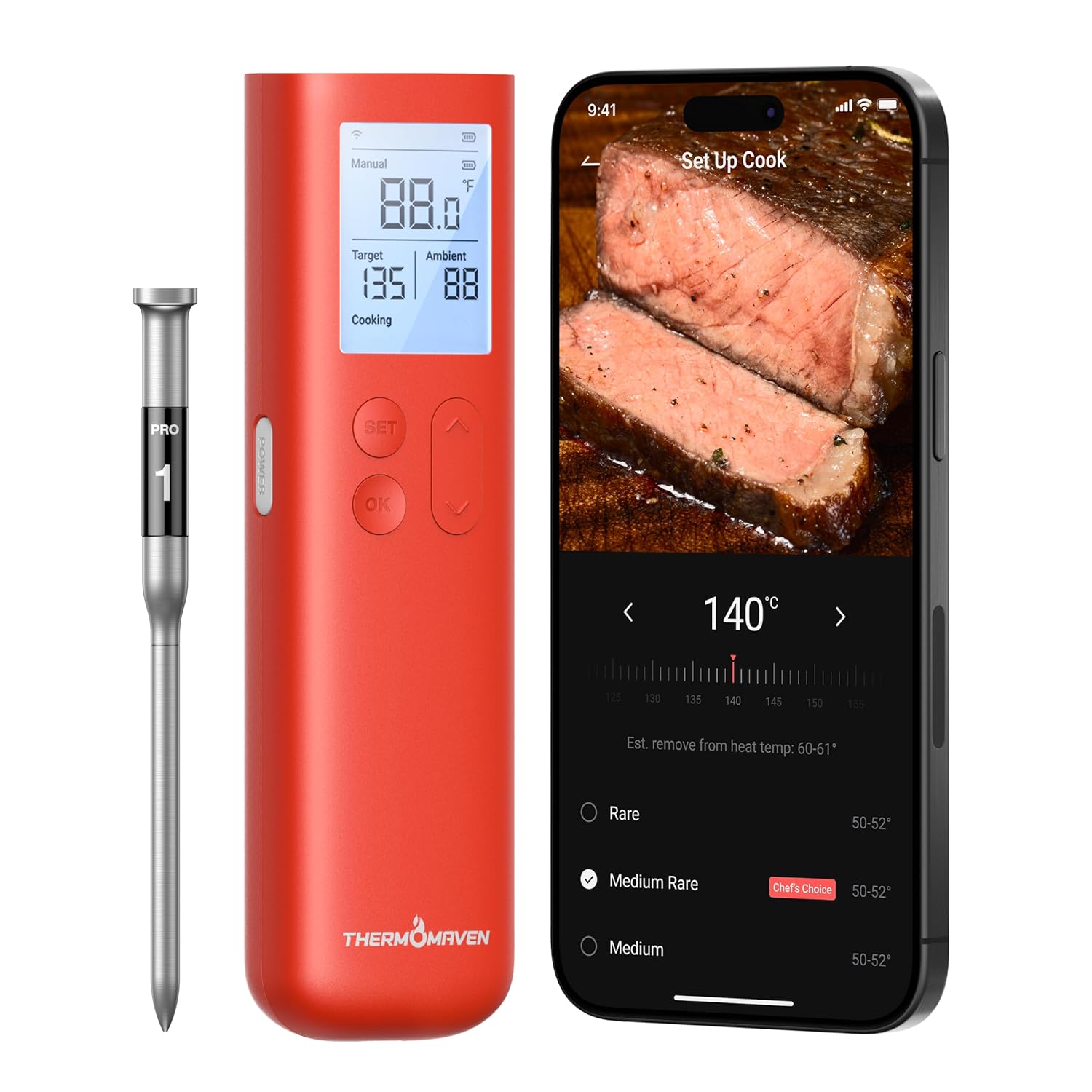
Leave-in probe: Stays in meat during cooking. Monitors continuously. The ThermoMaven Bluetooth type.
When instant-read works: Grilling, pan-searing, checking doneness quickly.
When leave-in helps: Roasting, smoking, slow cooking—anything where opening lid repeatedly is problematic.
Digital vs Analog
Display technology comparison:
Digital: Precise readings, faster response, easier to read. Modern standard.
Analog (dial): No batteries needed. Slower response. Less precise. Old-school reliability.
Digital advantage: Temperature alarms, Bluetooth connectivity, backlit displays.
Bluetooth and Smart Features
The ThermoMaven represents connected thermometers:
Remote monitoring: Check temperature from phone without opening oven.
Temperature alerts: Notification when target temperature reached.
Multiple probes: Monitor several pieces of meat simultaneously.
Graph tracking: See temperature rise over time.
Practical benefit: Walk away from smoker or grill without anxiety.
Response Time
How quickly thermometers read:
Fast (1-3 seconds): Ideal for checking multiple spots quickly.
Medium (5-10 seconds): Adequate for most use.
Slow (15+ seconds): Frustrating, especially checking multiple items.
Thermocouple vs thermistor: Thermocouple technology provides fastest readings.
Temperature Accuracy
Precision varies by thermometer:
± 1-2°F: Laboratory grade. Excellent for any purpose.
± 3-5°F: Consumer grade. Fine for food safety, may affect precision doneness.
Calibration: Some thermometers allow calibration. Test in ice water (32°F) or boiling water (212°F at sea level).
Target Temperatures
Critical temperatures to know:
Poultry: 165°F minimum. Non-negotiable for safety.
Ground beef: 160°F minimum. Bacteria throughout, not just surface.
Beef steaks/roasts: 145°F minimum (medium-rare). Surface searing kills bacteria.
Pork: 145°F minimum. Old 160°F guidance updated.
Fish: 145°F for most species.
Carryover cooking: Temperature rises 5-10°F after removing from heat. Account for this.
Probe Placement
Where to measure matters:
Thickest part: Measures slowest-heating area.
Away from bone: Bone conducts heat differently than meat.
Not touching pan: Pan temperature isn't meat temperature.
Multiple spots: Large roasts may have cool spots.
Probe Care
Maintaining accuracy and safety:
Cleaning: Wash probe with soap and water after each use.
Sanitizing: Especially important when checking doneness—probe touched raw meat.
Storage: Protect probe tip from damage.
Cable care: Leave-in probes have heat-resistant cables—don't exceed ratings.
Specialized Thermometers
Beyond basic meat probes:
Dual probe: Meat probe plus ambient/grill temperature.
Infrared: Surface temperature only. Not for internal meat temperature.
Oven-safe: Stays in meat inside oven without damage.
Waterproof: For outdoor cooking in any weather.
Price vs Performance
What different prices buy:
Under $20: Basic functionality. May be slow or less accurate. The Lonicera tier.
$20-50: Quality consumer grade. Fast, accurate, reliable.
$50-100: Premium features. Bluetooth, multiple probes.
$100+: ThermoMaven tier. Professional features for serious cooks.
Common Mistakes
Thermometer usage errors:
Not preheating probe: Cold probe in hot meat reads slow initially.
Checking too early: Opening frequently slows cooking. Trust the process, check strategically.
Ignoring carryover: Meat keeps cooking after removal. Remove slightly below target.
Single reading: Temperature varies. Check multiple spots on large cuts.
Practical Recommendations
For beginners: Quality instant-read digital around $20-30. Handles most cooking needs.
For grillers and smokers: Leave-in probe with remote monitoring. ThermoMaven Bluetooth type.
For precision cooks: Fast-read thermocouple with ±1°F accuracy.
For all cooks: Any thermometer beats no thermometer. Even basic digital dramatically improves food safety and consistency.
The key insight: meat thermometers are food safety tools first, precision cooking tools second. The $15 thermometer that you actually use beats the $100 thermometer left in the drawer.
Frequently Asked Questions
What should I look for when buying meat thermometers?
Nøkkelfaktorer inkluderer byggekvalitet, brukeranmeldelser og verdi for pengene. Topprangerte alternativer som ThermoMaven ThermoMaven Smart Bluetooth Wireless Meat Thermome (4,5★ fra 1422 anmeldelser) viser hvordan kvalitet ser ut i denne kategorien.
How much do meat thermometers typically cost?
Prisene varierer fra $9 til $140, med de fleste kvalitetsalternativer rundt $43. Budsjettalternativer under $13 fungerer for sporadisk bruk, mens premiummodeller over $65 tilbyr bedre holdbarhet og funksjoner.
Which meat thermometers are most popular right now?
ThermoMaven Smart Bluetooth Wireless Meat Thermometer er for øyeblikket topprangert med 4,5★ fra 1422 verifiserte anmeldelser. Sjekk vår fullstendige sammenligning på /best/meat-termometers for alle toppvalg.