 PickPundit
📦 Como escolher os melhores liquidificadores de imersão: guia de compra completo

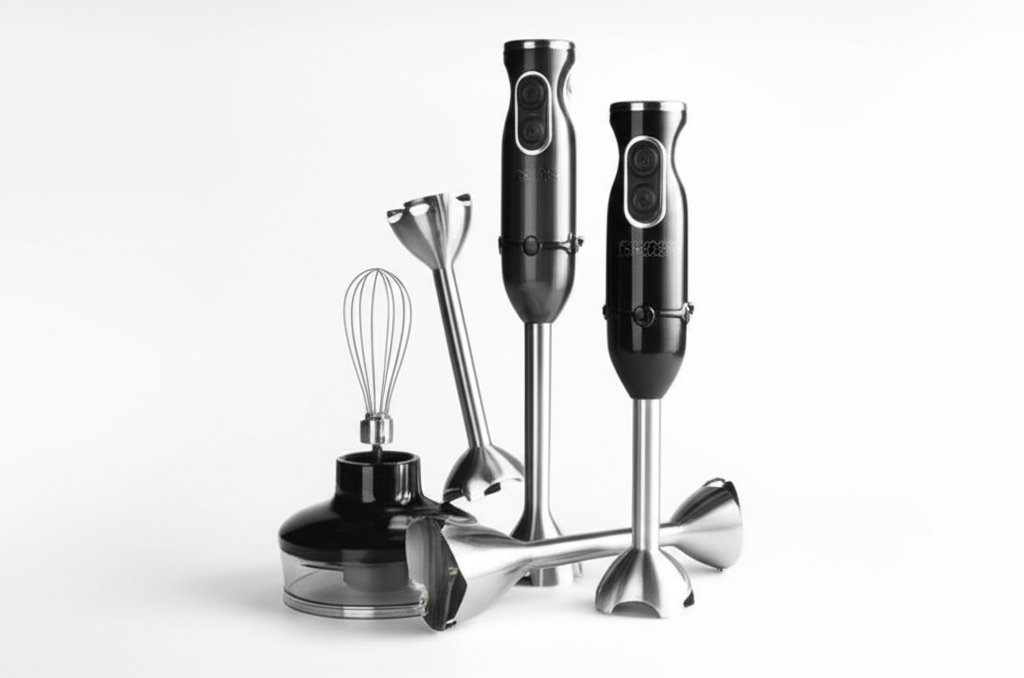
Complete immersion blenders buying guide. Learn what features matter, compare top products, and find the best immersion blenders for your budget.
View Top Picks →Table of Contents
Immersion Blenders: Hand Blending Versatility, Power Selection, and Kitchen Applications
Immersion blenders (stick blenders) blend directly in pots, bowls, and containers. Understanding power needs and attachments helps select effective hand blending tools.
Versatility Advantage
Blend soups directly in pots—no transfer needed.
Make smoothies in individual cups.
Puree baby food in small batches.
Whip cream, beat eggs, make mayonnaise.
Power Considerations
Low power (150-200W): light tasks, soft ingredients.
Medium power (250-400W): most home cooking needs.
High power (500W+): frozen ingredients, heavy blending.
More power increases versatility but also cost.
Corded vs Cordless
Corded provides consistent power without battery concerns.
Cordless offers freedom of movement.
Battery life limits continuous use.
Most home cooks prefer corded simplicity.
Blade Design
Stainless steel blades are standard.
Blade shape affects blending efficiency.
Dome guards reduce splashing.
Quality blades stay sharp longer.
Attachment Options
Whisk attachments for whipping and beating.
Chopper attachments for small food processing.
Blending beakers for countertop smoothie making.
More attachments increase versatility and cost.
Shaft Length
Longer shafts reach into deep pots.
Standard length suits most cooking vessels.
Measure your largest pot for proper fit.
Short shafts limit deep-pot blending.
Speed Controls
Variable speed dial provides precision control.
Multiple fixed speeds offer adequate control.
Turbo button for extra power bursts.
Simple two-speed sufficient for basic needs.
Hot Liquid Safety
Designed for use with hot soups and sauces.
Reduce splashing risk with deeper immersion.
Tilt pot away for initial blending.
Quality guards minimize splash-back.
Ergonomics
Comfortable grip for extended use.
Weight affects fatigue during blending.
Button placement affects ease of control.
One-handed operation is typical design.
Cleaning Ease
Detachable shafts simplify cleaning.
Dishwasher-safe components reduce effort.
Rinse immediately after use.
Blade housing can trap food.
Counter Blender Comparison
Immersion blenders excel at in-pot blending.
Counter blenders better for frozen drinks and ice.
Many households benefit from both types.
Different tools for different tasks.
Practical Recommendations
For occasional soup blending, basic immersion blenders ($25-40) handle standard tasks.
For frequent use with varied tasks, mid-range options ($50-80) with attachments provide versatility.
Power matters—400W+ handles most home cooking situations well.
Corded models preferred for simplicity unless mobility is priority.
Frequently Asked Questions
O que devo procurar ao comprar liquidificadores de imersão?
Os principais fatores incluem qualidade de construção, avaliações de usuários e custo-benefício. Opções de classificação mais altas, como o Koios Koios Immersion Blender (4,5★ de 1.941 avaliações) demonstram como é a qualidade nesta categoria.
Quanto custam os liquidificadores de imersão normalmente?
Os preços variam de US$14 a US$614, com a maioria das opções de qualidade em torno de US$76. As opções de orçamento abaixo de US$22 funcionam para uso ocasional, enquanto os modelos Premium acima de US$114 oferecem melhor durabilidade e recursos.
Quais liquidificadores de imersão são mais populares agora?
O Koios Immersion Blender atualmente é o mais bem avaliado com 4,5★ de 1.941 avaliações verificadas. Verifique nossa comparação completa em /best/immersion-blenders para todas as principais opções.


