 PickPundit
📦 Como escolher os melhores blocos de ioga: guia de compra completo

Complete yoga blocks buying guide. Learn what features matter, compare top products, and find the best yoga blocks for your budget.
View Top Picks →Table of Contents
Yoga Blocks: The Support Props That Enable Practice Progression
Yoga blocks bridge the gap between where your body is and where poses require it to be. They're not crutches for weak practitioners—they're tools that enable proper alignment, safe progression, and sustainable practice for bodies of all capabilities.
Why Blocks Matter
Yoga blocks serve multiple purposes:
Bringing the floor up: When hamstrings or hips don't allow reaching the floor, blocks provide intermediate surface.
Maintaining alignment: Blocks enable proper form when flexibility limitations would otherwise force compromise.
Creating stability: Supported poses allow focus on technique rather than balance struggle.
Deepening stretches: Blocks under knees, hips, or back enable longer holds in restorative poses.
Even advanced practitioners use blocks for specific purposes—they're tools, not training wheels.
Size Standards
Yoga blocks come in standard sizes:
Standard (9"x6"x4"): Most common size, provides three height options depending on orientation.
Large (9"x6"x4"+): Extra height for those needing more support or with longer limbs.
Small (9"x6"x3"): The 3" height option at $10 provides lower profile—may suit those needing less elevation.
The three orientations (lying flat, on side, standing tall) provide 3", 6", or 9" of height from a single block—versatility built into standard dimensions.
Material Options
Yoga block materials affect experience:
Foam (EVA):
- Lightweight and soft
- Most common and affordable
- Gives slightly under pressure
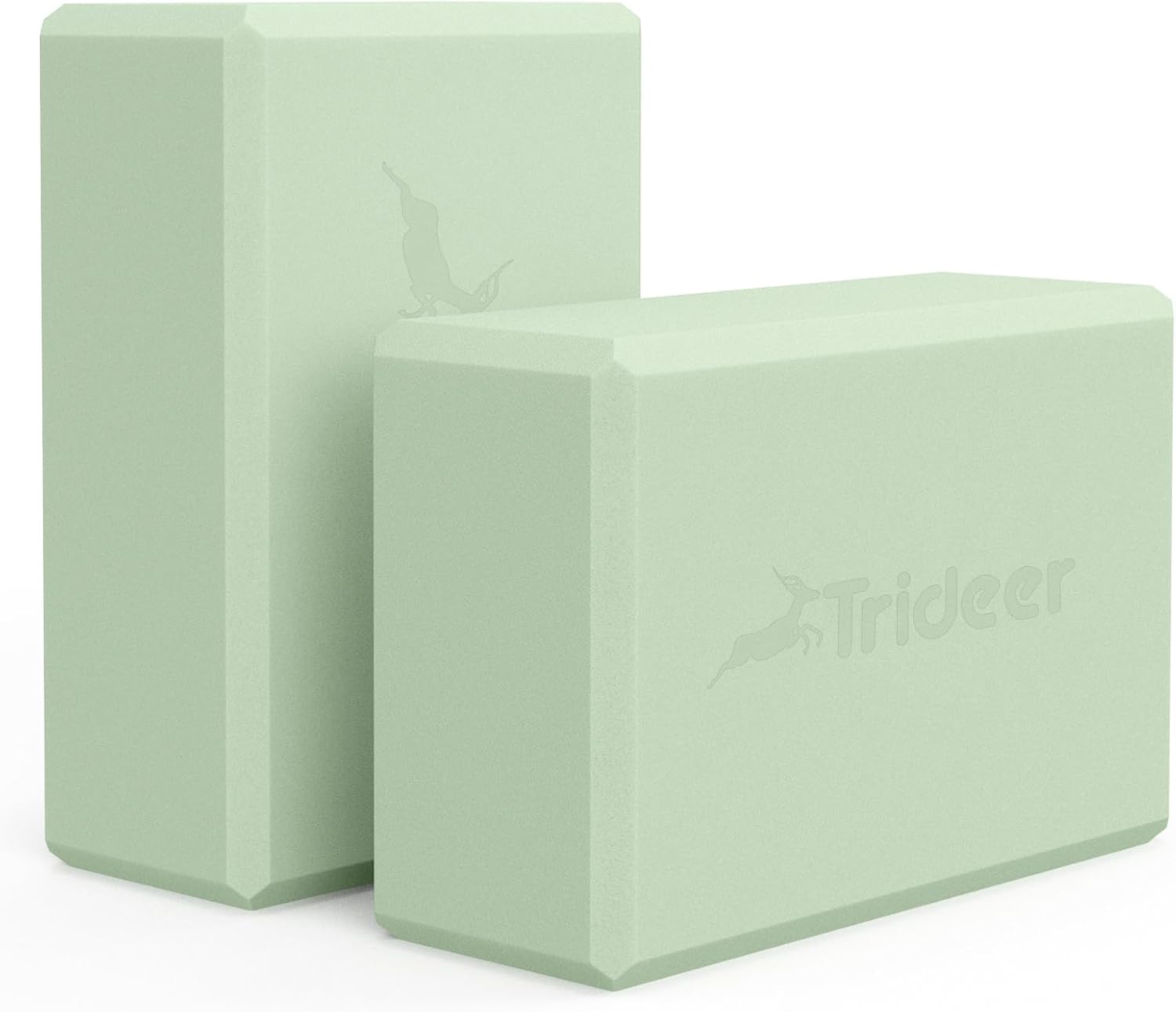
- The Trideer and Fitvids options use high-density foam
Cork:
- Natural material, firmer feel
- Heavier (stability in standing poses)
- Sustainable material choice
- Higher price point
Wood:
- Very firm, no give
- Maximum stability
- Heaviest option
- Traditional material, highest price
For most practitioners, foam blocks provide appropriate combination of support, weight, and value.
Density Matters
Foam block density affects performance:
Low density: Soft, compresses under weight, less stable. Budget blocks often cut density for cost.
High density: Firm, maintains shape under pressure, stable support. The "high density" marketing on Fitvids and Trideer indicates quality foam.
Blocks that compress significantly under hand pressure during standing poses compromise stability. Quality high-density foam maintains shape throughout practice.
One Block or Two?
Block purchasing quantities:
One block: Sufficient for many poses and practitioners.
Two blocks (pair): Enables symmetrical support, more pose options, and restorative setups requiring blocks under both sides.
Most practitioners eventually want two blocks. The 2-pack pricing at $10-12 provides both blocks economically.
When to Use Blocks
Block use situations:
Forward folds: When hands don't reach floor with straight legs
Triangle pose: When hand can't reach floor without compromising chest openness
Half moon: For balance support during learning
Bridge pose: Under sacrum for supported bridge
Seated forward folds: Under sit bones to enable pelvic tilt
Restorative poses: Various support configurations for relaxation
Teachers often cue block use; self-directed practitioners should experiment with support wherever poses feel unstable or compromised.
Blocks vs Straps
Both are props, serving different purposes:
Blocks: Vertical support, bringing surfaces closer
Straps: Horizontal reach, extending limb length for binds and stretches
Neither replaces the other—complete prop sets include both.
Practical Recommendations
For home practice: Two-block set at $10-12 covers most needs affordably.
For travel: Consider lighter foam over cork/wood for portability.
For studio classes: Many studios provide blocks, but personal blocks ensure availability and hygiene.
For beginners: Block use from the start builds proper alignment habits rather than forcing compensation.
The key insight: yoga blocks enable better practice, not easier practice. Using blocks appropriately develops alignment understanding that persists when blocks eventually become unnecessary for certain poses.
Frequently Asked Questions
O que devo procurar ao comprar blocos de ioga?
Os principais fatores incluem qualidade de construção, avaliações de usuários e custo-benefício. Opções de classificação mais alta, como os blocos de ioga SEPTO 2 PCS (4,7★ de 481 avaliações) demonstram como a qualidade é nesta categoria.
Quanto custam normalmente os blocos de ioga?
Os preços variam de US$ 8 a US$ 50, com a maioria das opções de qualidade em torno de US$18. As opções de orçamento abaixo de US$12 funcionam para uso ocasional, enquanto os modelos Premium acima de US$27 oferecem melhor durabilidade e recursos.
Quais blocos de ioga são mais populares agora?
Os blocos de ioga de 2 peças atualmente são os mais bem avaliados com 4,7★ de 481 avaliações verificadas. Verifique nossa comparação completa em /best/yoga-blocks para todas as principais escolhas.