 PickPundit
📦 Как выбрать лучшие камеры резервного копирования: Полное руководство по покупке

Complete backup cameras buying guide. Learn what features matter, compare top products, and find the best backup cameras for your budget.
View Top Picks →Table of Contents
Backup Cameras: The Factory vs Aftermarket Quality Gap
Modern vehicles increasingly include factory backup cameras, yet the aftermarket camera market thrives for two reasons: older vehicles lacking this safety feature, and RV/trailer applications requiring specialized multi-camera solutions. Understanding which category you're shopping for prevents expensive mismatches.
The Consumer Vehicle Upgrade Path
For standard cars and trucks without factory cameras, the $18-50 price range offers capable solutions that most buyers overcomplicate. The fundamental technology—a CMOS sensor transmitting video to a display—has commoditized to the point where budget options perform adequately for basic reversing needs.
The YIMU camera at $18 and similar budget options provide 720p resolution, LED night illumination, and license plate mounting. Reviews consistently note these cameras work fine for their intended purpose: seeing obstacles while backing up. The image quality won't match a Tesla's built-in cameras, but it shows shopping carts, children, and curbs clearly enough for safe reversing.
Where budget cameras fail: extreme weather durability and long-term reliability. The waterproofing on sub-$25 cameras often degrades within 1-2 years, particularly in climates with temperature extremes. Reviews from Minnesota and Arizona buyers frequently mention camera failure after 18 months. This suggests treating cheap cameras as consumables—expect replacement rather than decade-long service.
The Wireless vs Wired Decision
Wireless backup cameras eliminate running cables through vehicle bodies, appealing to DIY installers intimidated by routing wires. The trade-off involves signal reliability and latency.
Modern digital wireless systems at $50+ have largely solved the interference issues that plagued earlier analog wireless cameras. These systems transmit video reliably in typical conditions. However, "typical" matters—dense urban environments with significant RF interference can cause occasional dropouts. For most suburban and rural use, current wireless technology works.
Latency—the delay between real-world movement and screen display—matters more than specifications suggest. Even 100-200 milliseconds of delay creates slight disconnect between steering input and visual feedback. Wired cameras eliminate this latency entirely. Drivers accustomed to factory backup cameras may find wireless delay noticeable and annoying.
The honest recommendation: if you're capable of basic wire routing (removing interior trim panels, accessing trunk/tailgate areas), wired cameras provide better long-term experience. If vehicle disassembly intimidates you, wireless cameras work acceptably with minor compromises.
RV and Trailer Systems: A Different Category
The $100-350 multi-camera RV systems exist in a separate market from consumer vehicle cameras. These systems address genuine challenges: monitoring blind spots on 30+ foot vehicles, providing split-screen views of multiple angles, and surviving the vibration and weather exposure of road travel.
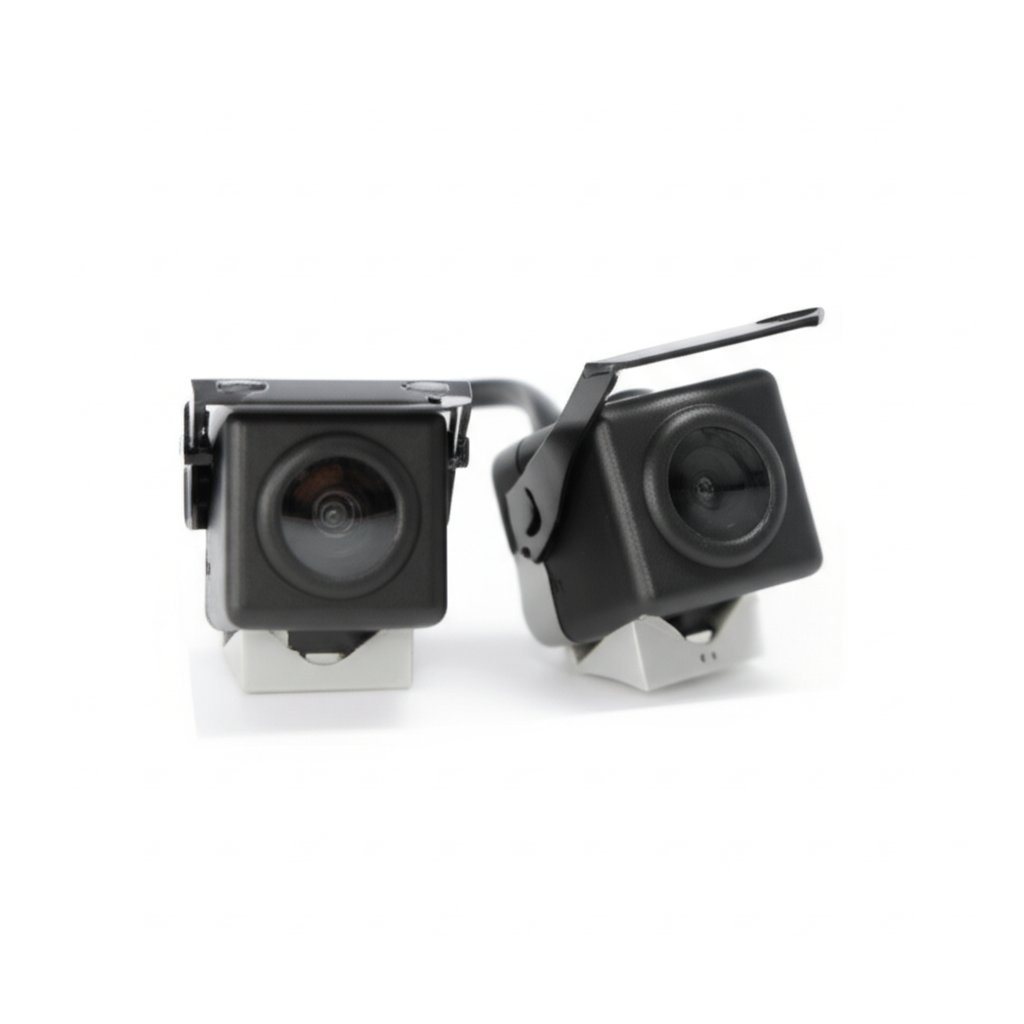
The Kairiyard dual-camera system at $50 and Fookoo system at $330 illustrate the range. Budget RV cameras provide basic rear visibility—useful for backing into campsites and monitoring towed vehicles. Premium systems add side cameras, split-screen capability, and more durable construction designed for years of road vibration.
For occasional RV users renting vehicles a few times yearly, the basic $50-80 portable systems suffice. For RV owners using vehicles frequently, the $200-350 systems with better durability and features justify their premium through extended service life and improved daily usability.
Vehicle-Specific Replacements
The $80-150 OEM-replacement cameras—designed to replace failed factory cameras in specific vehicle models—occupy a specialized niche. These cameras match factory mounting points and connectors, enabling direct replacement without modification.
The Ford F-250/F-350 replacement camera at $81 exemplifies this category. Factory camera failures are common enough that aftermarket alternatives exist for most popular vehicles. These replacements typically offer quality matching or exceeding original equipment at 30-50% of dealer replacement costs.
Critical caution: verify exact model year compatibility before purchasing. Camera connectors and mounting points often change between model years, and a camera specified for 2017-2019 may not fit 2020+. Return rates on these specific-fit cameras run high due to compatibility mismatches.
Installation Realities
Backup camera installation ranges from 20-minute simplicity to multi-hour complexity depending on approach and vehicle. License plate mount cameras with wireless transmission represent the simple end—mount camera, place display on dash, connect power.
Integrated installations—routing video to factory head units or installing flush-mount cameras—require more skill and time. Professional installation costs $75-200 depending on complexity, which sometimes exceeds camera cost. Factor installation into total budget, and honestly assess your installation capabilities before choosing a system that exceeds your skills.
The Safety Value Proposition
Backup cameras prevent an estimated 58-69 deaths annually in the United States—predominantly small children behind vehicles. For families with young children, even a basic $25 camera providing adequate visibility justifies itself through accident prevention potential.
Beyond child safety, cameras prevent property damage. Backing into poles, walls, and other vehicles creates repair costs easily exceeding camera investment. A single prevented accident pays for even premium camera systems.
The technology has matured to the point where any functional backup camera provides safety value. Price differences primarily affect durability, image quality, and installation convenience rather than fundamental safety capability.
Frequently Asked Questions
What should I look for when buying backup cameras?
Ключевые факторы включают качество сборки, отзывы пользователей и соотношение цены и качества. Лучшие опции, такие как Kairiyard Kairiyard Dual RV Backup Camera с 7-дюймовым Monito (4★ из 272 отзывов), демонстрируют, как выглядит качество в этой категории.
How much do backup cameras typically cost?
Цены варьируются от 9 до 484 долларов, при этом большинство качественных вариантов около 102 долларов США. Бюджетные варианты стоимостью менее 14 долларов США работают для случайного использования, а премиальные модели стоимостью более 153 долларов предлагают лучшую долговечность и функции.
Which backup cameras are most popular right now?
Камера резервной копии Kairiyard Dual RV с 7-дюймовым монитором в настоящее время имеет максимальную оценку 4★ из 272 проверенных отзывов. Проверьте наше полное сравнение в /best/backup-camera для всех лучших вариантов.


