 PickPundit
📦 Как выбрать лучшие автомобильные сигналы: Полное руководство по покупке

Complete car alarms buying guide. Learn what features matter, compare top products, and find the best car alarms for your budget.
View Top Picks →Table of Contents
Car Alarms: The Security Theater vs Actual Theft Deterrence
Modern car alarms occupy a peculiar position in vehicle security: nearly universal installation yet widely ignored when triggered. The wailing alarm in a parking lot prompts annoyance rather than concern—we assume false triggers from wind, passing trucks, or oversensitive systems rather than actual theft attempts.
This reality shapes how to evaluate aftermarket car alarm purchases. The question isn't whether an alarm provides absolute security—it doesn't—but whether it offers incremental deterrence at reasonable cost.
Understanding What Thieves Actually Do
Professional car thieves don't wrestle with door locks while alarms blare. They exploit electronic vulnerabilities (relay attacks on keyless entry), tow vehicles to private locations for leisurely defeat, or target specific vehicles for parts rather than resale. Against sophisticated theft, consumer alarms provide minimal protection.
Opportunistic theft—the smash-and-grab of visible valuables or the joyriding of unlocked vehicles—represents what basic alarms actually deter. The calculus is simple: thieves seeking easy targets bypass vehicles that will attract attention. Even an alarm that neighborhood residents ignore may cause a thief to select a quieter target.
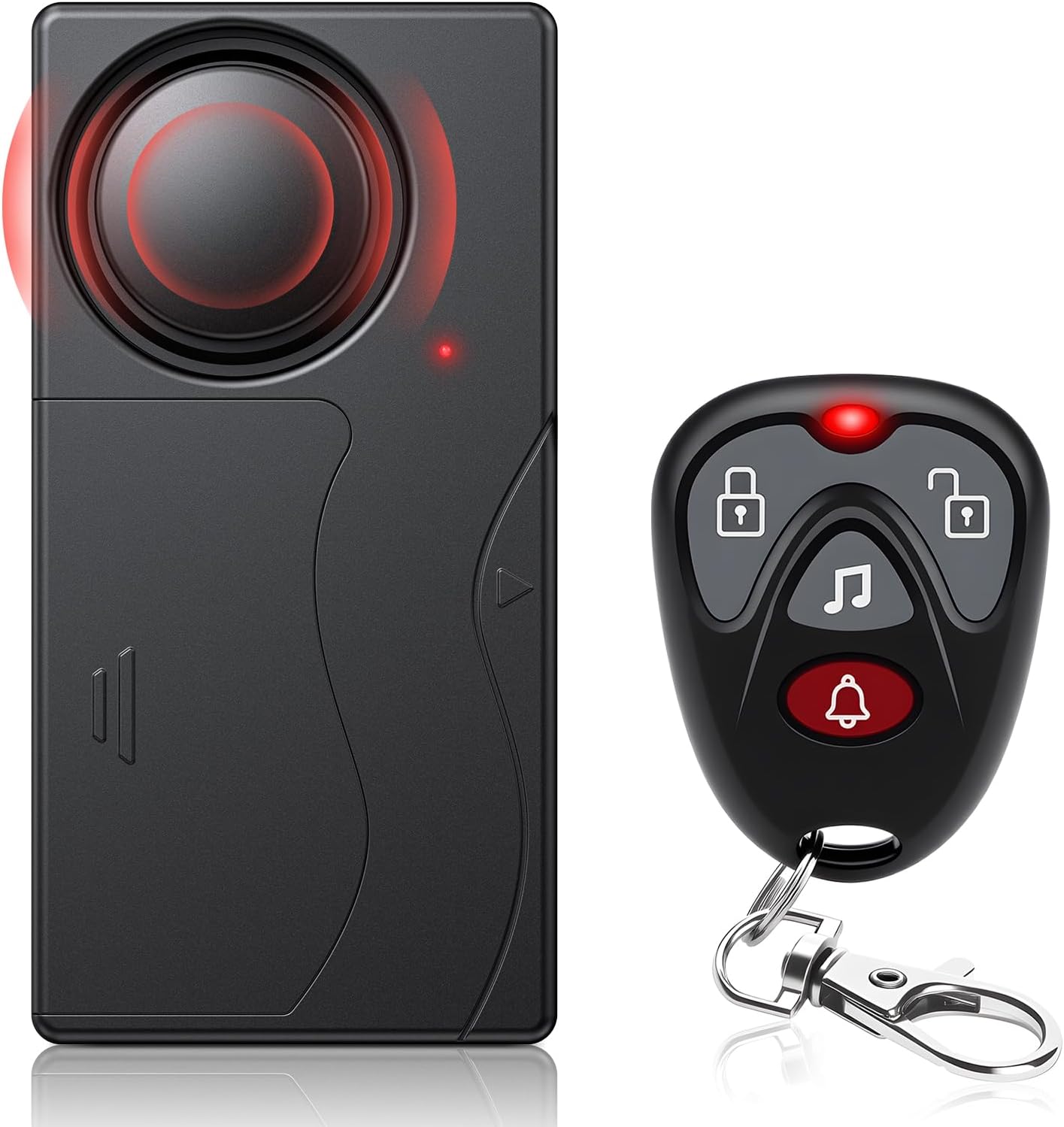
This framing matters for purchasing decisions. A $16 vibration alarm that triggers 110dB sirens provides identical deterrent effect against opportunists as a $100 system with smartphone integration. The opportunist sees both vehicles as "will make noise if I proceed" and moves to quieter options.
Vibration Sensors vs Motion Sensors
Budget car alarms primarily detect vibration—physical contact with the vehicle body that exceeds sensitivity thresholds. The $16-30 vibration alarms like the basic 110dB system respond to window breaking, door handle manipulation, and attempts to rock or tow the vehicle.
Sensitivity calibration creates the core trade-off. High sensitivity catches genuine intrusion attempts but triggers from heavy trucks passing, car wash pressure, or strong wind gusts. Low sensitivity reduces false alarms but may miss subtle intrusion attempts. Most users spend their first week adjusting sensitivity levels through trial and error.
Motion sensors expand detection to interior movement—someone reaching through a broken window or already inside the vehicle. These add complexity and cost without proportionate benefit for most users. If glass breaks and vibration sensors trigger, the additional motion detection rarely changes outcomes.
Steering Wheel Locks: Visual Deterrence Reconsidered
The Urban UR978Y and similar steering wheel locks represent a different deterrence philosophy: visible physical barriers that communicate "this vehicle will be difficult to steal" before any intrusion attempt begins.
These locks physically prevent steering wheel rotation when engaged, making driven theft impractical without defeating the lock. The 120dB alarm integration adds auditory response if the lock is manipulated.
The honest assessment: determined thieves can defeat steering wheel locks, sometimes by cutting through the steering wheel itself rather than the lock. But the visible presence—bright yellow metal blocking the steering wheel—selects this vehicle out of the easy-target category. Thieves seeking quick scores skip vehicles with visible security measures.
The $100 price point for quality steering wheel locks exceeds basic alarm systems but may provide superior deterrence through visibility. A silent, hidden alarm system offers no deterrent until triggered; a visible lock deters before approach.
Smartphone Integration: Convenience vs Security Value
Higher-priced systems ($30-50) increasingly offer smartphone notification when alarms trigger. Theoretically, this enables immediate response to genuine intrusion rather than discovering theft hours later.
Practical value depends on response capability. If you're miles from your vehicle when notification arrives, knowing your alarm triggered provides limited benefit beyond insurance documentation timing. If you're in an adjacent building and can respond within minutes, immediate notification enables intervention.
For most users, smartphone integration solves a problem they don't actually have. The base-level deterrent function—making noise when disturbed—doesn't improve with notification sophistication. The premium pays for awareness that rarely translates to action.
Installation Complexity and Vehicle Compatibility
Basic vibration alarms require minimal installation: adhesive mounting and connection to vehicle power (often through cigarette lighter adapters or OBD ports). These systems work across virtually all vehicles without modification.
Integrated systems that connect to vehicle door locks, ignition systems, or factory alarm interfaces require significant installation complexity. Professional installation costs $50-200 depending on vehicle and system complexity—often exceeding the alarm hardware cost.
For most buyers, the installation complexity of advanced systems undermines their value proposition. A $30 alarm requiring $100 professional installation competes poorly against a $16 adhesive-mount system providing 80% of the deterrent value.
The Insurance Perspective
Some insurance providers offer discounts for verified alarm installation, theoretically offsetting alarm costs through premium reduction. Verify discount availability and amount before factoring this into purchasing decisions—many insurers have eliminated or reduced these discounts as factory alarms became standard.
When discounts exist, they typically require professional installation certification, eliminating the DIY savings that make budget alarms attractive. The math often favors basic alarms without insurance involvement rather than premium systems chasing marginal discounts.
False Alarm Fatigue
The car alarm's diminished social response stems from epidemic false alarming. Owners who trigger their own alarms repeatedly, systems that respond to environmental factors, and oversensitive factory installations have trained society to ignore alarm sounds.
This creates a counterintuitive recommendation: set sensitivity lower than you initially prefer. A system that never false alarms maintains credibility with neighbors who might actually respond to genuine intrusion. A system that cries wolf weekly ensures universal ignoring.
Practical Recommendations
For basic deterrence: A $16-30 vibration-based alarm provides core functionality—noise generation when disturbed. Adjust sensitivity to minimize false alarms while catching genuine contact.
For visual deterrence: Steering wheel locks at $30-100 communicate secured status before intrusion attempts begin. Consider these as complements to rather than replacements for alarm systems.
For high-value vehicles: The layered approach—visible deterrent (steering wheel lock), audible deterrent (alarm), and tracking capability (separate GPS device)—provides meaningful security improvement. No single system prevents determined theft, but layers reduce opportunity windows.
For most vehicles: Honest assessment suggests basic alarms provide reasonable deterrence at minimal cost. The marginal improvement from premium systems rarely justifies 3-5x pricing for vehicles of ordinary value.
Frequently Asked Questions
На что следует обратить внимание при покупке автосигнализации?
Ключевые факторы включают качество сборки, отзывы пользователей и соотношение цены и качества. Самые популярные опции, такие как автомобильная сигнализация Lnkerco 110db (4,4★ из 27 отзывов), демонстрируют, как выглядит качество в этой категории.
Сколько обычно стоят автосигналы?
Цены варьируются от 10 до 169 долларов, причем большинство качественных вариантов около 50 долларов. Бюджетные варианты стоимостью менее 15 долларов США работают для случайного использования, а премиальные модели стоимостью более 75 долларов предлагают лучшую долговечность и функции.
Какие автомобильные сигнализации сейчас наиболее популярны?
Автомобильная сигнализация 110 дБ в настоящее время имеет топ-рейтинг 4,4★ из 27 проверенных отзывов. Ознакомьтесь с нашим полным сравнением в /best/автомобильной сигнализации для всех лучших вариантов.