 PickPundit
📦 Как выбрать лучшие радиоуправляемые вертолеты: полное руководство по покупке

Complete rc helicopters buying guide. Learn what features matter, compare top products, and find the best rc helicopters for your budget.
View Top Picks →Table of Contents
RC Helicopters: The Most Challenging RC Aircraft Category
RC helicopters represent the steepest learning curve in RC aviation—more difficult than drones, planes, or multirotors. The physics of single-rotor flight create inherent instability that requires continuous pilot correction. This challenge appeals to some hobbyists and frustrates others.
Understanding helicopter difficulty prevents purchasing decisions that lead to quick abandonment.
Why Helicopters Are Harder
Unlike multirotors (drones) that use computer-controlled motor speed variation for stability, traditional RC helicopters rely on pilot skill for constant stability:
Inherent instability: Single-rotor helicopters want to spin, roll, and crash—the pilot prevents this continuously.
Complex controls: Collective pitch, cyclic control, and tail rotor coordination require simultaneous management.
Mechanical complexity: Many moving parts that require adjustment and can fail.
Learning crashes: Expect many crashes during the learning process.
Drones have largely replaced helicopters for casual flying because computer stabilization eliminates the constant pilot workload.
Coaxial vs Single-Rotor
RC helicopters use different rotor configurations:
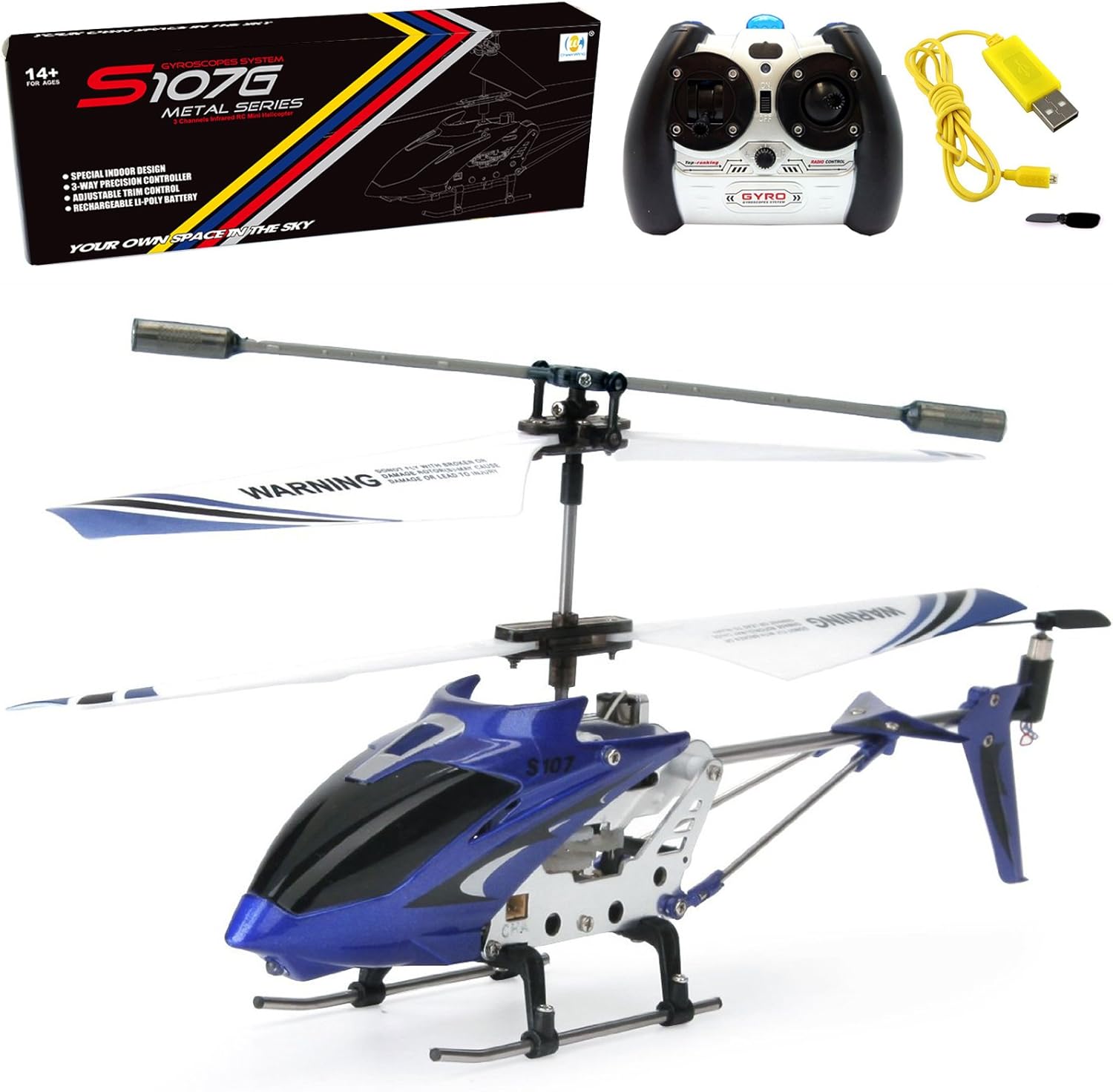
Coaxial (dual counter-rotating rotors): The Cheerwing S107G and SYMA S107H represent this design—two rotors spinning opposite directions cancel torque, eliminating tail rotor need and dramatically improving stability. Best for beginners.
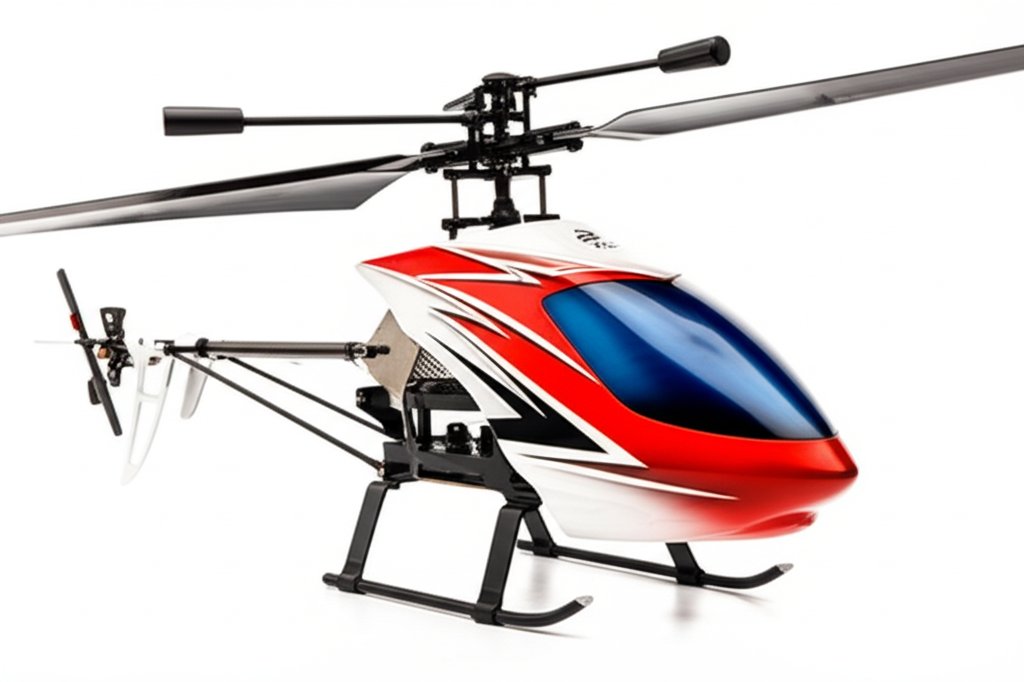
Single-rotor with tail rotor: Traditional helicopter configuration. More challenging to fly but capable of aerobatic maneuvers coaxial designs can't perform.
The S107G's enduring popularity stems from its coaxial stability making helicopter flight accessible to beginners.
Channel Count Explained
Helicopter "channels" describe control complexity:
2-channel: Up/down and rotation only. Very limited, essentially flying toys.
3-channel (3CH): Add forward/back movement. The S107G's "3.5CH" (the 0.5 indicates gyro assistance) provides accessible flight.
4-channel: Add lateral movement. Full directional control.
6-channel+: Add collective pitch control enabling full aerobatic capability including inverted flight.
Beginners should start with 3-channel coaxial helicopters before considering more complex configurations.
Gyro Stabilization
Modern RC helicopters include electronic gyros that assist stability:
Heading lock gyros: Maintain heading automatically, reducing pilot workload significantly.
Rate gyros: Provide some stability assistance without full heading lock.
Gyro assistance transformed RC helicopter accessibility—pre-gyro helicopters were nearly impossible for casual hobbyists. The "3.5" channel designation typically indicates gyro assistance.
Size Categories
RC helicopter sizes affect where and how they fly:
Micro/mini (under 20cm): Indoor only, fragile, minimal wind tolerance. The S107G at approximately 19cm represents this category—ideal for indoor learning.
Small (20-40cm): Indoor or calm outdoor, some wind tolerance.
Medium (40-70cm): Outdoor primarily, reasonable wind tolerance.
Large (70cm+): Outdoor only, significant wind tolerance, expensive.
Indoor-capable helicopters suit controlled learning environments. Outdoor helicopters require suitable weather and space.
Flight Time Reality
RC helicopter flight times are typically short:
Micro helicopters: 5-8 minutes per charge
Small helicopters: 8-12 minutes per charge
Larger helicopters: 10-15 minutes per charge
Multiple batteries extend sessions, but most helicopter flying involves short flights with charging intervals.
Durability and Crashes
RC helicopter crashes happen frequently during learning:
Blade strikes: Main rotor blades hitting surfaces—often survived but may damage blades
Hard landings: Stressing landing gear and frame
Inverted crashes: Often damaging—rotors, booms, and electronics at risk
The S107G's popularity partly stems from crash resilience—simple construction survives learning-curve abuse better than complex designs.
Replacement Parts
Quality RC helicopters have available replacement parts:
Main blades: Frequently replaced consumable
Tail blades/rotors: Damaged in crashes
Canopies: Cosmetic damage common
Motors and electronics: Eventually wear or damage
The S107G's long market presence ensures parts availability—important for a helicopter that beginners will crash repeatedly.
Indoor Flying Considerations
Indoor helicopter flying suits learning but has limitations:
Ceiling height: Higher ceilings provide more margin for control errors
Obstacles: Furniture and walls become crash hazards
Carpet vs hard floors: Hard floors enable sliding landings; carpet catches skids
The S107G's size suits typical indoor spaces with reasonable ceiling height.
Progressing Beyond Beginner Helicopters
After mastering coaxial helicopters, progression involves:
Single-rotor fixed pitch: Traditional configuration without collective pitch
Collective pitch: Full aerobatic capability including inverted flight
Larger sizes: Outdoor flying with better wind handling
This progression spans months to years depending on practice frequency and ambition.
Practical Recommendations
For first helicopter: The Syma S107G or similar coaxial 3.5-channel at $25-45 provides accessible introduction without frustrating difficulty.
For indoor flying: Micro coaxial helicopters suit available space and tolerate learning crashes.
For outdoor flying: Larger single-rotor helicopters require developed skills and appropriate conditions.
For drone-curious: Honestly consider whether helicopter challenge appeals—drones provide aerial experience with far easier learning curves.
The key insight: RC helicopters reward those who enjoy mastering difficult skills and frustrate those seeking immediate success. Self-assess honestly before purchasing.
Frequently Asked Questions
На что следует обратить внимание при покупке вертолетов RC?
Ключевые факторы включают качество сборки, отзывы пользователей и соотношение цены и качества. Лучшие варианты, такие как Syma Cheerwing S107/S107G Phantom 3CH 3.5 Channel Mini (4★ от 5 130 отзывов), демонстрируют, как выглядит качество в этой категории.
Сколько обычно стоят вертолеты RC?
Цены варьируются от 15 до 124 долларов, причем большинство качественных вариантов около 45 долларов. Бюджетные варианты стоимостью менее 22 долларов США работают для случайного использования, а премиальные модели стоимостью более 68 долларов предлагают лучшую долговечность и функции.
Какие радиоуправляемые вертолеты сейчас наиболее популярны?
Cheerwing S107/S107G Phantom 3CH 3.5 Channel Mini RC Helicop в настоящее время имеет топ-рейтинг с 4★ от 5 130 проверенных отзывов. Проверьте наше полное сравнение в /best/rc-helicopters для всех лучших выборов.