 PickPundit
🌬️ How to Choose the Best air purifier: Complete Buying Guide


Complete best air purifier buying guide. Learn what features matter, compare top products, and find the best air purifier for your budget.
View Top Picks →Table of Contents
Air Purifiers: What HEPA Actually Means and When It Matters
Air purifier marketing loves acronyms and vague health claims. Understanding what different filter technologies actually remove—and at what room sizes—cuts through noise to find purifiers that genuinely improve air quality rather than just move air around.
HEPA Filter Reality
True HEPA filters remove 99.97% of particles 0.3 microns or larger:
What HEPA catches: Dust, pollen, mold spores, pet dander, smoke particles. Particles 0.3 microns are the hardest to capture—larger and smaller particles are actually caught more easily.
What HEPA doesn't catch: Gases, odors, volatile organic compounds (VOCs). These pass through HEPA unchanged.
"HEPA-type" warning: Marketing term for filters that don't meet true HEPA standards. May capture only 85-90% of particles. True HEPA is the real thing.
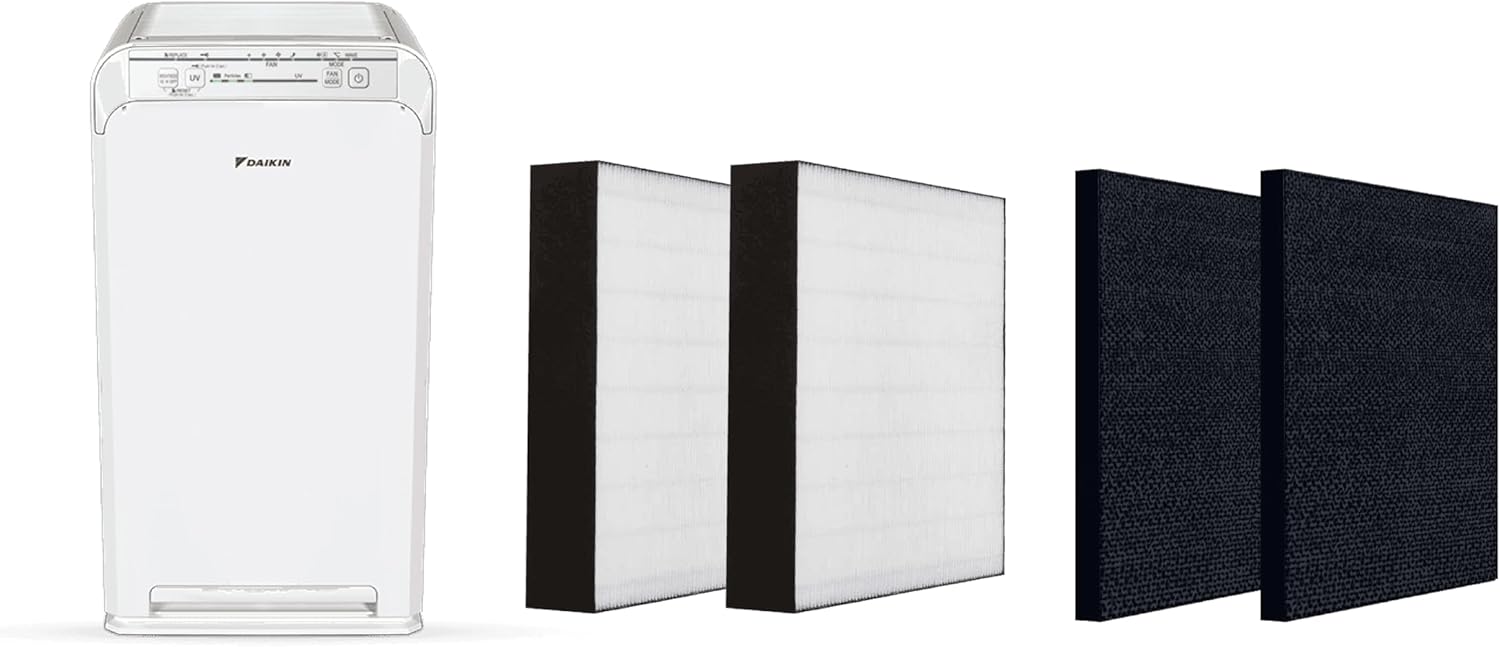
The LG PuriCare 360 and Daikin models use true HEPA—essential for allergy and asthma relief.
Room Size and CADR
Clean Air Delivery Rate (CADR) indicates actual cleaning capacity:
CADR explained: Cubic feet of air cleaned per minute. Higher CADR means faster, more thorough cleaning.
Room size matching: CADR should be at least 2/3 of room's square footage. A 300 sq ft room needs 200+ CADR.
Undersizing problem: Purifiers rated for larger rooms than they can handle create false confidence while failing to clean effectively.
Multiple units: Sometimes two medium purifiers serve better than one undersized large one.
Filter Replacement Costs
Purchase price is just the beginning:
Replacement frequency: True HEPA filters typically need replacement every 6-12 months depending on use.
Replacement cost: $30-100 per filter set, sometimes more for proprietary designs.
Total cost of ownership: Calculate 2-3 years of filter costs when comparing models. A $200 purifier with $80 annual filters costs more than a $300 unit with $40 filters over three years.
Pre-filters: Washable pre-filters extend HEPA life by catching large particles first.
Beyond HEPA: Activated Carbon
For odors and chemicals, carbon filters add capability:
What carbon removes: VOCs, smoke smell, cooking odors, off-gassing from furniture.
Carbon limitations: Saturates and stops working—needs regular replacement. Thin carbon layers are mostly marketing.
Substantial carbon: Look for filters with significant carbon weight, not carbon-coated mesh.
Combination filters: Many purifiers combine HEPA and carbon for comprehensive filtration.
Ionizers and UV: Helpful or Hype?
Secondary technologies vary in usefulness:
Ionizers: Charge particles to stick to surfaces. Can help but may produce ozone—check for CARB certification.
UV-C light: Kills some bacteria and viruses with sufficient exposure time. Most purifier UV sections provide minimal exposure—effectiveness questionable.
Plasma and photocatalytic: Marketing-heavy technologies with limited independent verification.
Core recommendation: Strong HEPA and good airflow matter most. Additional technologies are secondary.
Noise Considerations
Air purifiers run continuously—noise matters:
Decibel ratings: 25-35 dB on low is quiet (background hum). 50+ dB on high is noticeable.
Low speed effectiveness: Many purifiers are quiet on low but don't clean well. CADR ratings are often at high speed.
Bedroom use: Night modes reduce noise but also reduce cleaning. Larger units on low settings often work better than smaller units straining on high.
Smart Features
Modern purifiers add connectivity:
Air quality sensors: Show particle counts and adjust speed automatically. Useful for understanding air quality patterns.
App control: Schedule operation, monitor filter life, control remotely. Convenience varies by implementation quality.
Voice assistant integration: Turn on/off via Alexa or Google. Nice for hands-free control.
The Daikin bundle and LG models include sensors that actually help understand when air quality degrades.
When Air Purifiers Help
Air purifiers effectively address:
Allergies: Pollen, pet dander, dust mites significantly reduced with proper HEPA.
Smoke: Both tobacco and wildfire smoke particles captured (though odor needs carbon).
Asthma triggers: Reduced particulates can decrease asthma symptoms.
New construction off-gassing: Carbon filters help with VOCs from new furniture, paint.
When They Don't Help
Air purifiers can't fix:
Source problems: Mold in walls, smoking indoors—purifiers treat symptoms, not causes.
Very large spaces: Open floor plans need multiple units or commercial solutions.
Humidity issues: Purifiers don't dehumidify. Mold problems need dehumidifiers.
Ventilation problems: Sometimes opening windows provides better air quality than recirculating.
Practical Recommendations
For bedrooms: Medium CADR purifier with true HEPA, quiet operation priority.
For living areas: Higher CADR matching actual room size, carbon for cooking odors.
For allergies: True HEPA essential, pre-filters extend life, larger capacity recommended.
For smoke/odors: Substantial activated carbon required, not just carbon-coated filters.
The key insight: match purifier capacity to actual room size, verify true HEPA, calculate filter replacement costs, and don't expect purifiers to solve source problems they can only mask.
Frequently Asked Questions
What should I look for when buying air purifiers?
Key factors include build quality, user reviews, and value for money. Top-rated options like the LG LG PuriCare 360 Air Purifiers for Home (4.6★ from 187 reviews) demonstrate what quality looks like in this category.
How much do air purifiers typically cost?
Prices range from $43 to $300, with most quality options around $149. Budget options under $64 work for occasional use, while premium models over $224 offer better durability and features.
Which air purifiers are most popular right now?
The LG PuriCare 360 Air Purifiers for Home is currently top-rated with 4.6★ from 187 verified reviews. Check our full comparison at /best/air-purifiers for all top picks.