 PickPundit
🔌 Hur man väljer de bästa förlängningssladdarna: Komplett köpguide

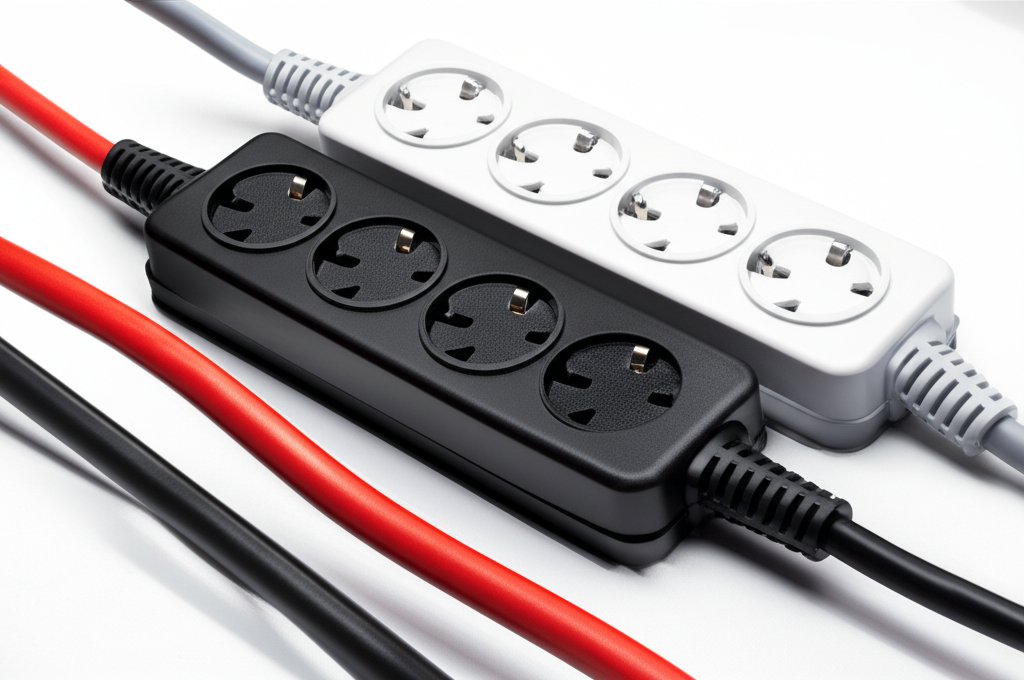
Complete extension cords buying guide. Learn what features matter, compare top products, and find the best extension cords for your budget.
View Top Picks →Table of Contents
Extension Cords: The Gauge and Rating System Most Buyers Ignore
Extension cords seem simple—longer wires connecting devices to distant outlets. This simplicity masks important electrical considerations that affect both safety and functionality. Undersized extension cords create fire hazards; oversized cords waste money on unnecessary capacity. Understanding cord ratings prevents both problems.
The Gauge System (AWG) Explained
Extension cord wire thickness uses American Wire Gauge (AWG), where counterintuitively, lower numbers mean thicker wire. A 12-gauge cord has thicker conductors than a 16-gauge cord.
Thicker wire handles more current with less resistance. This matters because resistance generates heat—undersized wires carrying high current become warm, then hot, then potentially fire hazards.
Common extension cord gauges and typical uses:
16 AWG: Light-duty cords for lamps, phone chargers, small electronics. Suitable for up to 10-13 amps.
14 AWG: Medium-duty for power tools, space heaters, vacuum cleaners. Suitable for 13-15 amps.
12 AWG: Heavy-duty for high-draw equipment—circular saws, air compressors, workshop equipment. Suitable for 15-20 amps.
10 AWG: Extra-heavy-duty for extended runs or maximum amperage requirements.
The Amazon Basics 10 ft at $8 and Cable Matters 6 ft at $10 are 16 AWG—appropriate for light-duty extension of common household electronics. The POWGRN 50 ft at $38 is 12 AWG—appropriate for outdoor power tools and high-draw applications.
Length Affects Capacity
Wire resistance increases with length. A 50-foot extension cord creates more resistance than a 10-foot cord of identical gauge, reducing safe amperage capacity.
Practical implication: longer cords need thicker gauge to maintain the same amperage capacity. A 16-gauge cord suitable for a lamp at 10 feet may be inadequate for the same lamp at 50 feet.
For long outdoor runs (50+ feet), default to heavier gauge than the connected device strictly requires. The cost difference is modest; the safety margin is valuable.
The Prong Count Decision
Extension cords come in 2-prong and 3-prong configurations:
2-prong: For devices with 2-prong plugs—lamps, phone chargers, basic electronics. Lighter duty, typically 16 AWG.
3-prong: For devices with grounding prong—power tools, space heaters, anything with metal housing. Required for safety—the ground prong provides fault protection.
Never defeat the ground prong (cutting it off or using 2-prong adapters) for 3-prong devices. The grounding connection prevents electrical shock if internal faults occur. This isn't cautious advice; it's the difference between minor inconvenience and potential electrocution.
Indoor vs Outdoor Ratings
Outdoor extension cords use jacketing materials rated for UV exposure, moisture, and temperature extremes. Indoor cords degrade in outdoor conditions—insulation cracks, copper oxidizes, and failure risk increases.
The difference isn't visible in casual inspection. Outdoor rating must be specified in product description; assume indoor-only unless explicitly rated for outdoor use.
Using outdoor-rated cords indoors is fine—they're simply overbuilt for the application. Using indoor cords outdoors is dangerous—even for "temporary" use that becomes semi-permanent.
Surge Protection vs Extension
Some extension cords include surge protection (like the Amazon Basics surge protector at $10). These function as extension cords while also protecting connected devices from voltage spikes.
Surge protection matters for sensitive electronics—computers, TVs, audio equipment. It matters less for motors, heaters, and other robust devices. The 790 joule rating on the Amazon Basics model provides modest protection; computer equipment often warrants 1000+ joule protection.
Note that surge protectors wear out—their protective components degrade with each surge absorbed. Protectors used in lightning-prone areas or with unstable power may exhaust protection capacity within 1-2 years while still functioning as extension cords. Some models include indicator lights showing protection status.
The Daisy Chain Warning
Connecting multiple extension cords end-to-end ("daisy chaining") creates cumulative resistance and multiple connection points—each a potential failure and heat generation point.
Fire codes and electrical safety standards prohibit daisy chaining for permanent installations. For temporary use, if you need longer reach than a single cord provides, purchase a cord of appropriate length rather than combining shorter cords.
Similarly, plugging power strips into other power strips creates both daisy chain problems and potential overload situations. Each power strip should connect directly to wall outlets.
OSHA and Commercial Considerations
In workplace environments, OSHA regulations govern extension cord use. Requirements include:
- Ground prong must be intact
- Cords cannot substitute for permanent wiring
- Cords cannot run through ceilings, floors, or walls
- Damaged cords must be removed from service immediately
Home users aren't subject to OSHA but benefit from treating these as sensible guidelines rather than bureaucratic requirements. The regulations exist because extension cord misuse causes thousands of fires and injuries annually.
The Color Coding Convenience
Orange and yellow extension cords (common for outdoor/construction use) provide visibility—you can see where cords run, reducing trip hazards and preventing accidental damage.
Indoor cords often use white or brown to blend with home environments. The color choice is aesthetic for indoor use; visibility benefits for outdoor/worksite use justify the high-visibility colors.
Cord Management and Storage
Coiling extension cords for storage seems simple but affects longevity. Tight coiling stresses wires at bend points; kinked cords may have internal damage not visible externally.
Loop cords loosely for storage. Avoid the over-under wrapping technique common with audio cables—this works for signal cable but isn't necessary for power cord and can create handling confusion.
Unplugging cords by pulling the plug rather than yanking the cord prevents internal connection damage at the plug end—a common failure point for carelessly handled cords.
Practical Recommendations
For indoor light-duty (lamps, chargers): 16 AWG, 2-prong, length matching actual need. Amazon Basics at $8 serves most indoor needs.
For indoor heavy-duty (space heaters, vacuum cleaners): 14 AWG, 3-prong. Verify connected device amperage doesn't exceed cord rating.
For outdoor power tools: 12 AWG, 3-prong, outdoor-rated jacketing. The POWGRN at $38 for 50 feet provides appropriate heavy-duty capacity.
For sensitive electronics: Surge-protected power strips rather than simple extension cords, with joule ratings matched to equipment value.
The key insight: extension cords are electrical equipment, not simply "longer wires." Matching cord capacity to load and environment prevents problems that range from inconvenient (tripped breakers) to catastrophic (electrical fires).
Frequently Asked Questions
Vad ska jag leta efter när jag köper förlängningssladdar?
Nyckelfaktorer inkluderar byggkvalitet, användarrecensioner och valuta för pengarna. Topprankade alternativ som Amazon Basics Amazon Basics Extension-sladd (4,8★ från 59 294 recensioner) visar hur kvaliteten ser ut i den här kategorin.
Hur mycket kostar förlängningssladdar vanligtvis?
Priserna varierar från $6 till $38, med de flesta kvalitetsalternativ runt $14. Budgetalternativ under $9 fungerar för tillfällig användning, medan premiummodeller över $21 erbjuder bättre hållbarhet och funktioner.
Vilka förlängningssladdar är mest populära just nu?
Amazon Basics Extension-sladden är för närvarande topprankad med 4,8★ från 59 294 verifierade recensioner. Kolla in vår fullständiga jämförelse på /Best/Extension-Cords för alla toppval.


