 PickPundit
🔋 How to Choose the Best portable charger power bank: Complete Buying Guide

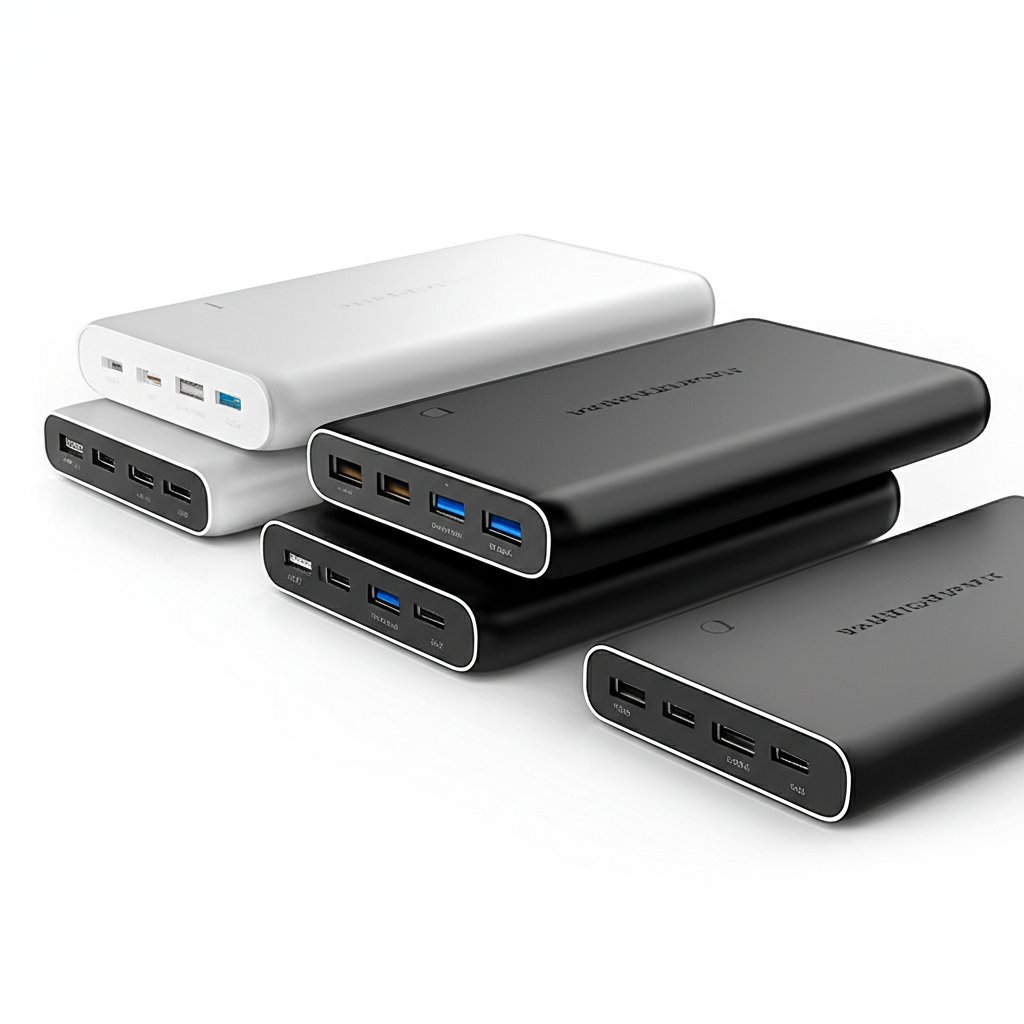
Complete best portable charger power bank buying guide. Learn what features matter, compare top products, and find the best portable charger power bank for your budget.
View Top Picks →Table of Contents
Portable Chargers: The Power Bank Capacity vs Size Tradeoff
Portable chargers solve the modern anxiety of dying phone batteries—but the category spans from pocket-sized emergency backups to laptop-charging behemoths. Understanding capacity, output speeds, and realistic expectations prevents both underpowered purchases and unnecessary bulk.
Understanding mAh Capacity
Milliamp-hours (mAh) indicate stored energy, but marketing numbers mislead:
Rated vs usable capacity: A 20,000mAh battery doesn't deliver 20,000mAh to your phone. Energy conversion loses 20-35%, so expect 13,000-16,000mAh of actual charging.
Phone battery reference: iPhone 15 has ~3,349mAh, Galaxy S24 has ~4,000mAh. A 20,000mAh power bank theoretically charges these 3-4 times, realistically 2.5-3 times.
The 50,000mAh models (like the $40 option with PD 30W): Massive capacity for extended trips, but correspondingly heavy and bulky.
Charging Speed: Watts Matter
Power delivery (PD) and Quick Charge ratings determine how fast your devices charge:
5W (basic USB-A): Slow charging, takes 3-4 hours for phone.
18W (QC 3.0): Fast charging for Android phones, significantly faster than basic.
20W (PD): iPhone fast charging threshold, 0-50% in ~30 minutes.
30W (PD): The 50,000mAh option's output—charges phones quickly, can slowly charge small laptops.
65W+ (PD): Full laptop charging capability.
The Mophie Powerstation Fast at around $70 prioritizes charging speed with 20,000mAh capacity—balancing size and capability.
Input Speed: Recharging the Charger
How fast the power bank itself recharges matters for frequent travelers:
Slow input (10W): Overnight charging required for large capacity banks.
Fast input (18W+): Several hours for 20,000mAh.
Pass-through charging: Charge power bank and phone simultaneously—convenient but sometimes reduces lifespan.
Physical Considerations
Capacity directly correlates with size and weight:
Under 10,000mAh: Pocket-friendly, 1-2 phone charges, daily carry reasonable.
10,000-20,000mAh: The sweet spot for most users—multiple charges without excessive bulk.
20,000-30,000mAh: Weekend trip territory, noticeable in bags.
50,000mAh: Serious capacity for extended travel, camping, or emergency preparedness.
Built-in Cables vs Ports
The VEGER with built-in cables eliminates carrying separate cables:
Advantages: Never forget cables, faster deployment, cleaner bag organization.
Disadvantages: If cable breaks, entire unit compromised. Cable type fixed (can't upgrade to newer standards).
Wall plug integration: Some models include folding prongs—charge from outlet without separate adapter.
Use Case Matching
Match power bank to actual usage:
Daily commuter: 10,000mAh with fast charging handles unexpected long days.
Weekend warrior: 20,000mAh covers multiple device days without outlet access.
International traveler: Higher capacity plus fast input for quick hotel recharges between adventures.
Emergency/outdoor: 50,000mAh provides serious backup for extended situations.
Laptop user: Must verify wattage matches laptop requirements—typically 45W minimum for modern ultrabooks.
Quality Indicators
Power bank quality varies dramatically:
Brand reputation: Anker, Mophie, RAVPower have track records. Unknown brands may exaggerate capacity.
Battery chemistry: Lithium-polymer generally better than lithium-ion for safety and lifespan.
Safety certifications: UL or CE certification indicates basic safety testing.
Warranty: Quality manufacturers offer 18-month to lifetime warranties.
Airline Regulations
TSA allows power banks in carry-on only (not checked bags):
Under 100Wh: No restrictions (covers most under 27,000mAh).
100-160Wh: Airline approval required (some 50,000mAh banks approach this).
Over 160Wh: Prohibited on passenger aircraft.
The 50,000mAh option at 3.7V = 185Wh—potentially over airline limits. Verify before traveling.
Practical Recommendations
For everyday use: 10,000-15,000mAh with 20W+ output balances portability and capability.
For heavy phone users: 20,000mAh with fast charging handles demanding days.
For laptop charging: Verify PD wattage matches laptop requirements—minimum 30W for emergency use, 65W+ for regular charging.
For travel: Check airline watt-hour limits, prefer models with fast input for quick hotel recharges.
The key insight: buy for actual usage patterns, not maximum capacity. The best power bank is one you'll actually carry—excessive capacity often stays home due to weight.
Frequently Asked Questions
What should I look for when buying portable chargers?
Key factors include build quality, user reviews, and value for money. Top-rated options like the Enerwow Portable Charger 50000 mAh Power Bank PD 30W and Q (4.3★ from 71 reviews) demonstrate what quality looks like in this category.
How much do portable chargers typically cost?
Prices range from $15 to $249, with most quality options around $42. Budget options under $22 work for occasional use, while premium models over $63 offer better durability and features.
Which portable chargers are most popular right now?
The Portable Charger 50000 mAh Power Bank PD 30W and QC 4.0 Powe is currently top-rated with 4.3★ from 71 verified reviews. Check our full comparison at /best/portable-chargers for all top picks.
⚖️ Quick Comparison
| Product | Price | Rating | Key Feature |
|---|---|---|---|
| $27.99 | High Capacity - 50000mAh power bank provides up to 11 charges for iPhone 13 Pro ... | ||
| $39.99 | POWER THAT LASTS 20,000mAh internal battery provides enough power to charge your... | ||
| $27.99 | Portable Charger With Built In Cables And Plug - 10000mAh capacity with built-in... |
🏆 Top best portable charger power bank We Recommend


